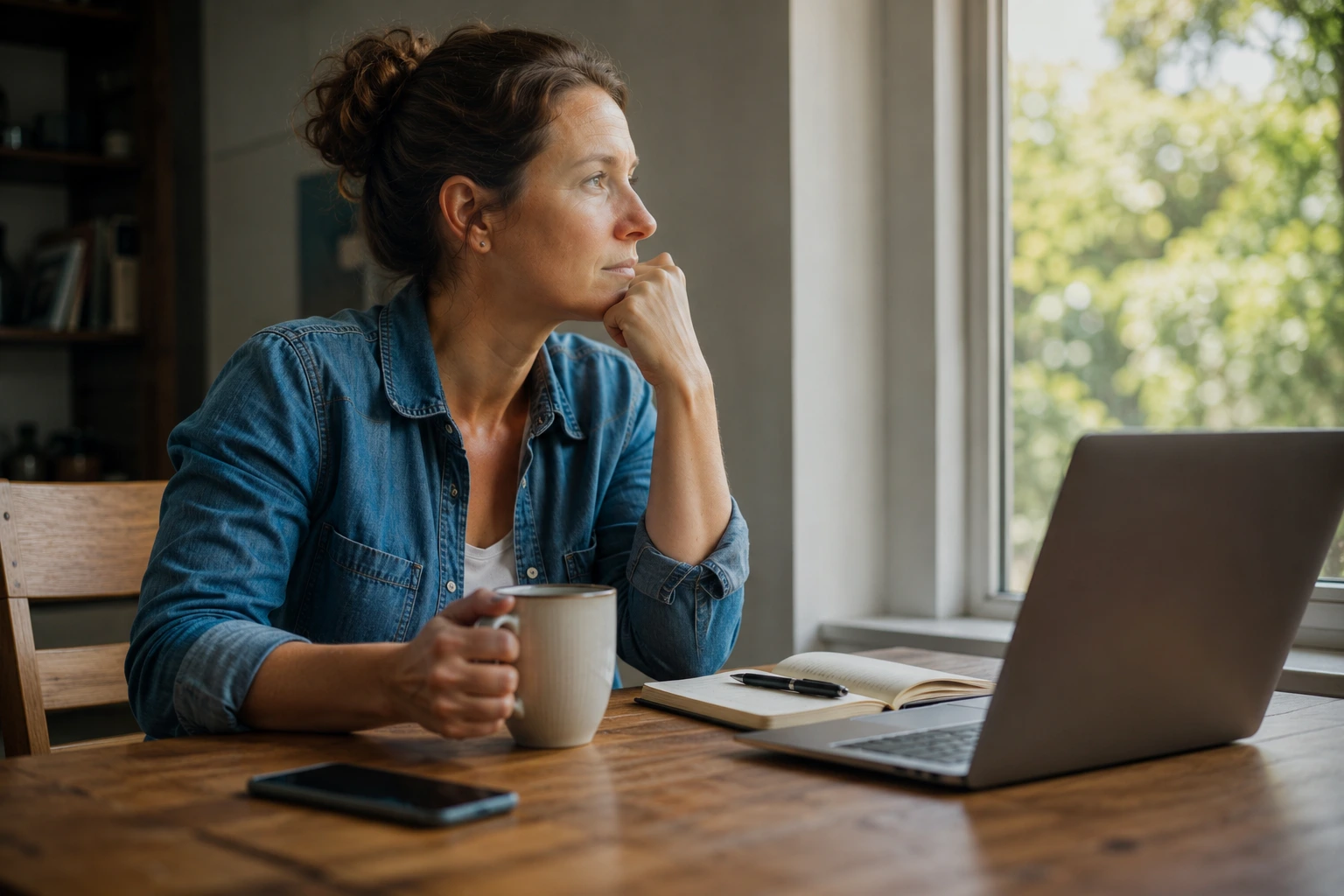
If stress has you feeling stuck in your own skin, waking up tense, or dreading simple daily tasks, you’re not alone, and the good news is that stress relief techniques work for seniors who are ready to reclaim their peace.
Mindfulness meditation
Mindfulness meditation offers seniors a direct pathway to quieting the mental chatter that builds throughout the day. Rather than trying to empty your mind, you learn to observe thoughts without judgment, letting them pass like clouds. Start by sitting comfortably for just five to ten minutes in a quiet corner of your home. Focus on your breath, noticing the cool air as you inhale and the warmth as you exhale. When your mind wanders, gently return attention to your breathing. Many seniors find that a consistent morning practice sets a calmer tone for the entire day. Body scans are another powerful technique, where you mentally move through each part of your body from toes to head, releasing tension as you go. Over time, this practice rewires how your nervous system responds to stress, making you naturally more resilient. Some seniors use guided meditation apps or YouTube videos to stay on track, while others prefer silence. The key is consistency, not perfection.
- Set aside time for daily meditation sessions.
- Find a quiet, comfortable place to meditate.
- Engage all your senses to fully experience the present moment.
Yoga and tai chi
Yoga and Tai Chi are deceptively powerful for stress relief because they combine gentle movement with focused breathing and mindfulness. Unlike high-impact exercise, these practices respect the aging body while strengthening it from within. Tai Chi involves slow, flowing movements that improve balance and coordination, reducing fall risk while calming your mind. Yoga offers flexibility and strength work tailored to your current abilities. A typical beginner class might include simple poses like child’s pose, cat-cow stretches, and gentle forward folds, held for several breaths each. The beauty is that you never compete or push beyond comfort. Many community centers and senior centers offer affordable classes specifically designed for older adults. If attending in person feels intimidating, numerous online platforms provide senior-friendly videos you can follow at home. Even fifteen minutes three times a week produces measurable reductions in cortisol, the stress hormone. Many seniors report sleeping better and feeling more grounded after just a few weeks of regular practice.
📘 Fix your day in under 2 minuteschoose where to begin:
Nature walks
Stepping into nature is one of the simplest yet most underrated stress management tools available to seniors. A walk through a local park or nature trail exposes you to fresh air, sunlight, and natural sounds that your nervous system craves. The rhythmic motion of walking itself is meditative, allowing your mind to settle while your body gets gentle movement. Pay attention to sensory details: the texture of tree bark, the scent of grass after rain, bird songs, or the feeling of sun on your face. Even a twenty-minute walk has been shown to lower blood pressure and reduce anxiety. If mobility is limited, a slow stroll around your neighborhood or sitting on a park bench while observing nature provides similar benefits. The key is regularity. Aim for at least three walks per week, ideally at the same time each day to build a habit. Some seniors invite a friend along, combining nature exposure with social connection for double the stress relief benefit.
Art therapy
Art therapy taps into a part of your brain that stress and worry often suppress, allowing creative expression to bypass the logical mind entirely. You do not need artistic talent or experience. Whether you paint, draw, sketch, sculpt with clay, or work with collage materials, the process itself is therapeutic. Many seniors find that focusing on brushstrokes or shaping clay quiets racing thoughts and anchors them in the present moment. A typical session might involve choosing colors that match your mood, then freely applying them to paper without planning or judgment. Some seniors create mandalas or geometric patterns, finding the repetitive motion deeply calming. Others work on landscapes or abstract designs. Local senior centers, libraries, and community colleges frequently offer affordable art classes where you can work alongside peers. At home, you need only basic supplies: paper, colored pencils, markers, or watercolors. The finished product matters far less than the mental state you enter while creating. Many seniors report that art sessions become their favorite part of the week.
Social support
Isolation amplifies stress, while meaningful connection buffers against it. Maintaining regular contact with friends and family, whether in person or by phone, is not a luxury but a necessity for emotional health. Sharing what you are experiencing with someone who listens without judgment provides immediate relief. Many seniors underestimate how much a weekly coffee with a friend or a phone call with a grandchild can shift their stress levels. Beyond one-on-one relationships, joining a group activity creates structure and purpose while reducing loneliness. This might be a book club, a gardening group, a faith community, a volunteer opportunity, or a hobby-based club. Even virtual groups work if mobility or transportation is a barrier. The act of being heard, contributing to something larger than yourself, and feeling part of a community directly lowers stress hormones. If you feel isolated, start small: attend one group meeting or reach out to one person this week. Most seniors find that once they take that first step, momentum builds naturally.
Explore mindfulness meditation, yoga, nature walks, art therapy, and social support as effective stress relief techniques for seniors. These practices can help promote relaxation, self-awareness, and well-being.
How can mindfulness meditation help seniors manage stress?
Mindfulness meditation allows seniors to focus on the present moment, promoting relaxation and self-awareness. By practicing deep breathing and body scans, seniors can reduce stress and enhance well-being.
What are the benefits of art therapy for seniors?
Engaging in artistic activities like painting and crafting can be therapeutic for seniors, allowing them to express themselves and find stress relief. Art therapy promotes creativity, relaxation, and emotional well-being.
Others also read:
Disclaimer: This article is for informational purposes only and is not a substitute for professional medical advice. Always consult a healthcare professional for personal guidance.
This guide has been prepared and reviewed by the GlobalHealthBeacon editorial team and reflects current medical research as of 2026. It provides structured, evidence-based information to support informed health decisions.
