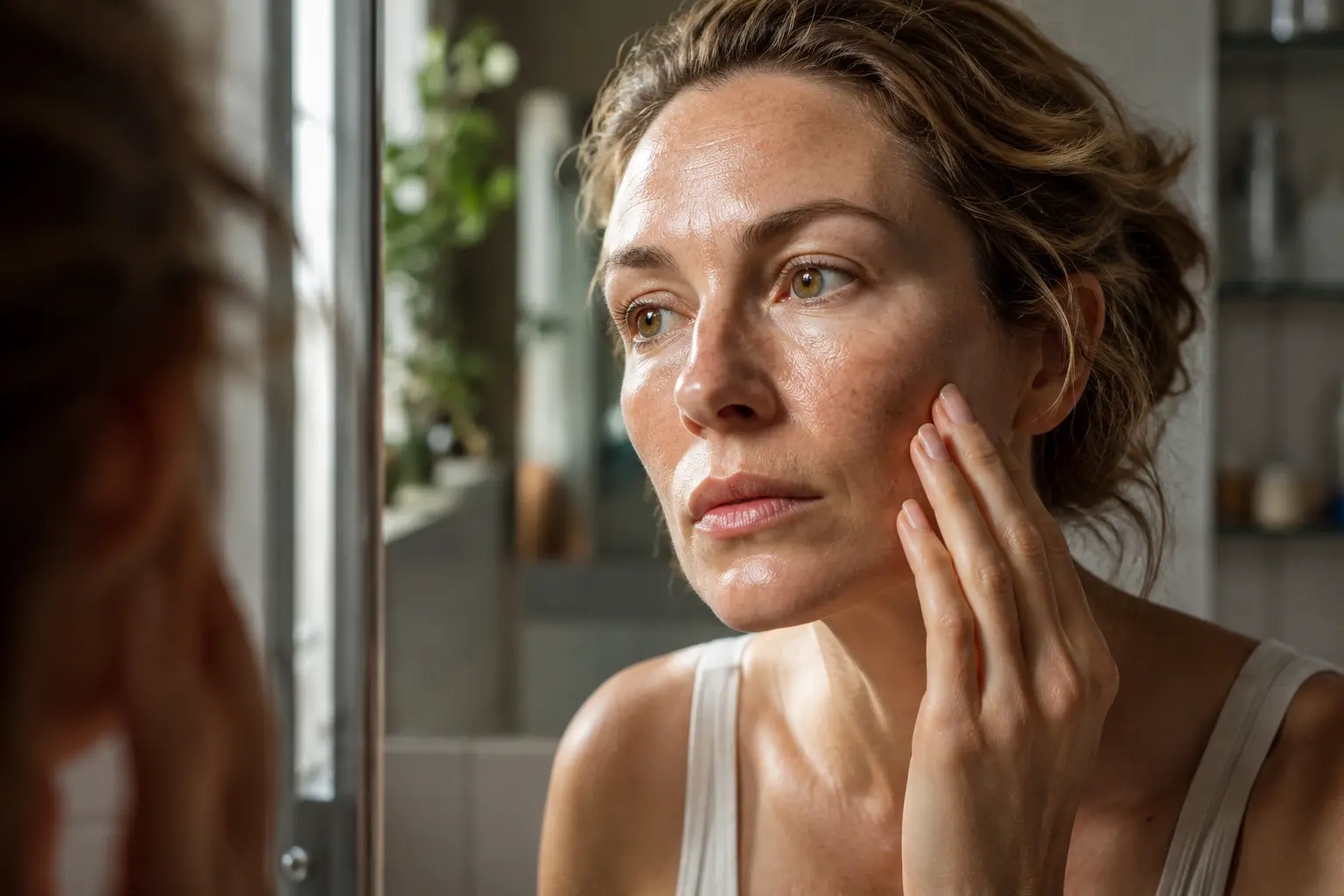
Those brown spots creeping across your hands, the leathery texture you catch in the mirror, the way your skin just doesn’t bounce back anymore – that’s decades of sun exposure talking, and a solid sun damage repair routine can actually reverse more of it than you’d think.
Understanding sun damage at a cellular level
When ultraviolet rays penetrate your skin, they trigger a cascade of chemical reactions that generate free radicals – unstable molecules that ricochet through your cells like tiny wrecking balls. These free radicals attack collagen and elastin, the structural proteins that keep skin firm and supple. Over time, this damage accumulates. Picture a rope that’s been frayed and weakened by constant stress; that’s what happens to your skin’s support system. The result shows up as wrinkles that deepen with each passing year, sagging that makes your jawline less defined, and age spots that seem to multiply overnight. For seniors, this damage is often decades in the making, from beach vacations without sunscreen, daily commutes with UV exposure through car windows, or simply spending a lifetime outdoors without adequate protection. Understanding this process at the cellular level helps explain why sun damage doesn’t just disappear overnight and why consistent, targeted repair efforts actually work.
The role of antioxidants in sun damage repair
Antioxidants function as your skin’s personal security team, patrolling for and neutralizing those destructive free radicals before they cause more harm. Vitamin C, for instance, not only stops free radical damage but also stimulates fibroblasts, the cells responsible for producing new collagen. Vitamin E works as a fat-soluble protector, guarding the lipid layers in your cell membranes. Vitamin A derivatives penetrate deeper, encouraging your skin to shed damaged outer layers and reveal fresher skin beneath. When these antioxidants work together, they reduce inflammation that makes skin look puffy and irritated, they support your skin’s natural repair mechanisms, and they enhance your skin’s ability to defend itself against future UV exposure. Think of it this way: if sun damage is like rust forming on metal, antioxidants are both the rust remover and the protective coating that prevents new rust from forming. For seniors with years of accumulated sun exposure, these compounds offer a scientifically-backed way to support your skin’s healing capacity from within topical applications.
Effective sun damage repair routine
A practical sun damage repair routine follows a logical sequence that prepares your skin to receive and benefit from active ingredients. Start each morning and evening by cleansing gently, because impurities and old product buildup create a barrier that prevents beneficial ingredients from penetrating effectively. Use lukewarm water and a non-stripping cleanser, as harsh cleansing can compromise your skin barrier, which is already stressed from sun damage. After cleansing, apply a vitamin C serum while your skin is still slightly damp, as this helps with absorption. The serum works to boost collagen production and fade hyperpigmentation, those stubborn dark spots that accumulate with age. Wait a few minutes for the serum to absorb, then follow with your regular moisturizer to lock in hydration. Finally, apply a broad-spectrum sunscreen with SPF 30 or higher every single morning, even on cloudy days, because UV rays penetrate clouds. This final step is crucial because without sun protection, you’re essentially trying to repair a roof while it’s still raining. Consistency matters more than perfection; following this routine daily for several weeks allows your skin to show measurable improvements in texture and tone.
- Cleanse your skin with a mild, non-stripping cleanser using lukewarm water.
- Apply a vitamin C serum to damp skin to promote collagen production and reduce hyperpigmentation.
- Follow with a hydrating moisturizer to lock in moisture and support skin barrier function.
- Finish with a broad-spectrum sunscreen with SPF 30 or higher to prevent further damage.
🔬 Science-backed benefits in 2 minuteschoose where to begin:
Understanding the importance of hydration and moisturization
Hydration works on two levels: internal and external. Drinking adequate water supports your entire body’s cellular function, including skin repair processes, though the popular claim that water alone reverses wrinkles oversimplifies the science. External hydration through moisturizers is equally important. Hyaluronic acid, a naturally occurring compound in your skin, can hold up to 1000 times its weight in water, plumping skin cells and temporarily reducing the appearance of fine lines and wrinkles. For seniors, whose skin naturally produces less of this compound with age, topical application becomes increasingly valuable. When you apply a hyaluronic acid moisturizer to clean, slightly damp skin, you’re essentially giving your cells a drink of water that helps them function optimally. This hydration also supports your skin barrier, the protective layer that keeps irritants out and moisture in. A compromised barrier makes sun damage worse and slows healing. Many seniors find that simply improving their moisturizing routine leads to visible improvements in skin texture within two to three weeks, as plumped, hydrated cells reflect light differently and appear smoother and more youthful.
Incorporating retinol for skin renewal
Retinol, a vitamin A derivative, stands out as one of the most scientifically-validated ingredients for addressing sun damage. It works by accelerating cell turnover, essentially encouraging your skin to shed damaged outer layers more quickly and replace them with newer cells. This process, called desquamation, helps fade dark spots and improve overall skin texture. Retinol also stimulates collagen production and helps normalize skin cell behavior that has been disrupted by UV damage. For seniors new to retinol, starting slowly is essential because retinol can cause initial irritation, redness, and peeling as your skin adjusts. Begin with a low concentration, perhaps 0.25 percent, used just two or three times weekly. Gradually increase frequency over several weeks as your skin builds tolerance. Always use retinol at night, as it increases sun sensitivity, and always follow with sunscreen the next morning. Many seniors report that after four to eight weeks of consistent retinol use, they notice significant improvements in fine lines, age spots become less prominent, and overall skin texture becomes smoother and more refined. The key is patience and consistency rather than aggressive application.
The science behind UV protection
Ultraviolet radiation exists in three forms: UVA, UVB, and UVC. UVC is mostly filtered by the atmosphere, but UVA and UVB both reach your skin and cause damage in different ways. UVB rays directly damage DNA in skin cells, causing mutations that can lead to skin cancer. UVA rays penetrate deeper, damaging collagen and elastin while also contributing to DNA damage and skin cancer risk. This is why dermatologists emphasize that sun protection isn’t vanity; it’s a health necessity. Using a broad-spectrum sunscreen daily protects against both UVA and UVB radiation. For seniors, daily sunscreen use is particularly important because cumulative UV exposure increases skin cancer risk significantly with age. Many seniors mistakenly think that if they’re not spending time at the beach, they don’t need sunscreen, but UV rays penetrate clouds, reflect off surfaces like water and concrete, and accumulate during routine activities like driving or gardening. Applying sunscreen every morning, reapplying every two hours if you’re outdoors, and seeking shade during peak UV hours between 10 a.m. and 4 p.m. creates a comprehensive protection strategy that prevents further damage while your skin repairs existing damage.
Sun damage on senior skin results from decades of accumulated UV exposure that damages collagen, creates free radicals, and disrupts normal skin cell function. Effective repair involves a multi-faceted approach: antioxidants neutralize free radicals and support collagen production, hydration and moisturization restore skin barrier function and plump cells, retinol accelerates cell renewal and fades dark spots, and consistent UV protection prevents further damage while healing occurs. Understanding the science behind these strategies helps seniors approach sun damage repair with realistic expectations and commitment to consistent daily routines.
How long does it take to see results from a sun damage repair routine?
Results vary based on individual skin condition, the severity of sun damage, and the specific products used. Most seniors notice improvements in skin texture and tone within four to six weeks of consistent daily use. More significant improvements, such as noticeable fading of age spots or reduction in fine lines, typically become apparent within two to three months. Retinol-based routines may show results within six to eight weeks. Patience and consistency matter more than expecting overnight transformation; sun damage accumulated over decades requires time to repair.
Can natural remedies alone repair sun-damaged skin effectively?
Natural remedies containing antioxidants, hyaluronic acid, and plant-based ingredients can support skin repair and provide measurable improvements in texture and appearance. However, severe sun damage, including deep wrinkles, significant hyperpigmentation, or precancerous lesions, often requires professional interventions like chemical peels, laser treatments, or microdermabrasion for more dramatic results. A combination approach, using natural remedies daily alongside occasional professional treatments, often yields the best outcomes for seniors with extensive sun damage.
Others also read:
Disclaimer: This article is for informational purposes only and is not a substitute for professional medical advice. Always consult a healthcare professional for personal guidance.
This article has been prepared and reviewed by the GlobalHealthBeacon editorial team and is based on current medical research and published scientific literature available in 2026. It provides structured, evidence-based information to support informed health decisions.
