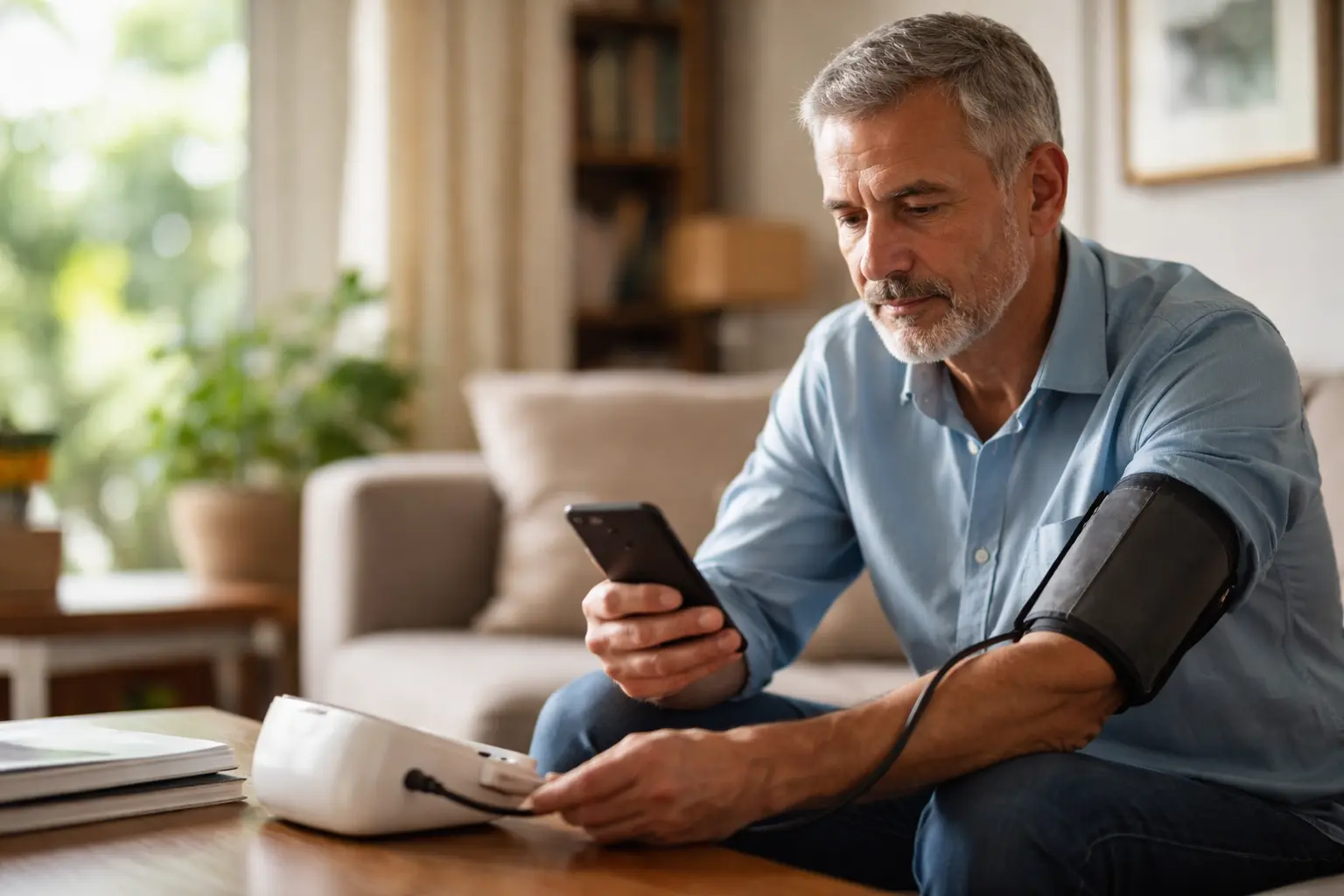
Tired of white-coat syndrome skewing your readings at the clinic, or worried you’re missing dangerous BP spikes between appointments? Telemonitoring blood pressure effectiveness changes everything by letting you track what’s really happening in your body from home, giving you and your doctor the actual data needed to keep you safe.
Understanding telemonitoring blood pressure
Telemonitoring blood pressure represents a shift in how seniors manage their cardiovascular health. Instead of relying on occasional clinic visits where anxiety or stress can artificially elevate readings, you monitor from your own environment where your body is calm and relaxed. Picture this: Margaret, a 68-year-old retiree, was told her BP was consistently high during office visits. Once she started home monitoring, her readings dropped significantly because she wasn’t nervous about the clinical setting. This real-world data helped her doctor adjust her medication more accurately. Telemonitoring uses specialized devices that connect to apps on your phone or tablet, automatically recording and storing your readings. Your healthcare provider can access this information remotely, spotting trends you might miss. The convenience means you’re more likely to stick with monitoring, which leads to better health outcomes. No more rushed appointments or forgotten readings. You control when and how often you check, building a complete picture of your blood pressure patterns over weeks and months.
- Convenient and non-invasive way to monitor blood pressure
- Reduces the need for regular trips to the clinic
- Enhances communication between you and your healthcare provider
Choosing the right telemonitoring device
Selecting a telemonitoring device requires balancing several practical factors. Start by considering ease of use, since a complicated device ends up in a drawer. Look for devices with large, easy-to-read displays and simple button controls. Test the cuff fit on your arm before purchasing, as an ill-fitting cuff produces inaccurate readings. Check whether the device syncs with your smartphone or computer, as this automation saves time and reduces manual entry errors. Accuracy matters tremendously, so choose devices cleared by the FDA or validated by medical organizations. Compare options like wrist monitors versus upper-arm monitors, understanding that upper-arm devices generally provide more reliable readings. Consider battery life and whether you prefer rechargeable or battery-powered models. Some devices offer Bluetooth connectivity, allowing automatic data upload to your healthcare provider’s portal. Others require manual input but cost less. Think about your living situation too. If you travel frequently, a lightweight portable device makes sense. If you have arthritis, a device with a pre-sized cuff eliminates the struggle of manual adjustment. Reading user reviews from other seniors reveals real-world reliability and customer service quality.
📘 Fix your day in under 2 minuteschoose where to begin:
Establishing a monitoring routine
Creating a consistent monitoring routine transforms random readings into meaningful health data. Choose a specific time each morning, ideally before taking medications or eating breakfast, when your body is in a standardized state. This consistency allows you to spot genuine changes rather than fluctuations caused by different daily activities. Set up your monitoring space thoughtfully. Sit in a comfortable chair with your feet flat on the floor and your arm at heart level, supported by a table or armrest. Avoid caffeine, exercise, and emotional stress for at least 30 minutes before measuring. Take two readings, one minute apart, and average them for accuracy. Consider linking your monitoring time to an existing habit, like after your morning coffee or during your favorite news program. This anchoring technique makes the routine feel natural rather than like a chore. Keep a simple log or use your device’s app to track not just the numbers but also notes about your day. Did you sleep poorly? Feel stressed? Have extra salt at dinner? These contextual details help your doctor understand what influences your readings. Over time, you’ll notice patterns. Maybe your BP rises on days you skip exercise or when you’re worried about something. This awareness empowers you to make adjustments before problems develop.
Interpreting your blood pressure readings
Understanding what your numbers mean transforms raw data into actionable health information. Blood pressure has two components: systolic (the top number, pressure when your heart beats) and diastolic (the bottom number, pressure when your heart rests). Normal is under 120/80. Elevated ranges from 120-129 systolic and under 80 diastolic. Stage 1 hypertension is 130-139 systolic or 80-89 diastolic. Stage 2 is 140 or higher systolic or 90 or higher diastolic. Rather than panicking over a single high reading, look for patterns. One elevated reading after a stressful day is normal. Consistently high readings across multiple days warrant attention. Consider creating a simple chart or using your app’s graphing feature to visualize trends over weeks. You might notice your readings climb gradually, spike suddenly, or remain stable. These patterns tell different stories. Gradual increases might suggest you need lifestyle adjustments or medication changes. Sudden spikes could indicate stress, illness, or medication issues. Stable readings suggest your current management is working. Share these patterns with your healthcare provider during check-ins. Bring your log or app data to appointments. This concrete information helps your doctor make informed decisions about your care rather than relying on memory or a single office reading.
Utilizing telemonitoring data for better health
The real power of telemonitoring emerges when you use your data to drive decisions and improvements. Start by reviewing your readings weekly to identify trends. Are mornings consistently higher than evenings? Does your BP spike on certain days? These observations guide lifestyle changes. If morning readings are elevated, discuss with your doctor whether a medication adjustment or earlier dosing might help. If stress days show higher readings, prioritize stress management techniques like walks, meditation, or breathing exercises. Use your data to evaluate lifestyle interventions. Reduced sodium intake, increased exercise, weight loss, and stress management all affect blood pressure. When you make a change, your telemonitoring data shows whether it’s working. This objective feedback is motivating. You see the results of your efforts reflected in improving numbers. Share your data regularly with your healthcare provider, not just at annual appointments. Many providers now offer patient portals where you can upload readings between visits. This ongoing communication allows early detection of problems. If your readings trend upward, your doctor might adjust medication before you develop symptoms. If they improve, your doctor might reduce medications, improving your quality of life. Involve family members in your monitoring journey. A spouse or adult child can help you stay consistent, interpret trends, and communicate with your healthcare team. This support system increases adherence and catches issues you might overlook.
Telemonitoring blood pressure empowers seniors to take control of their health through convenient and accurate tracking, establishing monitoring routines, interpreting readings effectively, and utilizing data for improved health outcomes.
How often should I monitor my blood pressure remotely?
It is recommended to monitor your blood pressure at least once a day, ideally at the same time each day, to track any fluctuations or trends effectively.
Can telemonitoring of blood pressure replace regular doctor visits?
Telemonitoring can complement traditional care by providing regular data to your healthcare provider. However, it is essential to continue with routine check-ups as advised by your physician.
Others also read:
Disclaimer: This article is for informational purposes only and is not a substitute for professional medical advice. Always consult a healthcare professional for personal guidance.
This guide has been prepared and reviewed by the GlobalHealthBeacon editorial team and reflects current medical research as of 2026. It provides structured, evidence-based information to support informed health decisions.
← Go to the telemonitoring blood pressure effectiveness main guide
