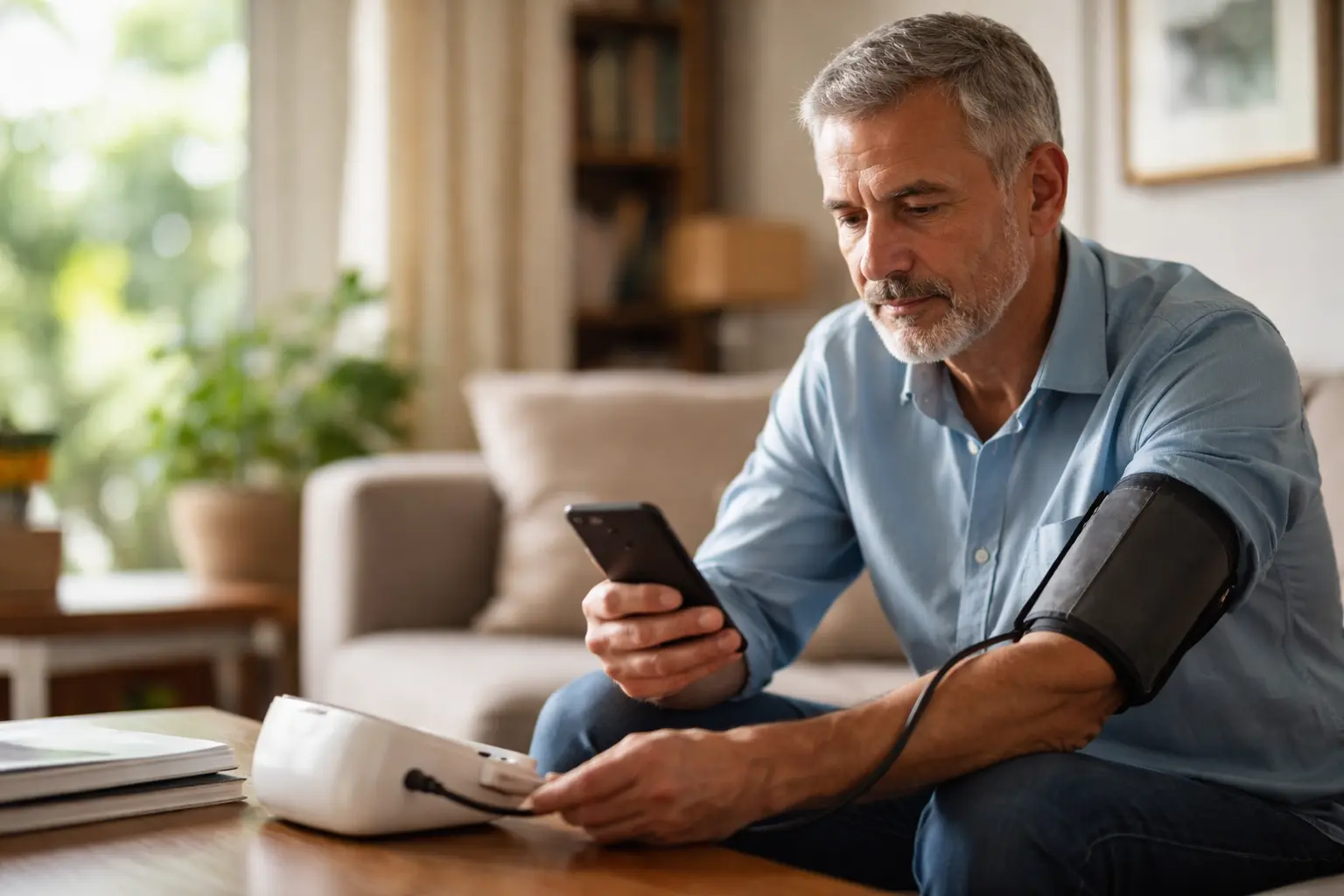
Your blood pressure readings are all over the place, you’re tired of guessing whether you’re okay, and your doctor only sees you once every three months – but telemonitoring blood pressure effectiveness is changing the game by putting real-time control directly in your hands.
Understanding telemonitoring blood pressure
Telemonitoring blood pressure represents a significant shift in how seniors manage cardiovascular health. Rather than relying solely on occasional office visits, this approach uses validated digital devices that measure your blood pressure at home and transmit readings to your healthcare provider’s secure platform. Imagine waking up, taking a reading on your connected monitor, and knowing that your doctor can see the trend developing over days and weeks. The technology works by capturing systolic and diastolic measurements through an automated cuff, then encrypting and sending that data to a HIPAA-compliant system. For seniors, this eliminates the anxiety of white coat syndrome, where blood pressure spikes simply from being in a medical office. A 72-year-old might notice their readings are consistently lower at home than at the clinic, revealing their true baseline. The devices themselves range from simple Bluetooth-enabled wrist monitors to sophisticated home stations that sync with smartphones or tablets, making the process accessible even for those less comfortable with technology.
Benefits of telemonitoring for seniors
The advantages of telemonitoring extend far beyond convenience. Real-time data allows healthcare providers to identify patterns that might otherwise remain hidden until a crisis occurs. Consider Margaret, a 68-year-old with hypertension who noticed her evening readings consistently exceeded 160/95 mmHg. Her doctor, reviewing weekly telemonitoring data, adjusted her medication timing and dosage before any serious event happened. Seniors also experience improved medication adherence because they see immediate feedback on whether their current treatment plan is working. The system promotes active engagement in health management, transforming seniors from passive patients into informed participants. Early intervention becomes possible when concerning trends emerge, potentially preventing strokes or heart attacks. Additionally, telemonitoring reduces unnecessary emergency room visits by catching problems early. Seniors report feeling more connected to their care team, knowing someone is monitoring their health continuously. The psychological benefit of this connection often translates to better overall health outcomes and reduced anxiety about cardiovascular status.
How to engage in telemonitoring effectively
Starting a telemonitoring program requires thoughtful preparation and consistent technique. First, selecting the right device matters significantly. Look for monitors validated by organizations like the American Heart Association, which have undergone rigorous testing for accuracy. Your healthcare provider may recommend specific brands or models that integrate seamlessly with their monitoring platform. Once you have your device, take time to understand its features before your first reading. Many seniors benefit from having a family member present during setup to help troubleshoot connectivity issues. Next, establish a routine. Take readings at the same time each day, typically in the morning before medication and in the evening, sitting quietly for five minutes beforehand. Proper technique is crucial: sit with feet flat on the floor, back supported, and the cuff at heart level. Common mistakes include taking readings while stressed, immediately after caffeine or exercise, or with a full bladder, all of which artificially elevate numbers. Document any unusual circumstances with your readings, such as poor sleep or increased stress, as context helps your doctor interpret the data accurately. Finally, follow your provider’s instructions for uploading or syncing data, whether that means pressing a button to transmit wirelessly or manually entering readings into a portal.
- Invest in a reliable blood pressure monitor validated by medical organizations.
- Connect the device to the telemonitoring platform provided by your healthcare provider.
- Follow the instructions for taking accurate readings consistently at the same time daily.
🔬 Science-backed benefits in 2 minuteschoose where to begin:
Importance of consistent monitoring
Consistency transforms raw data into meaningful clinical insight. When you monitor regularly, patterns emerge that single office visits cannot reveal. Blood pressure naturally fluctuates throughout the day and across seasons, and only sustained monitoring captures this variability. A senior who checks their pressure sporadically might miss the fact that their readings spike every afternoon or that their medication works better on some days than others. Consistent telemonitoring allows doctors to distinguish between true hypertension and temporary elevations caused by stress or illness. Over weeks and months, your healthcare team can see whether your current treatment plan is achieving target goals or whether adjustments are needed. This proactive approach prevents the common scenario where a patient feels fine but their blood pressure is silently damaging blood vessels. The relationship between senior and healthcare provider deepens through this continuous dialogue with data. Your doctor gains confidence in treatment decisions because they’re based on comprehensive information rather than assumptions. Many seniors find that the act of regular monitoring itself becomes a positive habit, a daily reminder to prioritize their health and stay engaged with their care plan.
Empowering seniors with data insights
Data becomes truly powerful when seniors understand what it means and how to use it. Modern telemonitoring platforms often provide visual dashboards showing trends, averages, and goal progress. A senior can see at a glance whether their readings are trending upward or downward, whether they’ve hit their target range, and how their current week compares to previous weeks. This visual feedback creates accountability and motivation. When you see your hard work reflected in improving numbers, you’re more likely to continue healthy behaviors. Some platforms include educational content explaining what different readings mean, why consistency matters, and how lifestyle factors influence blood pressure. Seniors report feeling less helpless and more in control when they understand the ‘why’ behind their numbers. The insights also facilitate better conversations with healthcare providers. Instead of vague complaints about how you feel, you can bring specific data: ‘My readings have been above target for the past week, especially in the evenings.’ This specificity allows your doctor to make targeted recommendations rather than generic advice. Over time, many seniors develop intuition about their own patterns, noticing which activities, foods, or stress levels affect their readings most significantly.
The future of blood pressure control
Telemonitoring technology continues advancing rapidly, promising even more accessible and user-friendly options for seniors. Emerging devices include wearable patches that measure blood pressure continuously without traditional cuffs, artificial intelligence algorithms that predict dangerous trends before they occur, and integration with other health metrics like heart rate variability and sleep quality. Future platforms may provide personalized recommendations based on your unique patterns, suggesting specific lifestyle adjustments when your data indicates they’re needed. Voice-activated interfaces will make telemonitoring easier for seniors with vision or dexterity challenges. Interoperability between different healthcare systems means your data will follow you seamlessly if you change providers or move to a new location. The integration of telemonitoring with home health visits and telehealth appointments creates a comprehensive care ecosystem where seniors receive coordinated, data-informed support. As these technologies mature and become more affordable, telemonitoring will likely become standard care rather than an optional enhancement. The trajectory suggests that future seniors will benefit from even more sophisticated tools for understanding and managing their cardiovascular health, potentially preventing many of the complications that currently affect older populations.
Telemonitoring blood pressure offers seniors a scientifically-supported approach to cardiovascular management by providing continuous data to healthcare providers, enabling early detection of concerning trends, and empowering older adults to actively participate in their own care. The technology transforms blood pressure management from occasional office checks into a comprehensive, ongoing dialogue between patient and provider, supported by real-time data that reveals patterns invisible to traditional monitoring methods.
Is telemonitoring blood pressure safe for seniors?
Yes, telemonitoring blood pressure is safe for seniors when they use devices validated by medical organizations and follow proper measurement technique. The devices are non-invasive, and the secure platforms protecting your data comply with healthcare privacy regulations. Consult your healthcare provider about which devices and platforms are appropriate for your specific situation.
How often should seniors monitor their blood pressure remotely?
Monitoring frequency depends on your individual health status, current blood pressure control, and your doctor’s recommendations. Many seniors benefit from twice-daily readings, typically morning and evening. However, those with well-controlled blood pressure might monitor less frequently, while those with uncontrolled hypertension or recent medication changes may need more frequent readings. Your healthcare provider will establish the schedule that best supports your care.
Others also read:
Disclaimer: This article is for informational purposes only and is not a substitute for professional medical advice. Always consult a healthcare professional for personal guidance.
This article has been prepared and reviewed by the GlobalHealthBeacon editorial team and is based on current medical research and published scientific literature available in 2026. It provides structured, evidence-based information to support informed health decisions.
← Back to the Main page on: telemonitoring blood pressure effectiveness
