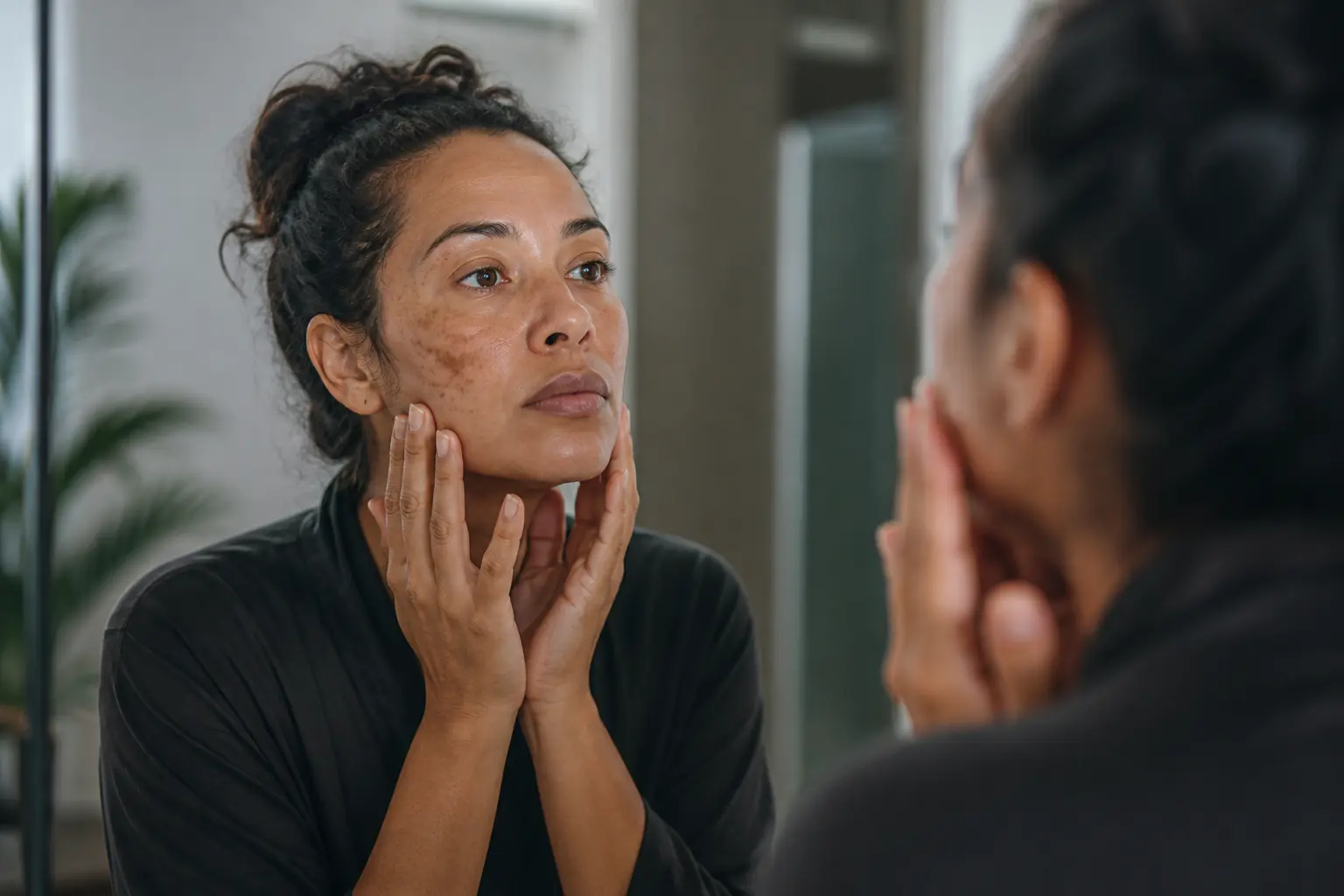
You look in the mirror and those dark spots staring back at you feel like they’ve taken permanent residence on your face, but here’s the truth: you can treat hyperpigmentation without peels and actually see real results without damaging your skin in the process.
Understanding hyperpigmentation
Hyperpigmentation happens when your skin produces too much melanin, creating those stubborn dark patches that seem to appear overnight. Sun exposure is the most common culprit, but hormonal shifts from birth control or pregnancy can trigger it too, along with post-inflammatory marks left behind after acne or skin injuries heal. Think of it this way: your skin is trying to protect itself, but sometimes that protection goes into overdrive. A 28-year-old woman might notice melasma appearing across her cheeks during summer, while another experiences dark spots after a breakout clears. Understanding which type you have matters because the treatment approach differs. Sun spots develop gradually from years of UV exposure, melasma appears in patches often linked to hormones, and post-inflammatory hyperpigmentation fades naturally over time but can be accelerated with the right care. Identifying your specific type helps you choose the most effective solution rather than wasting time on treatments that won’t work for your situation.
- Identify the specific type of hyperpigmentation you have (e.g., sun spots, melasma, post-inflammatory hyperpigmentation).
- Avoid excessive sun exposure and always wear sunscreen with at least SPF 30 to prevent further darkening of the spots.
- Maintain a healthy skincare routine with gentle products suitable for your skin type and avoid irritating ingredients that can worsen pigmentation.
Natural remedies and ingredients
Natural ingredients work differently than harsh chemicals, and many have solid research backing their effectiveness. Vitamin C is a powerhouse that brightens skin by inhibiting melanin production while also protecting against future sun damage. Licorice extract contains glabridin, which reduces melanin formation without the irritation of stronger actives, making it ideal if your skin is sensitive or reactive. Niacinamide strengthens your skin barrier while gently fading discoloration, and it plays well with other ingredients so you can layer treatments. Real example: a woman using a vitamin C serum in the morning followed by a niacinamide moisturizer and sunscreen might see visible lightening within 8 to 12 weeks of consistent use. Kojic acid and azelaic acid are gentler alternatives that work similarly to prescription options but with fewer side effects. The key is consistency and patience. These ingredients work gradually, which actually means less risk of irritation or rebound darkening. Many women find that combining two complementary ingredients accelerates results without overwhelming their skin.
📘 Fix your day in under 2 minuteschoose where to begin:
Gentle exfoliation techniques
Exfoliation removes dead skin cells sitting on top of dark spots, helping brightening ingredients penetrate deeper and revealing fresher skin underneath. Alpha hydroxy acids like glycolic acid and lactic acid dissolve the bonds between dead cells, promoting gentle turnover without physical scrubbing. Enzyme peels derived from papaya or pumpkin work similarly but feel less intense, making them perfect if you have sensitive skin or are new to chemical exfoliation. Start with once or twice weekly application and watch how your skin responds before increasing frequency. A common mistake is over-exfoliating, thinking more equals faster results, but this actually damages your skin barrier and can worsen hyperpigmentation through inflammation. Another trap is combining too many active ingredients at once. If you are using an exfoliating acid, skip other actives that day and save them for non-exfoliation days. Physical scrubs with gritty particles should be avoided entirely since they can irritate skin and trigger more melanin production. The sweet spot is finding a gentle exfoliant you can use consistently without irritation, allowing your skin to gradually lighten as new cells surface.
Professional treatments
When natural remedies and gentle exfoliation plateau, professional treatments offer faster, more dramatic results. Laser therapy targets melanin directly, breaking up pigment clusters so your body can naturally clear them. Different laser types work for different skin tones, which is why a dermatology consultation matters. Microdermabrasion uses tiny crystals to physically buff away the outer skin layer, revealing clearer skin beneath, and works well for surface-level spots. Light chemical peels use stronger acids than at-home products but in controlled doses, delivering results in a single session with minimal downtime. Imagine a woman with stubborn melasma trying home treatments for six months with modest improvement, then getting one professional peel and seeing significant lightening within weeks. The investment is higher, but results are often worth it for deep or widespread hyperpigmentation. Most dermatologists recommend a patch test first to ensure your skin tolerates the treatment well. Recovery varies: some treatments require just sunscreen and moisturizer, while others involve temporary redness or peeling. A professional can assess your skin type, the depth of your pigmentation, and recommend the safest, most effective option for your specific situation.
Sun protection and lifestyle changes
Sun protection is non-negotiable if you want dark spots to fade and stay faded. UV rays trigger melanin production, so every day without proper protection is a day your spots get darker or new ones form. Daily SPF 30 or higher is the baseline, but SPF 50 is better if you spend time outdoors. Reapply every two hours if you are swimming or sweating, and don’t forget often-missed spots like your ears, the back of your neck, and your part line. Beyond sunscreen, seek shade during peak UV hours (10 a.m. to 4 p.m.), wear a wide-brimmed hat, and consider UV-blocking clothing if you are outdoors frequently. Your lifestyle also plays a role: adequate sleep helps your skin repair itself, balanced nutrition with antioxidant-rich foods supports skin health, and staying hydrated keeps your skin barrier strong. A woman who combines consistent sunscreen use with a diet rich in vitamin C, vitamin E, and omega-3 fatty acids often sees better results than someone relying on treatments alone. Stress management matters too since cortisol can trigger inflammation and worsen pigmentation. Think of sun protection and lifestyle as the foundation that makes all your other treatments work better and last longer.
Treating dark spots safely means starting with understanding what caused your hyperpigmentation, then choosing a combination approach that works for your skin. Natural ingredients like vitamin C and niacinamide offer gradual, gentle results when used consistently. Gentle exfoliation speeds up cell turnover without damaging your skin barrier. Professional treatments provide faster results for stubborn spots when home care plateaus. Above all, daily sun protection and healthy lifestyle habits ensure your spots fade and stay faded. This multi-layered approach gives you the best chance of achieving the clear, even skin tone you want.
Are natural remedies effective for treating dark spots?
Natural remedies like vitamin C, licorice extract, and niacinamide have been shown to be effective in lightening dark spots when used consistently over time. Results typically appear within 8 to 12 weeks of daily use. They work best for mild to moderate hyperpigmentation and are gentler on sensitive skin than stronger actives.
Is it essential to seek professional treatments for hyperpigmentation?
Professional treatments are not essential for everyone. Many cases of hyperpigmentation respond well to consistent at-home care with natural ingredients and gentle exfoliation. However, if your spots are deep, widespread, or have not improved after three months of consistent treatment, professional options like laser therapy or chemical peels can deliver faster, more noticeable results.
Others also read:
Disclaimer: This article is for informational purposes only and is not a substitute for professional medical advice. Always consult a healthcare professional for personal guidance.
This guide has been prepared and reviewed by the GlobalHealthBeacon editorial team and reflects current medical research as of 2026. It provides structured, evidence-based information to support informed health decisions.
← Go to the treat hyperpigmentation without peels main guide
