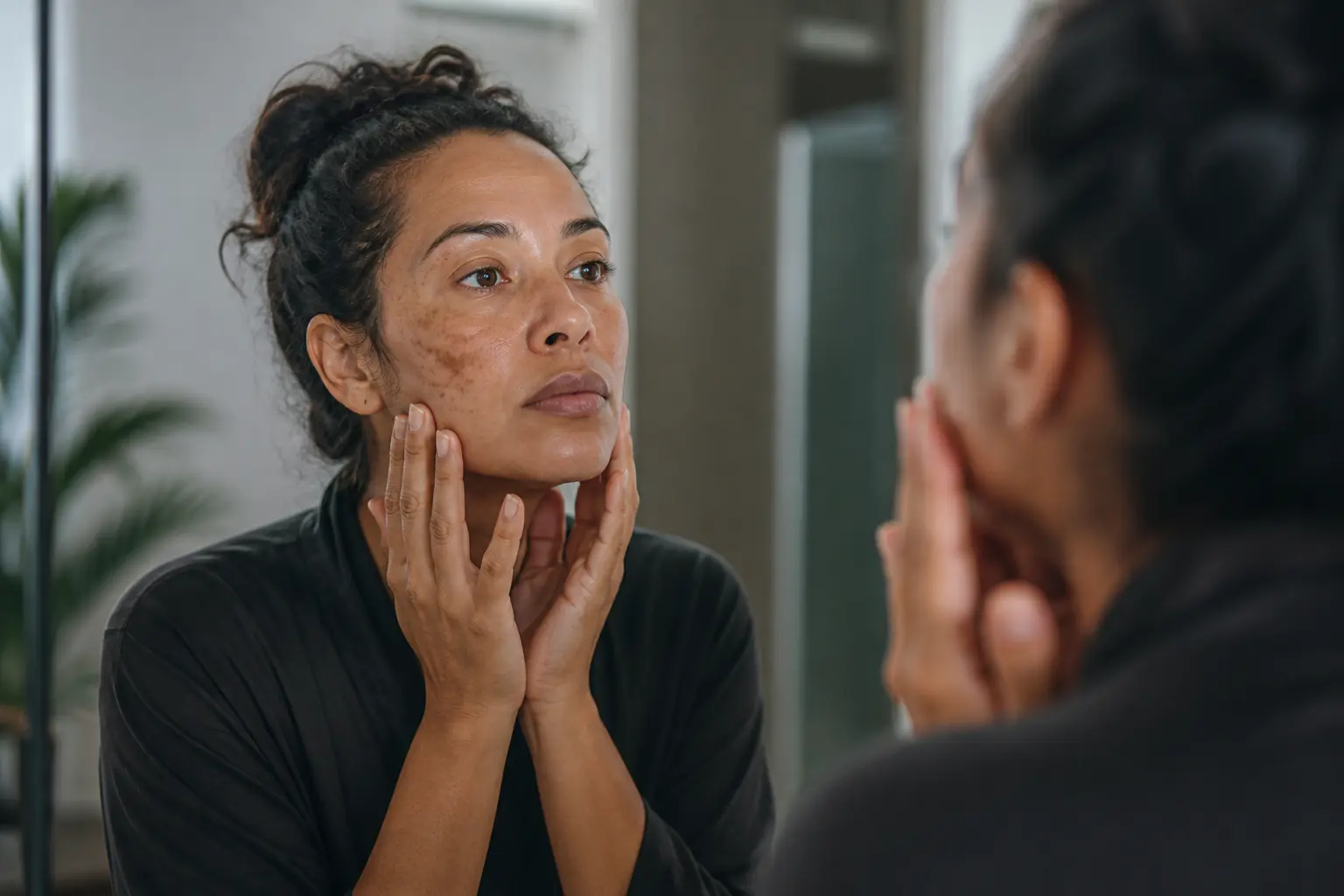
Dark spots creeping across your face, uneven patches that makeup can’t quite hide, that frustrating feeling like your skin is working against you – but here’s the thing: you can treat hyperpigmentation without peels and actually see real results without the downtime or irritation.
Understanding hyperpigmentation and its causes
Hyperpigmentation happens when your skin produces too much melanin, the pigment responsible for skin color. Picture it like this: your melanin-producing cells (melanocytes) get triggered into overdrive by various factors. Sun exposure is a major culprit, especially for women who spend time outdoors without consistent protection. Hormonal changes, particularly during pregnancy or from birth control use, can spark what’s known as melasma – those stubborn patches that seem to appear overnight. Even inflammation from acne, eczema, or injury can leave behind dark marks as your skin heals. The good news is that topical treatments work by targeting melanin production at its source, gradually fading discoloration and helping restore a more even skin tone without the trauma of chemical peels.
The mechanisms of topical treatments
Topical treatments for hyperpigmentation work like a multi-tool, each ingredient targeting different steps in the melanin-making process. Hydroquinone is a classic ingredient that inhibits tyrosinase, an enzyme essential for melanin production. Retinoids speed up cell turnover, helping shed pigmented cells faster and revealing fresher skin underneath. Vitamin C acts as an antioxidant while also suppressing melanin synthesis, plus it brightens skin naturally. Kojic acid and other botanical extracts like licorice root gently reduce melanin production without harsh side effects. When you apply these treatments consistently, you’re essentially telling your skin cells to pump the brakes on pigment production. The result isn’t instant, but over weeks and months, the dark spots gradually lighten as new, less-pigmented skin cells replace the darker ones. It’s a gentle, biological process rather than a forced removal.
Effective ways to apply topical treatments
Getting results from topical treatments depends heavily on how you use them. Start by cleansing your skin thoroughly with a gentle cleanser to remove dirt, oil, and any residue that might block absorption. Pat your skin dry completely, because applying products to damp skin dilutes them and reduces effectiveness. Take a pea-sized amount of your topical treatment and gently massage it onto the areas with hyperpigmentation using your fingertips, using light circular motions rather than aggressive rubbing. Let the product fully absorb for at least five to ten minutes before applying moisturizer or sunscreen, which is crucial because these products need direct contact with your skin to work. A common mistake women make is applying too much product thinking it will work faster, but this often leads to irritation without better results. Another frequent error is skipping sunscreen during the day, which actually makes hyperpigmentation worse by exposing treated skin to UV rays that trigger more melanin production.
- Cleanse skin thoroughly and pat completely dry
- Apply pea-sized amount to affected areas with gentle massage
- Wait five to ten minutes for full absorption before moisturizing
- Always use broad-spectrum sunscreen during the day
🔬 Science-backed benefits in 2 minuteschoose where to begin:
The benefits of choosing topical solutions over peels
Chemical peels work by essentially burning away the outer layers of skin to reveal fresher skin underneath, which sounds dramatic because it is. While peels can show faster results, they come with real downsides: redness, peeling, sensitivity, and downtime where you can’t go out in public comfortably. Many women find that peels trigger irritation or even worsen hyperpigmentation in darker skin tones due to post-inflammatory hyperpigmentation. Topical treatments take a gentler approach, working with your skin’s natural processes rather than against them. You can use them consistently without the risk of the intense irritation, flaking, or sensitivity that peels cause. They’re also more affordable and accessible, available without professional treatments or appointments. For women with sensitive skin, darker skin tones, or those who can’t afford downtime, topicals offer a realistic, sustainable path to improvement that fits into daily life without disruption.
Understanding the results of topical treatments
Results with topical treatments require patience, but they’re worth the wait. Most women don’t see dramatic changes in the first two to three weeks, which is when doubt creeps in. By six to eight weeks of consistent use, subtle lightening becomes visible. By three to six months, many women report significant improvement in the appearance of dark spots and more even skin tone overall. The timeline varies based on the severity of hyperpigmentation, your skin type, the specific ingredients you’re using, and how consistently you apply them. Some women see faster results with prescription-strength hydroquinone, while others respond better to gentler botanical options. The key is consistency and patience. You also need to protect your results by using broad-spectrum sunscreen daily, because sun exposure will undo your progress and trigger new spots. Think of it as building a habit rather than seeking a quick fix, and the cumulative effect becomes undeniable.
The future of hyperpigmentation treatment for women
The science of treating hyperpigmentation is evolving rapidly. Researchers are developing new ingredients that target melanin production more precisely while minimizing irritation. Combination approaches, where multiple ingredients work synergistically, are showing promise in clinical studies. Niacinamide, tranexamic acid, and advanced peptides are emerging as powerful options alongside traditional ingredients. Personalized skincare based on genetic and skin type analysis is becoming more accessible, allowing women to choose treatments tailored specifically to their needs. The beauty industry is also finally acknowledging that hyperpigmentation affects women of all skin tones differently, leading to more inclusive research and formulations. What this means for you is that the options available now are better than ever, and they continue to improve. You’re not limited to invasive procedures or harsh treatments. The combination of scientific advancement and growing awareness means women today have more effective, gentler, and more personalized choices for addressing hyperpigmentation than any previous generation.
Topical treatments offer a scientifically-backed, gentle approach to treating hyperpigmentation by targeting melanin production at the cellular level and promoting an even skin tone. Consistent use with proper application technique and daily sun protection can lead to visible improvement over time, making them a practical alternative to invasive procedures.
Are topical treatments safe for all skin types?
Topical treatments can be suitable for various skin types, though individual ingredients may work better for some than others. Sensitive skin types may experience irritation with certain ingredients like hydroquinone, while others tolerate them well. It’s advisable to perform a patch test on a small area of skin before full application, and consider starting with gentler options like vitamin C or kojic acid if you have reactive skin.
How long does it take to see results with topical treatments?
Results with topical treatments vary based on the severity of hyperpigmentation, skin type, and consistency of use. Subtle lightening may appear after four to six weeks of daily application, while more noticeable improvement typically takes three to six months. Some women see results within eight weeks, while others require longer. Patience and consistency are essential, as stopping treatment often allows hyperpigmentation to return.
Others also read:
Disclaimer: This article is for informational purposes only and is not a substitute for professional medical advice. Always consult a healthcare professional for personal guidance.
This article has been prepared and reviewed by the GlobalHealthBeacon editorial team and is based on current medical research and published scientific literature available in 2026. It provides structured, evidence-based information to support informed health decisions.
← Back to the Main page on: treat hyperpigmentation without peels
