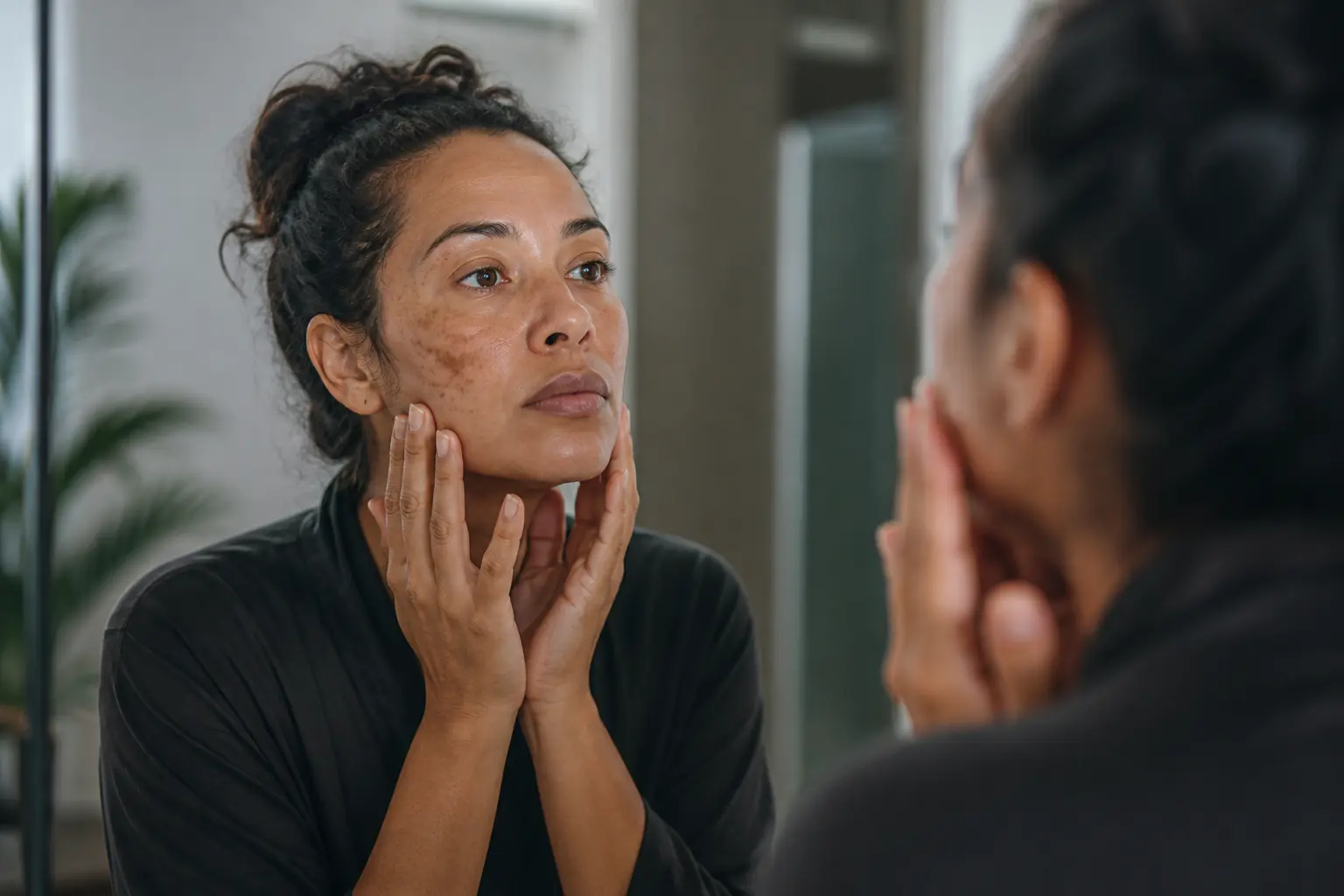
Dark patches creeping across your face, uneven skin tone that makeup can’t quite hide, and the frustration of watching your complexion become something you don’t recognize anymore – if you’re desperate to treat hyperpigmentation without peels, you’re not alone, and this review breaks down exactly what actually works.
Understanding hyperpigmentation causes
Hyperpigmentation develops when melanin, the pigment responsible for skin color, accumulates unevenly across the face and body. This happens because melanocytes, the cells that produce melanin, become overactive or damaged. UV exposure is a primary culprit, triggering melanin production as a protective response, which is why sun damage often appears as dark spots or patches. Hormonal shifts during pregnancy, menopause, or while taking certain medications can also spark this condition, sometimes called melasma when it appears symmetrically on the cheeks and forehead. Inflammation from acne, eczema, or injury can leave post-inflammatory hyperpigmentation as the skin heals. Understanding these root causes helps explain why some women develop these patches while others don’t, and why treating the underlying trigger matters as much as addressing the visible discoloration itself.
How topicals work to treat hyperpigmentation
Topical treatments function through several mechanisms to gradually fade dark patches. Hydroquinone, a gold-standard ingredient, works by inhibiting tyrosinase, an enzyme essential for melanin production, essentially slowing down the factory that creates pigment. Retinoids accelerate skin cell turnover, helping shed pigmented cells faster and revealing clearer skin beneath. Vitamin C acts as an antioxidant while also suppressing melanin synthesis, plus it brightens the overall complexion. Niacinamide strengthens the skin barrier and reduces inflammation that can trigger more pigmentation. These ingredients don’t work overnight; they require consistent daily application over weeks or months because skin cells naturally renew every 28 to 40 days. A woman using a vitamin C serum and retinoid cream might notice subtle fading after four to six weeks, with more dramatic improvement by three months. The gradual nature of topicals means you’re building results layer by layer, which also makes them gentler on sensitive skin compared to aggressive professional treatments.
Comparing topicals vs. professional peels
Professional chemical peels work through a fundamentally different mechanism than topicals. A dermatologist applies a controlled chemical solution that deliberately damages the outer skin layers, triggering the body’s healing response and forcing rapid cell turnover. This produces visible results in days or weeks rather than months. A woman with stubborn melasma might see significant fading after a series of professional peels. However, peels carry risks including redness, sensitivity, downtime, and potential for uneven results or post-inflammatory hyperpigmentation in darker skin tones. Topicals offer a gentler alternative suitable for long-term maintenance and home use, with minimal side effects and no recovery period. They’re also significantly less expensive than professional treatments. The trade-off is patience; topicals work slowly but steadily, making them ideal for women who prefer gradual improvement without disrupting their routine or risking complications. Neither approach is universally superior; the choice depends on skin sensitivity, budget, timeline, and individual response to treatment.
- Consult a dermatologist to determine the best treatment plan for your skin type and the specific cause of your hyperpigmentation.
- Follow a consistent skincare routine incorporating topicals recommended for hyperpigmentation, applying them exactly as directed without skipping days.
- Monitor progress and adjust treatment as needed based on skin response, taking photos monthly to track subtle changes.
- Use sunscreen daily with at least SPF 30 to protect the skin from further pigmentation and prevent undoing your treatment progress.
- Stay patient and realistic about the time needed to see significant improvement, typically expecting results between 8 to 16 weeks of consistent use.
🔬 Science-backed benefits in 2 minuteschoose where to begin:
Understanding skin cell turnover
Skin cell turnover is the natural process where old cells die and shed while new cells migrate upward from deeper layers to replace them. In younger skin, this cycle completes roughly every 28 days, but it slows with age, sometimes taking 40 to 60 days or longer. Hyperpigmented cells sit in the upper layers of skin, so speeding up turnover helps shed them faster. Retinoids are particularly effective at accelerating this process by signaling cells to divide and move upward more quickly. When a woman uses a retinoid cream consistently, she’s essentially fast-tracking the natural shedding cycle, which is why dermatologists often recommend them for discoloration. Exfoliating topicals like alpha hydroxy acids and beta hydroxy acids work similarly by chemically loosening the bonds between dead cells, helping them slough away. The fresher skin revealed underneath is typically less pigmented because the newer cells haven’t been exposed to years of sun damage or hormonal triggers. This is why patience is crucial; you’re waiting for your skin’s natural renewal system to cycle through and replace the damaged, darkened cells with clearer ones.
Benefits of topicals for long-term maintenance
Even after professional peels fade hyperpigmentation, the underlying tendency for melanin overproduction often remains. This is where topicals shine as a maintenance strategy. A woman who undergoes professional peels but doesn’t use preventive topicals may see her dark patches return within months or years, especially if she’s exposed to sun or hormonal triggers again. Incorporating brightening topicals into a daily routine acts as insurance, continuously suppressing melanin production and preventing new pigmentation from forming. This long-term approach is more cost-effective than repeated professional treatments, which can cost hundreds to thousands of dollars per session. Topicals also allow for customization; a woman can adjust her routine seasonally, using stronger actives in winter when sun exposure is lower and switching to gentler formulations in summer. The cumulative effect of consistent topical use means skin tone becomes progressively more even over months and years, not just immediately after a treatment. Many dermatologists recommend combining both approaches: professional peels for rapid initial improvement, then topicals for sustained maintenance and prevention of recurrence.
Scientific approach to treating hyperpigmentation
The scientific evidence supports both topicals and professional peels as effective treatments, but they work through different pathways and suit different situations. Research shows hydroquinone, retinoids, and vitamin C all reduce hyperpigmentation when used consistently, with studies documenting 25 to 50 percent improvement over three to six months. Chemical peels show faster results in clinical trials, with 50 to 75 percent improvement visible within weeks, but they carry higher risk profiles. Individual skin response varies significantly based on genetics, baseline skin tone, the specific cause of hyperpigmentation, and skin sensitivity. A woman with post-inflammatory hyperpigmentation from acne might respond better to topicals, while someone with melasma might benefit from professional peels followed by topical maintenance. The mechanism of action matters too; topicals work by slowing melanin production and accelerating cell turnover, while peels work by removing pigmented cells entirely. Understanding these differences helps explain why one approach might work beautifully for one person but disappoint another. The most evidence-based approach combines sun protection as the foundation, topicals as the primary treatment, and professional peels as an optional accelerator for women who want faster results and can tolerate the associated risks.
Hyperpigmentation stems from melanin overproduction triggered by UV exposure, hormonal changes, or inflammation, and understanding these causes shapes treatment decisions. Topicals containing hydroquinone, retinoids, and vitamin C work gradually by suppressing melanin and accelerating skin cell turnover, requiring consistent use over weeks to months. Professional peels offer faster results through controlled chemical damage and rapid cell shedding, but carry more risk and cost. Topicals excel at long-term maintenance and prevention, making them ideal for women seeking gentle, affordable, sustainable improvement. The scientific evidence supports both approaches, with the best choice depending on individual skin type, sensitivity, timeline, and the specific cause of discoloration. Many dermatologists recommend combining professional treatments for initial improvement with topical maintenance for lasting results.
Are topicals suitable for all skin types?
Topicals can be effective for a wide range of skin types, but formulation and concentration matter significantly. Darker skin tones may need gentler topicals to avoid irritation that could trigger post-inflammatory hyperpigmentation. Sensitive skin benefits from lower concentrations of active ingredients introduced gradually. Consulting with a dermatologist ensures the chosen topical matches your specific skin type, sensitivity level, and the underlying cause of your hyperpigmentation, maximizing effectiveness while minimizing adverse reactions.
How long does it take to see results with topicals?
Results with topicals vary depending on the individual’s skin, the specific product used, and the severity of hyperpigmentation. Consistent use over several weeks to months is typically needed to see significant improvement, with most women noticing subtle fading by 4 to 6 weeks and more dramatic results by 12 to 16 weeks. Patience is essential because topicals work by gradually replacing pigmented cells with fresh ones as your skin naturally renews, a process that cannot be rushed without risking irritation or damage.
Others also read:
Disclaimer: This article is for informational purposes only and is not a substitute for professional medical advice. Always consult a healthcare professional for personal guidance.
This article has been prepared and reviewed by the GlobalHealthBeacon editorial team and is based on current medical research and published scientific literature available in 2026. It provides structured, evidence-based information to support informed health decisions.
← Back to the Main page on: treat hyperpigmentation without peels
