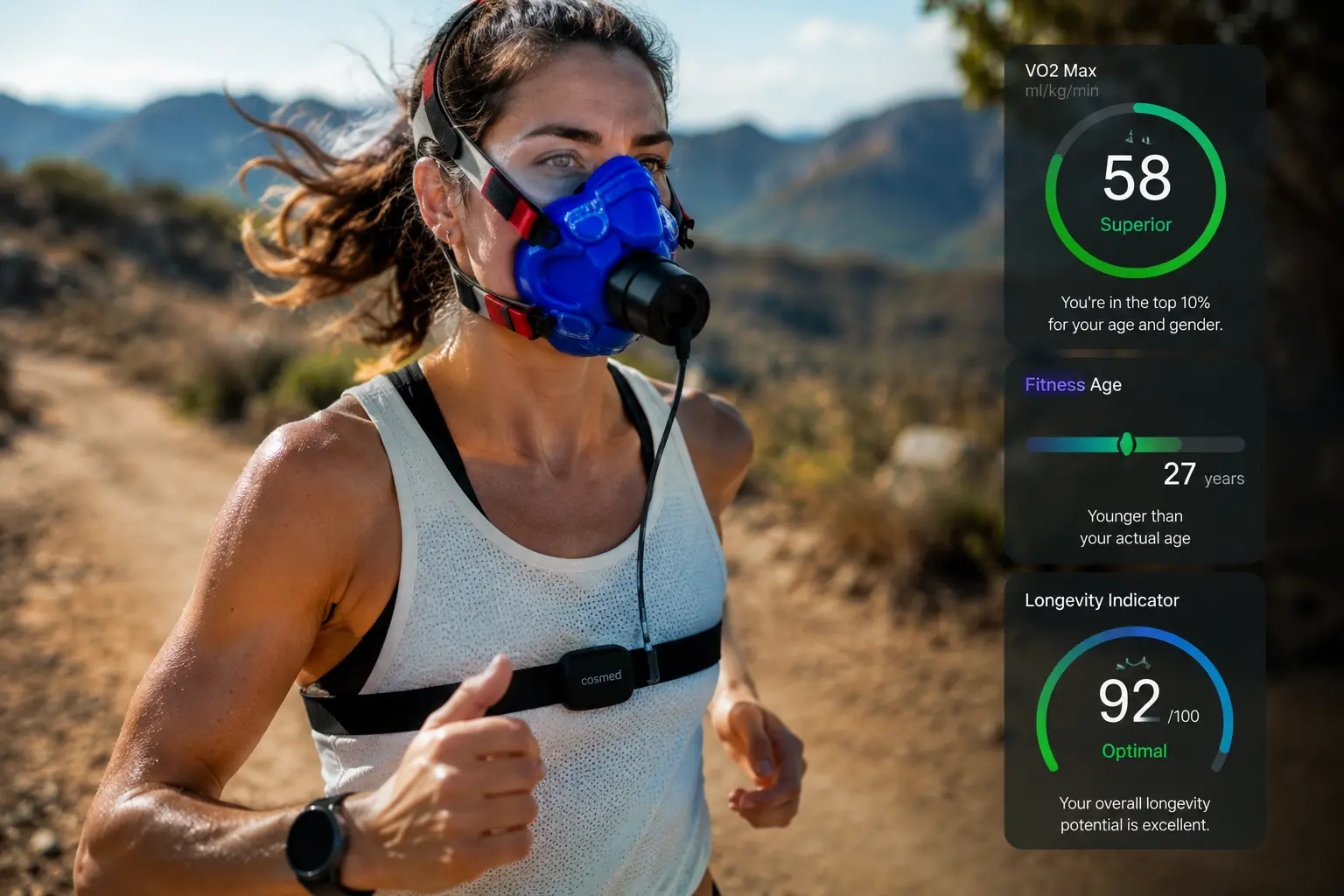
You feel tired climbing stairs, your workouts feel harder than they should, and you’re wondering if your body is actually getting stronger or just older, but here’s the truth: your vo2 max longevity marker is the one number that reveals exactly what’s happening inside your cardiovascular system and whether you’re truly building the fitness that adds years to your life.
What is VO2 max?
VO2 Max, also known as maximal oxygen uptake, measures the maximum amount of oxygen your body can utilize during intense exercise, typically expressed in milliliters of oxygen per kilogram of body weight per minute (ml/kg/min). Think of it as your body’s aerobic engine capacity. When you exercise hard, your lungs pull in oxygen, your heart pumps it through your bloodstream, and your muscles extract and use that oxygen for energy. VO2 Max captures the peak efficiency of this entire system working together. A woman with a VO2 Max of 35 ml/kg/min can process significantly more oxygen than someone with 25 ml/kg/min, which translates to better endurance, faster recovery, and a stronger cardiovascular system overall. This metric serves as a crucial indicator of cardiovascular fitness and is a strong predictor of overall health, longevity, and your body’s ability to handle physical demands throughout life.
- VO2 Max is a reflection of your cardiovascular endurance and efficiency.
- Higher VO2 Max levels indicate better aerobic fitness and overall health.
- Regular exercise can help improve your VO2 Max and enhance your longevity.
Why is VO2 max important for women?
For women, understanding VO2 Max is essential because cardiovascular health directly impacts quality of life, energy levels, and longevity. Women face unique cardiovascular challenges: hormonal fluctuations affect heart health, and women often have naturally lower VO2 Max values than men due to differences in hemoglobin levels and muscle mass. However, this doesn’t mean women can’t achieve excellent cardiovascular fitness. A woman in her 50s who maintains consistent aerobic training can have a VO2 Max comparable to an untrained 30-year-old man. Maintaining a healthy VO2 Max through regular physical activity provides insights into cardiovascular health, reduces risk of heart disease, improves mental clarity, boosts energy for daily tasks, and significantly extends both lifespan and healthspan. Women who prioritize VO2 Max improvements report feeling more capable, less winded during everyday activities, and more confident in their physical abilities.
📘 Fix your day in under 2 minuteschoose where to begin:
How to measure your VO2 max
Measuring VO2 Max accurately requires understanding your options and choosing what fits your situation. Lab-based testing remains the gold standard: you’ll exercise on a treadmill or stationary bike while wearing a mask that measures oxygen consumption directly. This takes 15-20 minutes and provides precise results but costs $100-300. Wearable fitness trackers like Garmin, Apple Watch, and Polar devices estimate VO2 Max using algorithms based on heart rate recovery and exercise data, offering convenience and affordability but less precision. Field tests like the Cooper 12-minute run or step tests provide rough estimates using simple math. Online calculators use age, resting heart rate, and activity level to predict your number. For most women, starting with a wearable device or field test gives you baseline data without expense, then pursuing lab testing if you want precision for training purposes. Consult with a healthcare professional or certified fitness professional to determine the most suitable method for your goals and fitness level.
Ways to improve your VO2 max
Improving VO2 Max requires strategic exercise choices that push your aerobic system. Start with aerobic base building: 150 minutes weekly of moderate-intensity activity like brisk walking, cycling, or swimming establishes cardiovascular foundation. Then add interval training, which is the most efficient VO2 Max booster. Try this practical approach: after a 5-minute warm-up, alternate 3 minutes at 85-90% effort with 2 minutes easy recovery, repeating 4-6 times. Do this once weekly. Add one longer steady-state session of 45-60 minutes at conversational pace. Include hill work or resistance training twice weekly to build muscular power. A woman following this structure typically sees 10-15% VO2 Max improvement within 8-12 weeks. Consistency matters more than intensity, so choose activities you actually enjoy. If running bothers your knees, cycling works equally well. If you hate the gym, outdoor hiking provides excellent training. The best workout is one you’ll actually do repeatedly.
Lifestyle factors affecting VO2 max
VO2 Max doesn’t exist in isolation; it’s shaped by interconnected lifestyle factors that either support or undermine your cardiovascular potential. Age naturally decreases VO2 Max by roughly 10% per decade after 25, but this decline slows dramatically with consistent training. Genetics set your ceiling, but most women operate well below their genetic potential due to inactivity. Smoking devastates VO2 Max by reducing oxygen-carrying capacity and damaging lung tissue; quitting reverses some damage within weeks. Sleep deprivation impairs recovery and reduces training adaptations, so prioritize 7-9 hours nightly. Nutrition matters: adequate iron supports oxygen transport, especially important for menstruating women; B vitamins fuel energy production; and hydration enables efficient oxygen delivery. Chronic stress elevates cortisol, which interferes with training adaptations. Underlying conditions like anemia, thyroid dysfunction, or heart issues directly limit VO2 Max. Managing these factors through balanced eating, consistent sleep, stress reduction practices, and addressing health concerns creates the environment where your training efforts actually translate into measurable improvements.
Understanding and monitoring your VO2 Max is crucial for assessing your cardiovascular health, fitness levels, and overall longevity. By incorporating regular exercise, healthy habits, and lifestyle changes, you can improve your VO2 Max and promote a healthier, longer life.
Can VO2 Max be improved with age?
While VO2 Max naturally declines with age, engaging in regular physical activity and exercise can help slow down this decline and improve cardiovascular health.
Is VO2 Max a reliable marker for overall health?
Yes, VO2 Max is a valuable indicator of cardiovascular fitness, endurance, and overall health. Maintaining a healthy VO2 Max through exercise and healthy lifestyle choices can positively impact longevity.
Others also read:
Disclaimer: This article is for informational purposes only and is not a substitute for professional medical advice. Always consult a healthcare professional for personal guidance.
This guide has been prepared and reviewed by the GlobalHealthBeacon editorial team and reflects current medical research as of 2026. It provides structured, evidence-based information to support informed health decisions.
