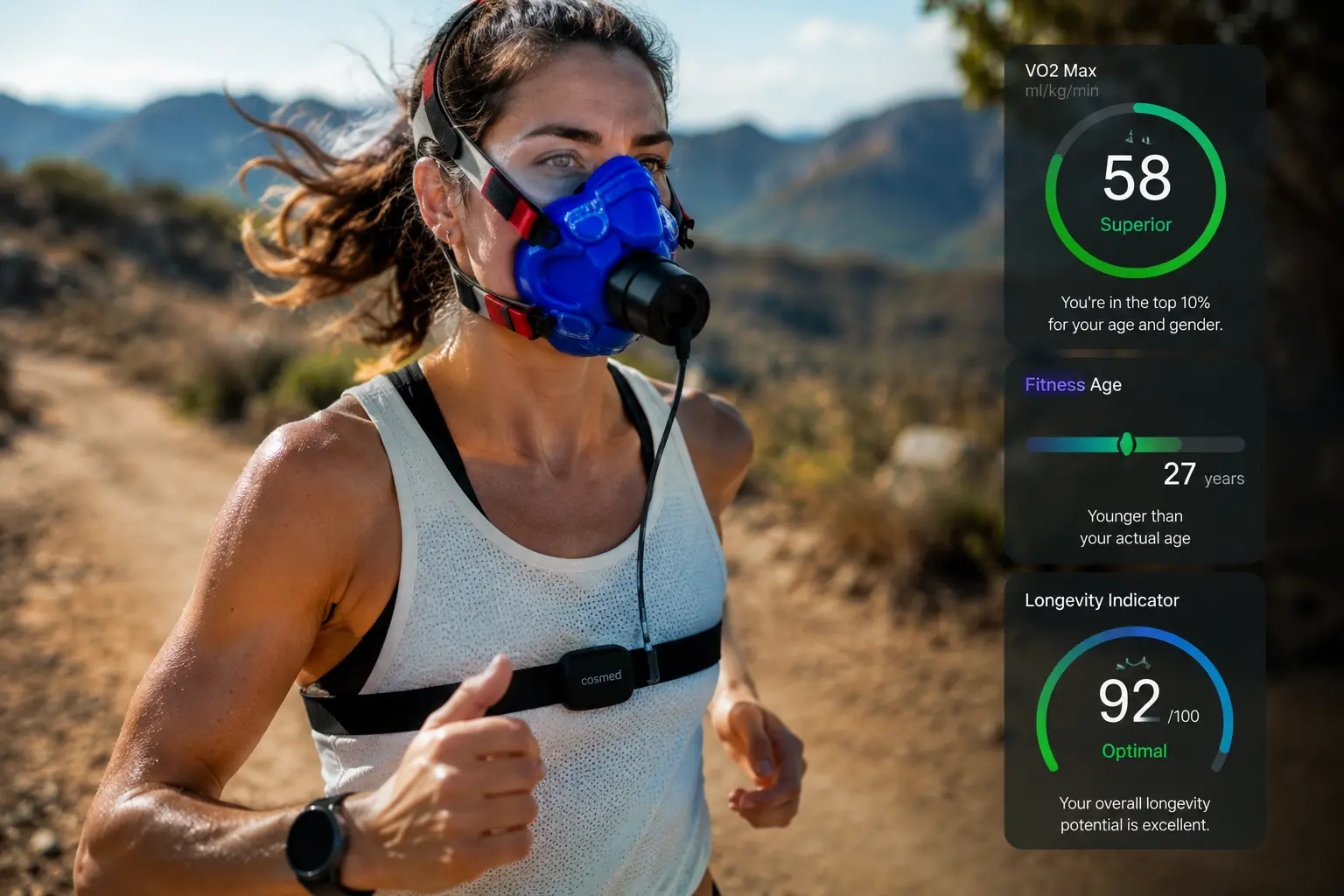
You feel winded climbing stairs, wonder if you’re actually fit, and suspect your body’s oxygen efficiency might be holding you back from the long, active life you want, which is exactly why understanding your vo2 max longevity marker could be the wake-up call that changes everything.
The science behind VO2 max
VO2 max, or maximal oxygen uptake, represents the maximum amount of oxygen your body can utilize during intense physical exertion, measured in milliliters of oxygen per kilogram of body weight per minute. Think of it as your aerobic engine’s horsepower. When you exercise hard, your lungs pull in oxygen, your heart pumps it through your bloodstream, and your muscles extract and burn it for energy. This entire system working in harmony is what VO2 max measures. A 25-year-old runner might achieve 55 ml/kg/min, while an untrained person of the same age might only reach 35 ml/kg/min. The difference isn’t just a number on a test result, it reflects how efficiently your cardiovascular system operates at its absolute peak. Your heart’s ability to pump blood, your lungs’ capacity to exchange gases, and your muscles’ mitochondrial density all contribute to this metric. Understanding this helps you see why some people seem naturally energetic while others fatigue quickly, even at the same age.
Role in predicting longevity
Research spanning decades has revealed a striking pattern: people with higher VO2 max levels consistently live longer and experience fewer chronic diseases. A landmark study following over 55,000 adults found that those in the highest fitness quartile had mortality rates 30 percent lower than those in the lowest quartile. The mechanism is straightforward but powerful. Better aerobic fitness means your cardiovascular system handles stress more efficiently, inflammation markers drop, blood pressure stabilizes, and your cells receive oxygen-rich blood more effectively. This translates to lower risk of heart disease, stroke, type 2 diabetes, and even certain cancers. A 40-year-old with a VO2 max of 45 ml/kg/min might have the cardiovascular age of a 25-year-old, while someone with 25 ml/kg/min might have the cardiovascular profile of a 60-year-old. It’s not magic, it’s biology. Your aerobic fitness essentially determines how well your body can maintain itself at the cellular level, which directly influences how many healthy years you accumulate.
Factors influencing VO2 max
Your VO2 max isn’t fixed at birth, though genetics do set a baseline ceiling. If your parents are naturally athletic, you likely inherited genes that favor higher aerobic capacity, but that’s only the starting point. Age plays a role too, with VO2 max typically peaking in your late 20s and declining about 10 percent per decade after 25 if you remain sedentary. However, active people in their 60s often outperform sedentary 30-year-olds. Gender matters because women typically have 15 to 30 percent lower VO2 max than men due to differences in hemoglobin levels and muscle mass, though this gap narrows significantly with intense training. Your current fitness level is the most changeable factor. Someone who starts running three times weekly can improve VO2 max by 15 to 25 percent within three months. Environmental factors like altitude, temperature, and humidity also influence testing results. Training at high altitude actually triggers adaptations that boost oxygen-carrying capacity. Even sleep quality and stress levels affect your aerobic performance on test day.
- Engage in regular aerobic exercise at least 150 minutes weekly through activities like running, cycling, swimming, or rowing to build cardiovascular capacity and progressively challenge your aerobic system.
- Incorporate high-intensity interval training once or twice weekly, alternating between 30-second maximum effort bursts and recovery periods to trigger rapid aerobic adaptations.
- Monitor your progress every 8 to 12 weeks through field tests like the 1.5-mile run test or the Cooper test, or schedule professional VO2 max testing at a sports medicine clinic for precise measurements.
🔬 Science-backed benefits in 2 minuteschoose where to begin:
Benefits of improving VO2 max
Boosting your VO2 max creates a cascade of health improvements that ripple through every system in your body. Immediately, you’ll notice you can climb stairs without gasping, run for a bus without your heart pounding for minutes afterward, and play with kids or grandkids without feeling exhausted. Your cardiovascular system becomes more efficient, meaning your resting heart rate drops, blood pressure normalizes, and your heart doesn’t have to work as hard for everyday activities. Over months, you’ll experience better sleep quality, improved mental clarity, and more stable energy throughout the day. Long-term benefits include reduced inflammation, better blood sugar control, stronger bones, and a lower risk of depression and cognitive decline. A 45-year-old who improves their VO2 max from 30 to 40 ml/kg/min essentially adds years of healthy life expectancy. The quality-of-life improvements matter too. You become the person who can hike without stopping, travel without fatigue, and maintain independence longer into older age. It’s not just about living longer, it’s about living better.
Measuring VO2 max
Professional VO2 max testing happens in a sports medicine lab or university exercise physiology department. You’ll wear a mask or mouthpiece connected to a metabolic cart that measures oxygen consumption and carbon dioxide production with each breath. The test typically starts with a warm-up, then gradually increases in intensity every minute or two until you reach exhaustion. For a treadmill test, the incline or speed increases progressively. For a stationary bike, resistance increases step by step. The whole process takes 10 to 15 minutes and feels genuinely challenging, but it’s safe and supervised by trained professionals. Your peak oxygen uptake during the final minute of maximum effort is your VO2 max. Field tests offer cheaper alternatives. The Cooper test involves running as far as possible in 12 minutes, and a formula estimates your VO2 max. The 1.5-mile run test works similarly. These aren’t as precise as lab testing but give you a reasonable baseline and track progress over time. Most people find the experience motivating because they see concrete numbers that prove their fitness improvements.
Nutrition and VO2 max
What you eat directly fuels your aerobic capacity because your muscles need specific nutrients to build mitochondria, the cellular powerhouses that extract and use oxygen. Iron is critical because it’s central to hemoglobin, the protein that carries oxygen in your blood. Red meat, spinach, and legumes provide iron that your body absorbs efficiently. Antioxidants like vitamins C and E protect your cells from oxidative stress created during intense training, allowing faster recovery and better adaptation. Berries, dark leafy greens, and nuts are excellent sources. Carbohydrates are your aerobic fuel, providing the glucose your muscles burn during endurance exercise. Whole grains, oats, and sweet potatoes deliver sustained energy. Adequate protein supports muscle repair and mitochondrial development. A balanced approach means eating colorful vegetables, lean proteins, whole grains, and healthy fats consistently. Hydration matters too because dehydration reduces blood volume and oxygen delivery. Someone training to improve VO2 max who eats poorly will plateau quickly, while someone with smart nutrition choices will see continuous gains. Think of nutrition as the foundation that allows your training to actually work.
VO2 max serves as a powerful window into your cardiovascular health and longevity potential. This metric reflects how efficiently your heart, lungs, and muscles work together to utilize oxygen during intense effort. While genetics provide a starting point, your current fitness level, training choices, and nutrition habits determine whether you’re operating at your potential. The science is clear: improving your VO2 max through consistent aerobic exercise and high-intensity training creates measurable health benefits that extend far beyond fitness, reducing disease risk and enhancing quality of life across decades. Understanding the vo2 max longevity marker empowers you to make informed decisions about your training and lifestyle that directly influence how long and how well you live.
Can genetics influence VO2 max?
Yes, genetics establish your aerobic ceiling, meaning some people naturally have higher potential VO2 max than others due to inherited traits affecting heart size, lung capacity, and muscle fiber composition. However, genetics account for only about 50 percent of your VO2 max. The other 50 percent depends entirely on your training, nutrition, and lifestyle choices. Someone with average genetic potential who trains consistently will almost certainly outperform a genetically gifted person who remains sedentary. This means your genetics aren’t destiny, they’re just your starting line.
How often should VO2 max be measured?
The frequency depends on your goals and training intensity. If you’re training seriously to improve aerobic fitness, testing every 8 to 12 weeks provides meaningful feedback on whether your training is working. If you’re exercising casually for general health, testing twice yearly is sufficient to track long-term trends. Professional athletes often test every 4 to 6 weeks to fine-tune training. Consulting with a fitness coach or sports medicine doctor helps determine the right schedule for your specific situation and prevents unnecessary testing costs.
Others also read:
Disclaimer: This article is for informational purposes only and is not a substitute for professional medical advice. Always consult a healthcare professional for personal guidance.
This article has been prepared and reviewed by the GlobalHealthBeacon editorial team and is based on current medical research and published scientific literature available in 2026. It provides structured, evidence-based information to support informed health decisions.
