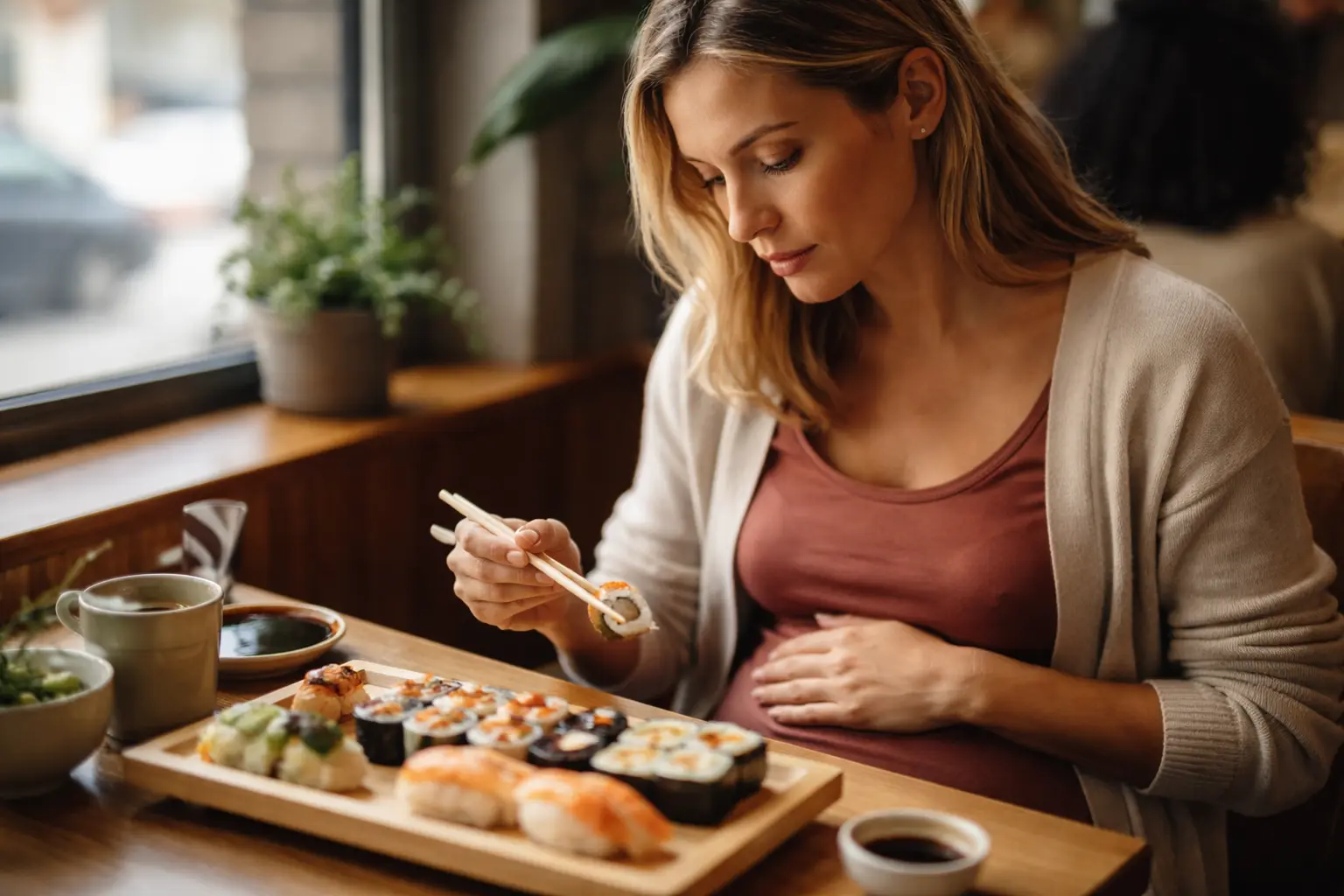
You’re pregnant, craving sushi, and suddenly every article online makes you feel like you’re poisoning your baby, so here’s the real story about which sushi to eat when pregnant without the fear-mongering.
Mercury content in raw fish
Mercury is a naturally occurring element that accumulates in aquatic ecosystems and bioaccumulates in fish tissue over time. When you consume raw fish, you’re ingesting whatever mercury that fish has absorbed throughout its lifetime. Larger predatory fish like tuna, swordfish, and king mackerel accumulate higher mercury concentrations because they eat smaller fish contaminated with mercury, concentrating it further in their bodies. This process, called bioaccumulation, means a 10-year-old tuna contains significantly more mercury than a 2-year-old salmon. The concern during pregnancy stems from mercury’s ability to cross the placental barrier and potentially affect fetal neurological development. However, not all fish pose equal risk. Understanding which species carry higher mercury loads helps you make informed choices. For instance, a single serving of high-mercury fish occasionally differs dramatically from regular consumption patterns. The scientific literature shows dose and frequency matter considerably when evaluating actual risk.
Safe sushi choices during pregnancy
Selecting lower-mercury fish options allows you to enjoy sushi while minimizing exposure. Salmon, a popular sushi ingredient, contains omega-3 fatty acids beneficial for fetal brain development alongside relatively low mercury levels. Shrimp and crab, common in sushi rolls, rank among the lowest-mercury seafood options available. Cooked fish eliminates bacterial contamination risks like Listeria, adding another safety layer beyond mercury considerations. Many sushi restaurants now offer cooked alternatives like tempura shrimp, cooked crab, and grilled fish options that provide the same satisfying experience. Vegetable-based rolls with avocado, cucumber, and pickled vegetables offer nutritious alternatives when you want to skip fish entirely. Understanding your local sushi restaurant’s sourcing practices can also help. Some establishments use sustainably farmed salmon, which typically has lower mercury than wild-caught varieties. Building a rotation of these safer options means you’re not relying on any single fish species repeatedly.
Guidelines for consuming sushi while pregnant
The FDA and EPA provide joint guidance recommending pregnant women limit high-mercury fish consumption to no more than once per week, while lower-mercury options can be consumed two to three times weekly. Avoid shark, swordfish, king mackerel, and tilefish entirely during pregnancy, as these species consistently show the highest mercury concentrations. When ordering sushi, ask your restaurant about fish origins and preparation methods. Cooked options eliminate both mercury concerns and foodborne illness risks simultaneously. If you love raw fish, consider limiting raw consumption to lower-mercury varieties like salmon and avoiding raw tuna, especially bigeye and ahi varieties. Keep a simple mental log of what you’ve eaten that week to avoid accidentally exceeding recommended limits. Many pregnant women find that knowing the science behind these guidelines reduces anxiety significantly. Rather than viewing sushi as forbidden, you’re simply making strategic choices that align with your baby’s developmental needs. This approach maintains both enjoyment and safety.
- Identify high-mercury fish like shark, swordfish, king mackerel, and tilefish and eliminate them from your sushi choices.
- Choose cooked fish options or lower-mercury varieties like salmon, shrimp, and crab for your sushi meals.
- Track your weekly sushi consumption to stay within recommended frequency guidelines of two to three servings for lower-mercury fish.
🔬 Science-backed benefits in 2 minuteschoose where to begin:
Cautions to consider
While sushi offers nutritional benefits including protein, omega-3 fatty acids, and essential minerals, pregnancy adds layers of consideration beyond mercury alone. Listeria contamination in raw fish poses risks to pregnant women, whose immune systems are naturally suppressed during pregnancy. This is why many healthcare providers recommend cooked fish as the safest option during this period. Additionally, some sushi preparations use high-sodium ingredients and excess salt, which can affect blood pressure during pregnancy. Raw fish sourcing matters tremendously; sushi-grade fish from reputable suppliers undergoes freezing protocols designed to eliminate parasites, but this doesn’t address mercury or bacterial concerns. If you experience any unusual symptoms after consuming sushi, such as persistent nausea beyond typical pregnancy nausea or gastrointestinal distress, contact your healthcare provider. Understanding these cautions doesn’t mean avoiding sushi entirely, but rather approaching it with informed awareness. Many pregnant women successfully enjoy sushi throughout their pregnancies by making thoughtful choices.
Consulting your healthcare provider
Your healthcare provider understands your individual health history, pregnancy specifics, and dietary patterns in ways general guidelines cannot address. Some women have higher nutritional needs or specific health conditions that might influence sushi recommendations. If you have gestational diabetes, for example, certain sushi preparations high in refined carbohydrates might warrant different guidance than for other pregnant women. Your provider can review your typical weekly diet and help you understand where sushi fits within your overall mercury and nutrient intake. They may also discuss your local water quality if you consume locally caught fish, as mercury levels vary geographically. Bringing a list of your favorite sushi options to your prenatal appointment allows for specific discussion rather than vague warnings. Many providers appreciate this proactive approach and can offer personalized reassurance. This conversation transforms abstract guidelines into practical, individualized advice that fits your life and preferences.
Further information
The FDA maintains detailed fish consumption advisories updated regularly based on mercury testing data. The EPA provides interactive tools showing mercury levels in various fish species, helping you make evidence-based choices beyond sushi. The American College of Obstetricians and Gynecologists offers pregnancy nutrition guidelines addressing seafood specifically. Scientific journals regularly publish research on mercury bioaccumulation and fetal exposure, though much of this research focuses on high-exposure populations rather than typical Western dietary patterns. Local health departments sometimes provide region-specific seafood advisories reflecting local water contamination patterns. Reputable pregnancy websites like the March of Dimes offer accessible summaries of current research without unnecessary alarmism. Building your knowledge from these authoritative sources empowers you to evaluate claims critically and make decisions aligned with actual scientific evidence rather than fear-based narratives.
Enjoying sushi during pregnancy is scientifically feasible when you understand mercury bioaccumulation in different fish species and make informed choices accordingly. By selecting lower-mercury options like salmon, shrimp, and crab, considering cooked alternatives, and consulting your healthcare provider about your individual situation, you can safely incorporate sushi into your pregnancy diet. The key lies not in complete avoidance but in strategic selection and frequency awareness.
Is it safe to eat sushi while pregnant?
Yes, sushi can be safely consumed during pregnancy when you choose lower-mercury fish options like salmon, shrimp, and crab, limit high-mercury varieties, and consider cooked preparations. The safety depends on fish species selection and consumption frequency rather than sushi itself.
Which types of fish should pregnant women avoid in sushi?
Pregnant women should avoid high-mercury fish species including shark, swordfish, king mackerel, and tilefish. Additionally, limit raw tuna, especially bigeye and ahi varieties, to occasional consumption only.
Others also read:
Disclaimer: This article is for informational purposes only and is not a substitute for professional medical advice. Always consult a healthcare professional for personal guidance.
This article has been prepared and reviewed by the GlobalHealthBeacon editorial team and is based on current medical research and published scientific literature available in 2026. It provides structured, evidence-based information to support informed health decisions.
← Back to the Main page on: which sushi to eat when pregnant
