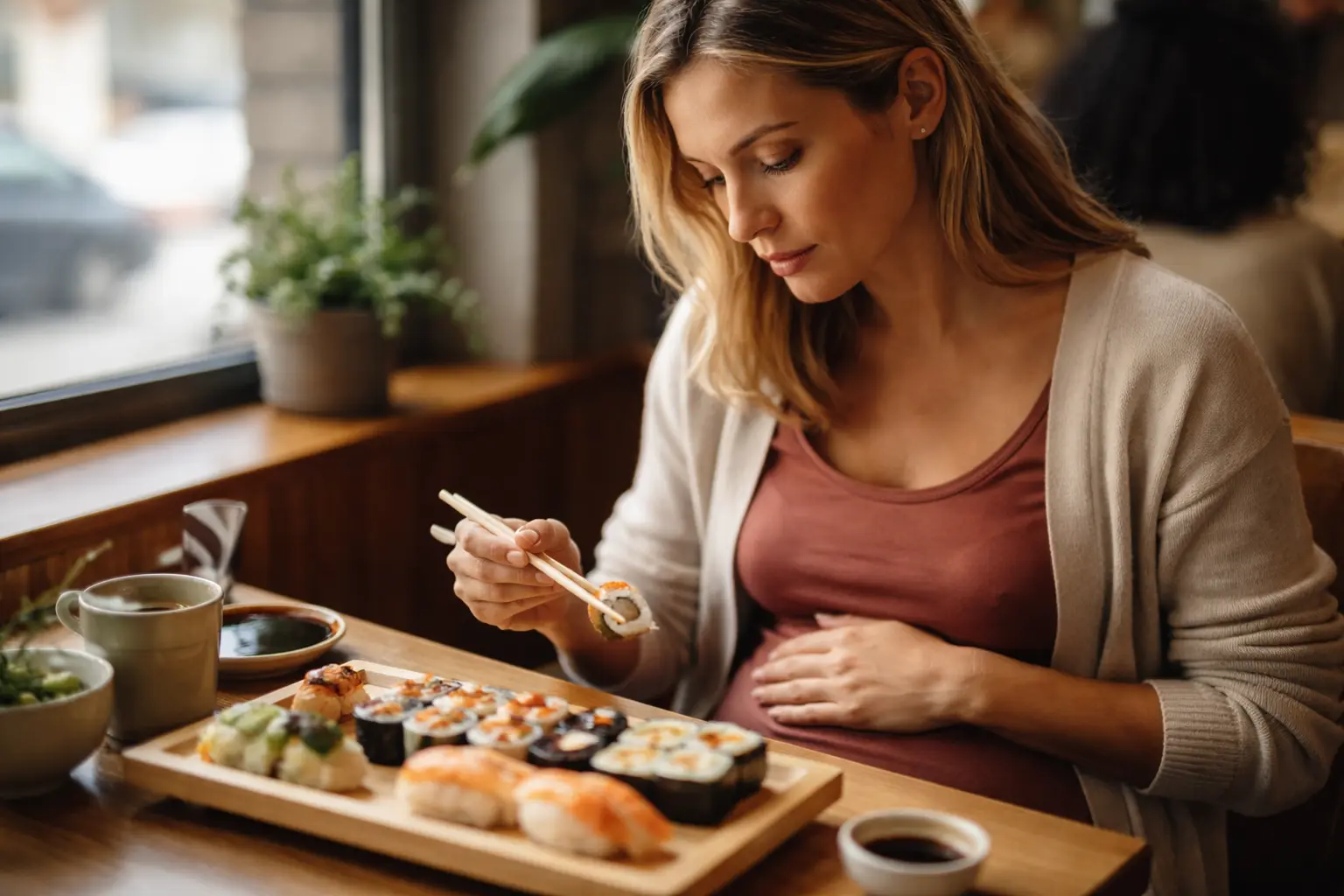
You’re craving sushi but terrified of making the wrong choice for your baby, scrolling through conflicting advice at 2 AM wondering which sushi to eat when pregnant without losing your mind.
Raw vs. cooked sushi: understanding the risks
The decision between raw and cooked sushi during pregnancy hinges on one critical biological reality: raw fish can harbor harmful bacteria and parasites that your developing baby’s immune system isn’t equipped to fight. Consider Sarah, a 28-week pregnant woman who loved sashimi before conception. When she learned about Listeria monocytogenes, a bacterium that thrives in cold, raw environments and can cross the placental barrier, she realized the stakes were personal. Cooking fish to an internal temperature of 145 degrees Fahrenheit eliminates these pathogens entirely. Cooked sushi options like tempura shrimp rolls, crab rolls made with pasteurized crab, and fully-cooked salmon provide the same satisfying umami flavors without the microbial risk. Many women don’t realize that even sushi-grade fish, despite its premium label, isn’t guaranteed pathogen-free. The grading refers to freshness and texture, not safety for vulnerable populations. Choosing cooked varieties transforms sushi from a potential worry into a genuinely safe indulgence.
Mercury content in sushi: choosing low-mercury fish
Mercury accumulates in fish tissue over time, and larger predatory fish contain significantly higher concentrations than smaller species. Tuna, particularly bigeye and yellowfin varieties commonly used in sushi, can contain mercury levels that exceed safe thresholds for fetal neurological development. The developing brain is exquisitely sensitive to mercury exposure during the second and third trimesters, when neural connections form at an accelerated pace. Imagine learning that your favorite spicy tuna roll could potentially affect your child’s learning capacity or motor development. This isn’t meant to alarm but to inform. Low-mercury alternatives like wild salmon, shrimp, scallops, and mackerel offer excellent protein and omega-3 fatty acids without the mercury burden. Salmon nigiri provides that buttery texture pregnant women often crave, while shrimp tempura rolls deliver satisfying crunch. The FDA recommends pregnant women limit high-mercury fish to no more than 6 ounces weekly. Understanding this distinction empowers you to enjoy sushi confidently while protecting your baby’s developing nervous system.
Making safe sushi choices
Safety in sushi consumption during pregnancy requires a three-pronged approach that addresses ingredient selection, fish type, and establishment standards. First, prioritize sushi rolls featuring fully-cooked components. Vegetable rolls, cooked shrimp tempura rolls, and crab rolls made with pasteurized ingredients eliminate raw-food risks entirely. Second, when you do choose fish, ask your server or chef specifically about mercury content and sourcing. Reputable establishments track their fish origins and can tell you whether their salmon comes from wild Alaskan sources, which typically contain lower mercury than farmed varieties. Third, assess the restaurant’s food safety culture. Look for clean preparation areas visible from the dining room, staff wearing gloves during food handling, and separate cutting boards for different ingredients. One common mistake women make is assuming all cooked sushi is equally safe. Cooked fish that’s been left at room temperature for hours poses its own bacterial risks. Ask when your roll was prepared and request it be made fresh. Another oversight involves overlooking vegetable and fruit-based rolls entirely. Cucumber rolls, avocado rolls, and vegetable tempura rolls are naturally safe, delicious, and often underrated options.
- Select sushi rolls with fully-cooked seafood, pasteurized crab, or vegetables as primary ingredients to eliminate raw-food pathogens.
- Ask your chef directly about fish sourcing and mercury levels, requesting low-mercury options like wild Alaskan salmon or shrimp.
- Verify the restaurant maintains strict food safety practices by observing preparation areas, staff hygiene, and ingredient handling procedures.
🔬 Science-backed benefits in 2 minuteschoose where to begin:
Sushi preparation: ensuring safe handling practices
The journey from fish market to your plate determines whether sushi remains safe or becomes a vector for foodborne illness. Proper sushi preparation involves precise temperature control, cross-contamination prevention, and ingredient freshness monitoring. High-quality sushi establishments maintain separate cutting boards for raw and cooked ingredients, preventing bacterial transfer. They store raw fish at temperatures below 41 degrees Fahrenheit and use it within 24 to 48 hours of delivery. Picture a busy Friday night at a sushi restaurant: if the chef doesn’t change gloves between handling raw fish and cooked ingredients, bacteria can migrate to your seemingly safe California roll. This is why observation matters. Pregnant women should feel empowered to ask questions about storage practices and ingredient sourcing without embarrassment. Some establishments use flash-frozen fish, which kills parasites through extreme cold exposure, then thaw it safely. Understanding this process removes the stigma from frozen fish, which is often safer than fresh. Additionally, proper hand hygiene among sushi chefs is non-negotiable. Establishments that visibly prioritize cleanliness, maintain organized workspaces, and follow food safety protocols significantly reduce your risk of foodborne illness.
Consulting your healthcare provider
Your obstetrician or midwife possesses crucial information about your individual health profile, pregnancy risk factors, and nutritional needs that generic dietary guidelines cannot address. Some pregnant women have compromised immune systems due to gestational diabetes or other conditions, making them even more vulnerable to foodborne pathogens. Others may have specific fish allergies or sensitivities that affect sushi safety. A healthcare provider conversation might sound like this: You mention your sushi cravings, and your doctor reviews your complete medical history, then provides personalized recommendations. Perhaps they suggest avoiding sushi entirely if you’re immunocompromised, or they give you the green light for cooked varieties if you’re low-risk. They can also discuss mercury exposure in context of your overall diet, since mercury accumulates from all sources, not just sushi. This consultation transforms abstract safety guidelines into actionable, personalized advice. Many women hesitate to ask their providers about food preferences, fearing judgment. Remember that your healthcare team wants you to enjoy pregnancy while protecting your baby. These conversations are exactly why they exist.
Conclusion: safe sushi choices for expecting mothers
Navigating sushi safety during pregnancy doesn’t require complete deprivation. Instead, it demands informed decision-making that balances cravings with biological realities. By choosing cooked sushi varieties, selecting low-mercury fish species, and patronizing establishments with visible food safety practices, you create a framework for safe enjoyment. The evidence is clear: pregnant women can absolutely eat sushi when they make intentional choices. Tempura shrimp rolls, cooked crab rolls, and vegetable-based options satisfy that sushi craving without compromise. When you do choose fish, low-mercury varieties like salmon and shrimp protect your baby’s developing nervous system. Your healthcare provider remains your most valuable resource, offering personalized guidance that accounts for your unique health circumstances. This isn’t about restriction; it’s about empowerment. You’re not depriving yourself of sushi during pregnancy. You’re making choices that allow you to enjoy it safely while protecting the person you’re growing. That’s the real victory.
Pregnant women can safely enjoy sushi by understanding the distinction between raw and cooked options, selecting low-mercury fish species, and choosing reputable establishments with strong food safety practices. Consultation with healthcare providers ensures personalized guidance based on individual health factors, while informed decision-making transforms sushi from a source of anxiety into a genuinely safe indulgence during pregnancy.
Can pregnant women eat sushi?
Yes, pregnant women can safely eat sushi made with cooked ingredients and low-mercury fish. Cooked sushi varieties eliminate the risk of bacterial contamination from raw fish, while choosing low-mercury options like salmon and shrimp protects fetal development. The key is selecting reputable establishments with strong food safety practices and consulting your healthcare provider for personalized guidance.
How can pregnant women ensure the safety of sushi?
Pregnant women can ensure sushi safety through several strategies: choose rolls with fully-cooked seafood or vegetables, ask your chef about fish sourcing and mercury levels, verify the restaurant maintains clean preparation areas and proper food handling practices, and request fresh preparation rather than pre-made rolls. Most importantly, consult your healthcare provider for personalized advice based on your individual health circumstances and dietary needs.
Others also read:
Disclaimer: This article is for informational purposes only and is not a substitute for professional medical advice. Always consult a healthcare professional for personal guidance.
This article has been prepared and reviewed by the GlobalHealthBeacon editorial team and is based on current medical research and published scientific literature available in 2026. It provides structured, evidence-based information to support informed health decisions.
← Back to the Main page on: which sushi to eat when pregnant
