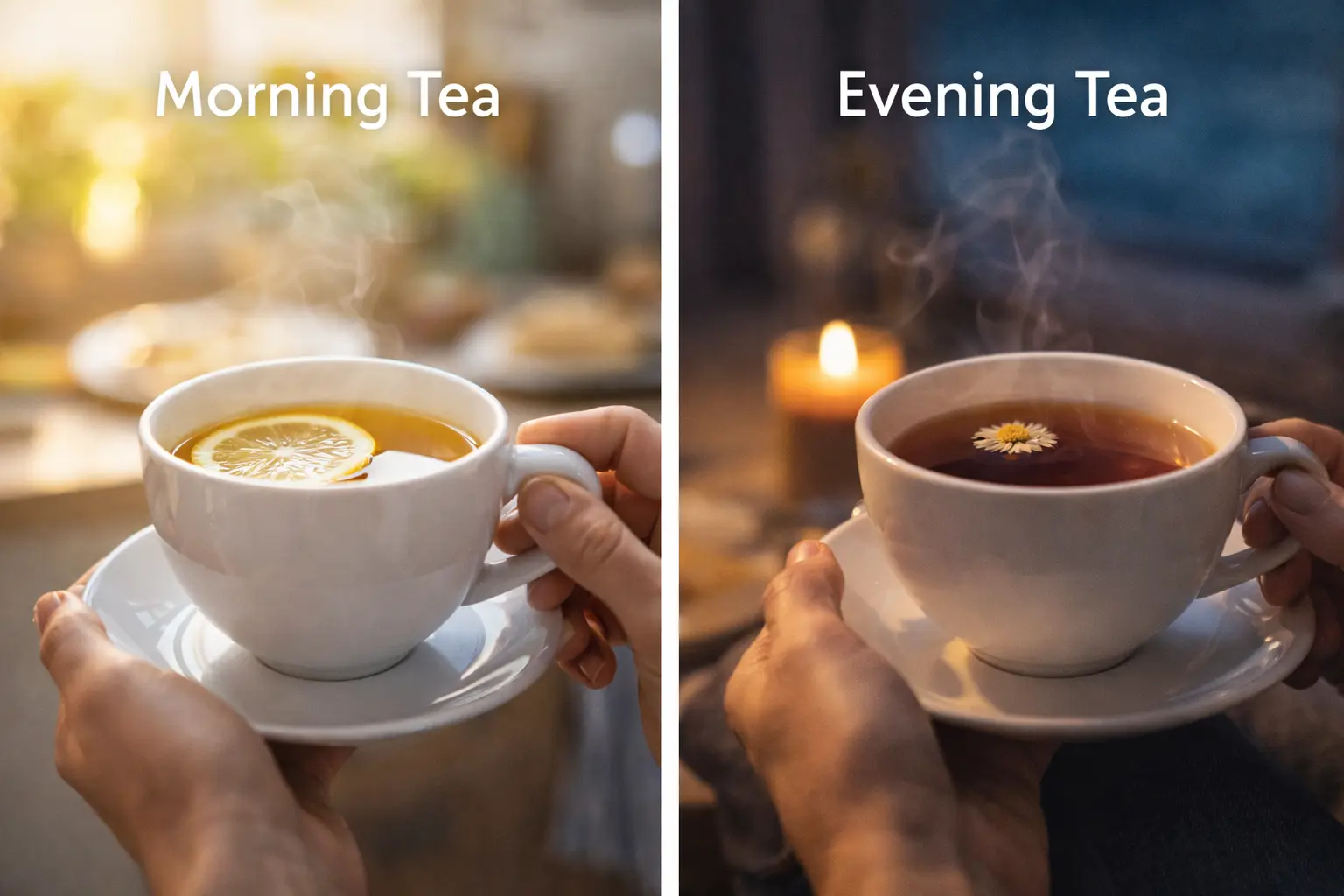
You wake up groggy, reach for coffee out of habit, then crash by noon, or you sip chamomile at 8 PM and still can’t fall asleep at midnight, which tea to drink in the morning vs evening makes all the difference, and this guide shows you exactly how to match the right tea to the right time of day so you actually feel better.
Morning tea
Starting your day with the right tea sets the tone for everything that follows. Many seniors find that green tea, black tea, or white tea provides exactly the gentle lift they need without the jitters that come from coffee. Think of it this way: you’re not trying to shock your system awake at 6 AM. You’re coaxing it gently into motion. Green tea contains about 25-50 mg of caffeine per cup, compared to 95-200 mg in a typical cup of coffee, making it ideal if you have a sensitive stomach or heart. Black tea sits in the middle at 40-70 mg, offering a bit more energy if you need it. The real magic, though, is the antioxidants these teas pack. They help kickstart your metabolism, support mental clarity, and give your immune system a morning boost. A practical approach: brew your tea between 160-180 degrees Fahrenheit for 3-5 minutes. Too hot, and you’ll damage the delicate compounds. Too long, and it becomes bitter. Pair your morning cup with a light breakfast like oatmeal or toast to stabilize blood sugar and prevent that mid-morning energy dip that leaves you reaching for snacks.
- Choose teas with lower caffeine levels to avoid any mid-morning crashes.
- Experiment with herbal teas like chamomile for a calming wake-up call.
- Pair your morning tea with a light breakfast for a balanced start to your day.
- Steep your tea at the correct temperature to preserve antioxidants and avoid bitterness.
- Drink your morning tea within one hour of waking to align with your natural cortisol rhythm.
Evening tea
As the sun sets, your body naturally begins preparing for sleep, and the tea you choose can either support this process or fight against it. Herbal blends like chamomile, lavender, passionflower, and valerian root are your allies here because they contain compounds that signal your nervous system to relax. Chamomile, for instance, has apigenin, a compound that binds to receptors in your brain associated with sleep and anxiety. Lavender works similarly, with its aromatic compounds promoting a sense of calm. The key mistake many people make is drinking any herbal tea and expecting sleep to follow immediately. It does not work that way. These teas work best when consumed 30-60 minutes before bed, giving your body time to absorb and respond to their calming properties. A practical scenario: you finish dinner at 6 PM, brew a cup of chamomile at 8 PM, sip it slowly while reading or doing gentle stretches, and by 9 PM your body feels genuinely ready for rest. Avoid all caffeinated teas after 2 PM, including green and black tea, because caffeine has a half-life of 5-6 hours in your system. That 3 PM cup of green tea is still 50% active in your body at 8 PM, sabotaging your sleep quality.
📘 Fix your day in under 2 minuteschoose where to begin:
Tea rituals
The act of drinking tea matters as much as the tea itself. Creating a deliberate ritual transforms a simple beverage into a stress-reducing practice that your mind and body come to anticipate. Here is how this works: when you perform the same calming action at the same time each day, your nervous system learns to associate that action with relaxation. Over weeks and months, simply reaching for your tea cup can trigger a cascade of calming responses. Start small. Each morning, spend five minutes with your tea before checking your phone or emails. Notice the steam rising, the aroma shifting as the tea cools, the warmth in your hands. This is mindfulness, and it does not require meditation experience. In the evening, create a wind-down sequence: dim the lights, brew your tea, settle into a comfortable chair, and spend 10-15 minutes with nothing else competing for your attention. Many seniors report that this simple ritual reduces their anxiety more effectively than any medication adjustment. The warmth of the cup itself activates your parasympathetic nervous system, the one responsible for rest and digestion. The sensory experience of tasting and smelling the tea keeps your mind anchored in the present moment, away from worries about tomorrow or regrets about today.
Health benefits
The health benefits of tea extend far beyond just caffeine or relaxation. Regular tea consumption has been linked to improved digestion, better cardiovascular health, enhanced mental clarity, and even reduced risk of certain chronic diseases. Green tea drinkers show better cognitive function in studies, while black tea consumers report improved heart health markers. But here is the practical reality: these benefits accumulate over time, not overnight. Drinking one cup of green tea will not suddenly sharpen your mind, but drinking it consistently for weeks and months will. Your digestive system also responds positively to tea. Many seniors experience improved regularity and reduced bloating when they switch from coffee to tea, partly because tea is gentler on the stomach lining. Herbal teas like ginger and peppermint specifically aid digestion by stimulating digestive enzymes. A common mistake is expecting tea to replace medical treatment. If you have a diagnosed condition, tea is a supportive tool, not a cure. Work with your doctor to understand how your tea choices fit into your overall health plan. The real benefit comes from consistency and choosing teas that match your body’s needs. Some people thrive on green tea, while others feel better with herbal blends. Pay attention to how you feel after different teas and adjust accordingly.
Variety is key
Drinking the same tea every single day works for some people, but most seniors benefit from rotating through different options based on season, mood, and how their body feels. In warmer months, lighter teas like white tea or herbal blends with mint feel refreshing. In colder months, richer black teas or warming spices like cinnamon and ginger feel more satisfying. Your mood matters too. On stressful days, reach for calming blends. On days when you feel sluggish, choose a tea with slightly more caffeine. This flexibility keeps tea enjoyable rather than turning it into another health obligation. A practical approach is to keep three to five different teas on hand at any given time. Maybe you have a morning green tea, an afternoon herbal blend for that post-lunch energy dip, and an evening chamomile for sleep. Some seniors enjoy experimenting with tea temperature as well. Iced tea in summer, hot tea in winter, or even room-temperature tea if that feels better for your digestion. The versatility of tea means you never have to get bored. You can explore single-origin teas from different regions, blended herbal combinations, or even make your own blends by mixing dried herbs and flowers. This exploration keeps your tea ritual engaging and gives you a sense of control over your wellness routine.
Discover the ideal teas for morning and evening rituals, including calming herbal blends and antioxidant-rich options. Create a mindful tea-drinking routine to promote relaxation and overall well-being. Stay open to experimenting with various teas to find your perfect match.
Can I drink coffee instead of tea in the morning?
While tea offers a milder caffeine boost compared to coffee, you can consume coffee in the morning if it aligns with your preferences. Just be mindful of your body’s reactions to caffeine and adjust accordingly.
Is it okay to switch up my tea choices depending on my mood?
Absolutely! Tea offers a wide range of flavors and benefits, making it a versatile beverage for different occasions. Experimenting with tea choices based on your mood can enhance your tea-drinking experience.
Others also read:
Disclaimer: This article is for informational purposes only and is not a substitute for professional medical advice. Always consult a healthcare professional for personal guidance.
This guide has been prepared and reviewed by the GlobalHealthBeacon editorial team and reflects current medical research as of 2026. It provides structured, evidence-based information to support informed health decisions.
← Go to the which tea to drink in the morning vs evening main guide
