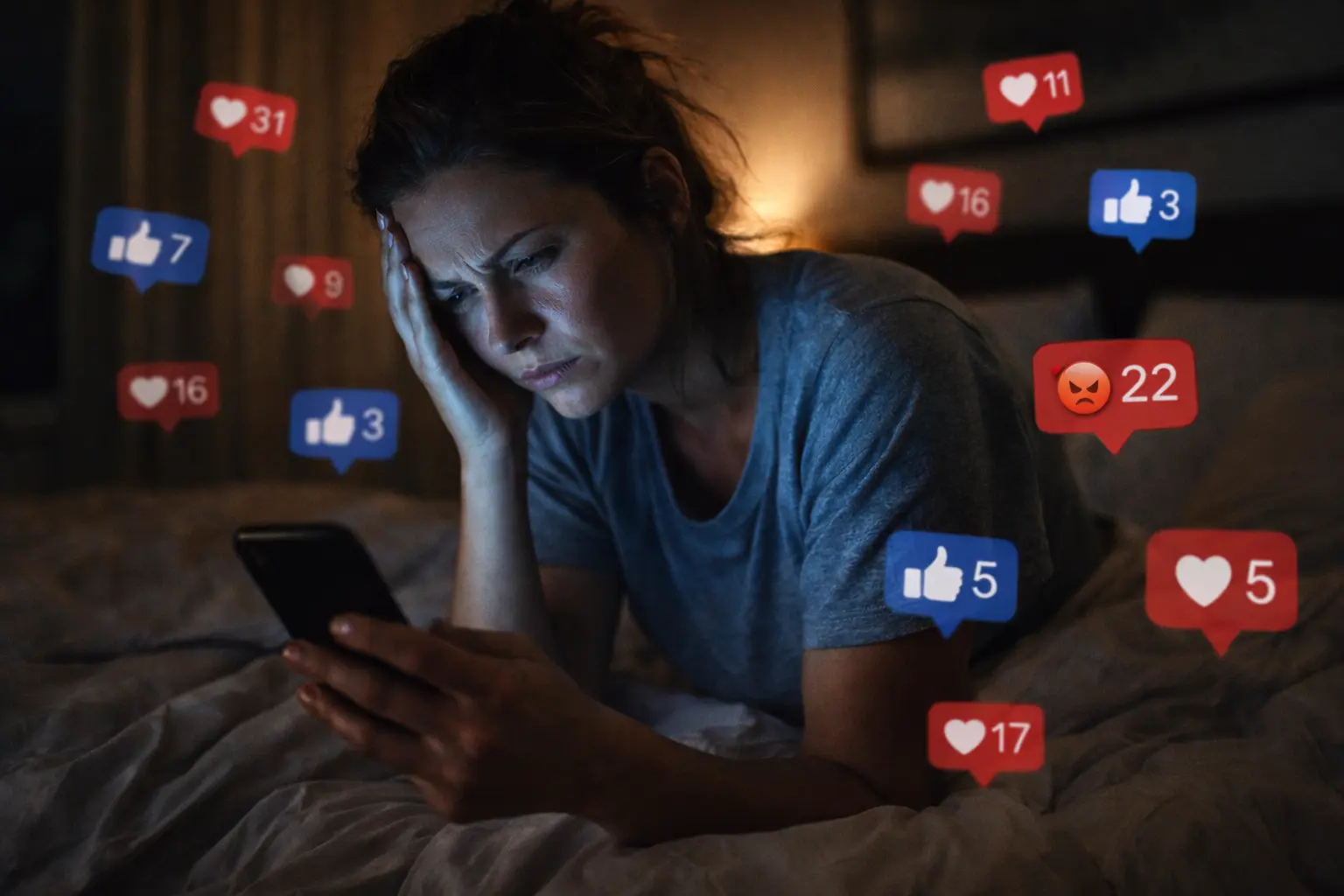
You’re scrolling at 2 AM again, heart racing as you compare your life to someone else’s highlight reel, and you still can’t figure out why social media harms health so effectively at making you feel empty despite being constantly connected.
Mental health risks of excessive social media use
Research consistently demonstrates a measurable correlation between heavy social media consumption and elevated rates of anxiety, depression, and diminished self-esteem among young adults. Consider Sarah, a 24-year-old who spent three hours daily on Instagram. Within months, she noticed persistent anxiety before posting photos, obsessive checking of likes, and a creeping sense of worthlessness when engagement fell short. The mechanism is straightforward: social platforms are engineered to highlight others’ achievements, vacations, and successes while your own life unfolds in real time without the same curated polish. This constant exposure to carefully filtered versions of others’ lives creates a psychological environment where your authentic experiences feel inadequate by comparison. The brain doesn’t distinguish between real and constructed realities when processing social information, so the emotional impact feels entirely genuine. Young adults report that this comparison cycle intensifies feelings of missing out, social rejection, and persistent self-doubt that can linger long after closing the app.
Biological mechanisms behind social media’s impact
When you receive a like, comment, or share, your brain releases dopamine, the same neurotransmitter involved in reward processing and motivation. This biological response is identical to what occurs with certain addictive substances, which explains why checking notifications feels so compelling. Your brain essentially learns that social media interaction equals reward, creating a feedback loop that strengthens with repetition. Imagine Marcus, a 22-year-old gamer who noticed he’d check his gaming community Discord server 50 times daily, each check triggering a small hit of dopamine whether or not new messages existed. Over weeks, his brain recalibrated its baseline dopamine levels, requiring more frequent engagement to achieve the same satisfaction. This neuroadaptation means that regular social media users often experience diminished pleasure from offline activities because their dopamine system has been recalibrated to expect frequent digital rewards. The brain’s prefrontal cortex, responsible for impulse control and decision-making, is still developing in young adults until approximately age 25, making this age group particularly vulnerable to dopamine-driven behavioral patterns and compulsive checking habits.
Understanding the impact on sleep patterns
Blue light emitted from smartphone and tablet screens suppresses melatonin production, the hormone that signals your body it’s time to sleep. When you scroll through social media before bed, you’re essentially telling your brain to stay alert and engaged at the exact moment it should be winding down. Beyond the light exposure, the psychological stimulation from social content keeps your mind active and processing information. Consider James, who’d spend 45 minutes in bed scrolling through TikTok before sleep. His sleep quality deteriorated noticeably: he’d lie awake for hours despite feeling exhausted, wake frequently during the night, and feel groggy throughout the following day. The cumulative sleep deprivation amplified his anxiety and depression symptoms significantly. Sleep disruption creates a vicious cycle because poor sleep impairs emotional regulation, making you more vulnerable to the negative effects of social comparison and FOMO. Young adults who maintain consistent sleep schedules and avoid screens one to two hours before bed report substantially better mood stability, improved focus, and reduced anxiety symptoms. The relationship between sleep quality and mental health is bidirectional: better sleep improves mental resilience, while mental health struggles further disrupt sleep.
- Set a specific time to stop using social media each night, ideally two hours before your intended sleep time.
- Create a calming bedtime routine without screens, such as reading, journaling, or gentle stretching.
- Avoid checking social media notifications in the middle of the night, and consider placing your phone in another room during sleep hours.
🔬 Science-backed benefits in 2 minuteschoose where to begin:
Social comparison and self-esteem
The human brain is wired for social comparison, but social media amplifies this natural tendency to an unprecedented degree. Every scroll presents a curated highlight reel of others’ lives, creating an illusion that everyone else is happier, more successful, and more attractive than they actually are. This phenomenon, called the highlight reel effect, distorts your perception of normalcy and success. Take Emma’s experience: she spent two hours daily on Instagram and gradually internalized the belief that she should look like the filtered influencers she followed, travel constantly, and maintain a perfect aesthetic in every aspect of life. When her reality didn’t match these standards, she experienced persistent feelings of inadequacy and shame. Research shows that young adults who actively compare themselves to others on social media report 40 percent higher rates of body dissatisfaction and disordered eating behaviors. The filtered images and edited photos create impossible standards because they’re not authentic representations of real human appearance or life. Your self-esteem becomes externally dependent on metrics like follower counts and engagement rates rather than grounded in genuine accomplishments and personal values. Breaking this pattern requires consciously recognizing that social media content is carefully curated and often misleading, then deliberately shifting your self-worth back to internal measures of success and personal growth.
Loneliness and isolation
This paradox confuses many young adults: you have hundreds of online friends and followers, yet you feel profoundly lonely. The reason lies in the fundamental difference between quantity and quality of social connection. Online interactions lack the nonverbal communication, physical presence, and genuine emotional reciprocity that characterize meaningful relationships. Consider David, who had 2,000 Instagram followers but felt isolated because his interactions were superficial likes and generic comments rather than deep conversations. When he shifted to spending more time with three close friends in person, his loneliness diminished dramatically despite having far fewer total connections. Research indicates that passive social media consumption (scrolling without engaging) correlates strongly with increased loneliness, while active, reciprocal communication shows the opposite effect. The brain evolved to process face-to-face interactions with subtle facial expressions, tone of voice, and physical proximity that create genuine bonding. Text-based communication and curated posts simply cannot replicate this neurobiological experience. Young adults who rely heavily on social media for social connection often report feeling unseen and misunderstood because online interactions don’t allow for the vulnerability and authentic self-disclosure that build real intimacy. The solution isn’t abandoning social media entirely but rather using it as a tool to facilitate in-person connection rather than as a substitute for it.
Seeking a healthier balance
Creating a sustainable relationship with social media requires intentional boundaries rather than willpower alone. Start by auditing your current usage: track how much time you spend daily and notice which apps trigger the strongest compulsive checking. Many young adults are shocked to discover they spend four to six hours daily on social platforms without conscious awareness. Next, implement specific strategies like removing apps from your home screen, using app timers that enforce limits, or designating phone-free zones in your home like bedrooms and dining areas. Consider also curating your feed deliberately by unfollowing accounts that trigger comparison or negative feelings, and following content that educates, inspires, or genuinely connects with your values. Rachel, a 23-year-old, replaced 30 minutes of daily scrolling with a hobby she’d abandoned: painting. Within weeks, she reported improved mood, better sleep, and stronger self-esteem because she was investing time in activities that produced genuine accomplishment and creative satisfaction. The key is replacing social media time with activities that engage your brain differently and provide intrinsic reward rather than external validation. This might include exercise, creative pursuits, learning new skills, or deepening existing relationships. A balanced approach acknowledges that social media can serve legitimate purposes for connection and information while recognizing its potential harms and maintaining protective boundaries.
Social media’s impact on young adult mental health operates through multiple interconnected mechanisms: dopamine-driven behavioral patterns, sleep disruption, social comparison effects, and the paradox of feeling lonely despite constant digital connection. Understanding these biological and psychological processes helps you recognize why social media harms health so effectively and why willpower alone rarely succeeds in changing usage patterns. The research is clear that excessive use correlates with increased anxiety, depression, low self-esteem, and sleep problems. However, the solution isn’t complete abstinence but rather intentional boundary-setting, mindful consumption, and prioritizing offline activities and relationships. By recognizing social media’s design to be addictive and its content to be curated rather than authentic, you can reclaim agency over your digital habits and protect your mental wellbeing.
Can social media addiction be harmful to mental health?
Yes, excessive social media use can develop into behavioral addiction with measurable impacts on mental health including anxiety, depression, and low self-esteem. The dopamine-driven reward cycle creates compulsive checking patterns that intensify over time, particularly in young adults whose prefrontal cortex is still developing.
How can one reduce the negative impact of social media on mental well-being?
Effective strategies include setting specific time limits and phone-free hours, removing apps from your home screen, curating your feed to remove triggering content, prioritizing face-to-face interactions, engaging in offline hobbies that provide intrinsic reward, and maintaining consistent sleep schedules by avoiding screens before bed. The goal is intentional use rather than passive consumption.
Others also read:
Disclaimer: This article is for informational purposes only and is not a substitute for professional medical advice. Always consult a healthcare professional for personal guidance.
This article has been prepared and reviewed by the GlobalHealthBeacon editorial team and is based on current medical research and published scientific literature available in 2026. It provides structured, evidence-based information to support informed health decisions.
