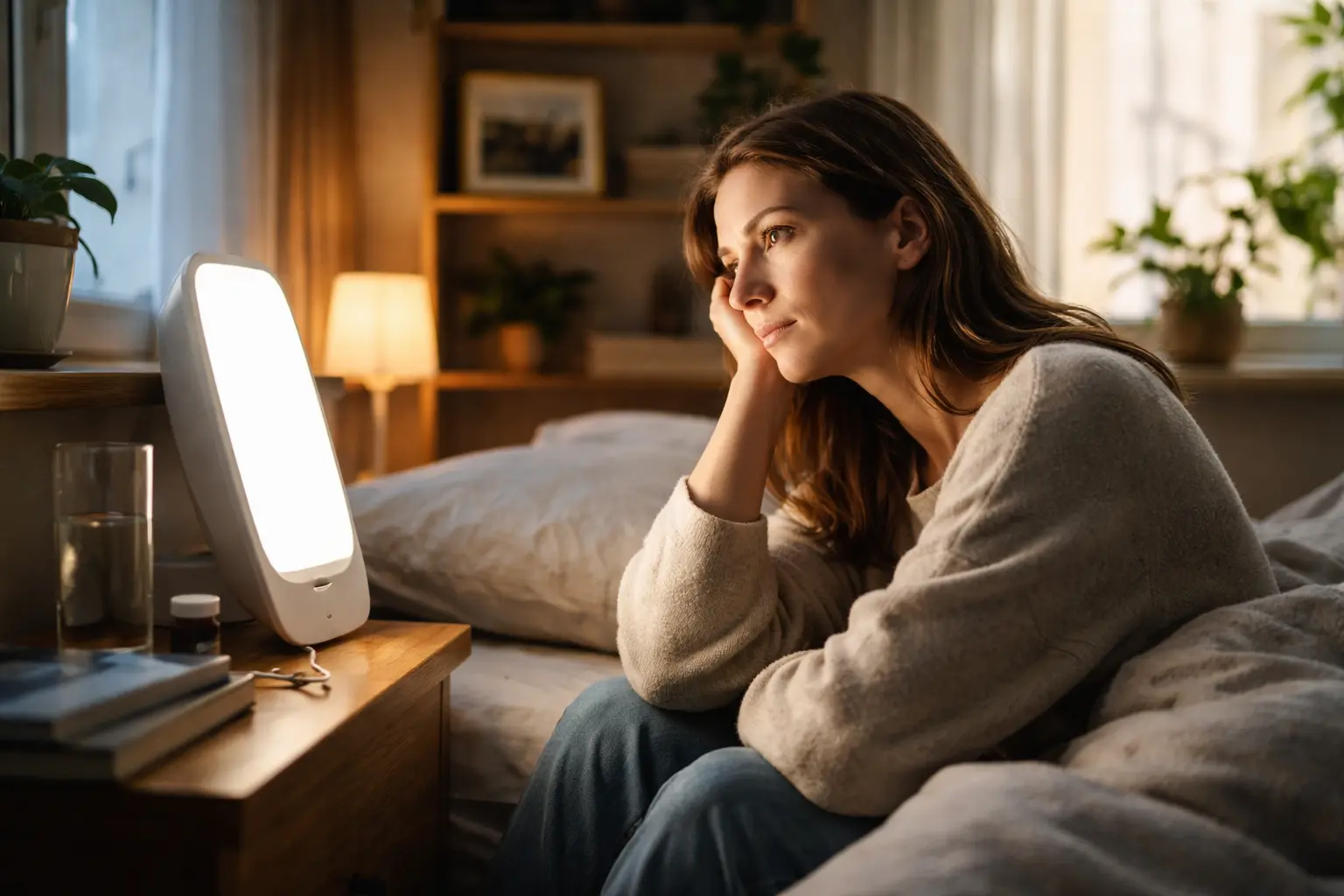
You wake up exhausted, the world feels gray, and even getting out of bed feels impossible, so does a daylight lamp work against depression, or is it just another wellness trend that won’t actually help you feel better?
Understanding light therapy for depression
Light therapy works by using a specially designed lamp that emits bright light, typically between 2,500 and 10,000 lux, which mimics natural sunlight far more effectively than regular indoor lighting. When this light enters your eyes, it signals your brain to regulate serotonin production and adjust your circadian rhythm, the internal clock that governs sleep, mood, and energy levels. For many women, especially those experiencing seasonal affective disorder or persistent low mood, this simple intervention can create noticeable shifts within days or weeks. Think of it this way: if depression dims your internal light, light therapy helps restore that brightness from the outside in. The science is solid. Studies show that consistent light exposure, particularly in the morning, can lift mood by up to 60 percent in some individuals. Unlike medication, light therapy has minimal side effects for most people and works alongside other treatments rather than replacing them.
- Light therapy is usually done in the mornings for about 20-30 minutes.
- Position the lamp at eye level, but avoid looking directly into the light.
- Consistency is key – use the lamp daily for best results.
- Consult with a healthcare provider before starting light therapy, especially if you have specific medical conditions.
Setting up your light therapy routine
Creating a dedicated light therapy space transforms this from a random task into a grounding ritual. Choose a spot where you naturally spend time in the morning, perhaps your kitchen table, desk, or a comfortable chair by a window. Position your lamp about 16 to 24 inches from your face at a slight angle, never directly in your line of sight. Start your session as soon as you wake up, ideally between 6 and 9 a.m., when your circadian rhythm is most responsive. During this time, you can eat breakfast, check emails, journal, or simply sit quietly. The key is consistency, not perfection. If you miss a day, resume the next morning without guilt. Many women report that within the first week, they notice subtle shifts: slightly better sleep, a touch more energy, or a small lift in their overall mood. By week two or three, these changes often become more pronounced. Give yourself at least 30 days before evaluating whether light therapy is working for you.
📘 Fix your day in under 2 minuteschoose where to begin:
Enhancing your well-being with light therapy
Light therapy works best when paired with other supportive practices that address your whole self. While the lamp tackles your circadian rhythm and serotonin, movement, sleep, and mindfulness address the other dimensions of your mental health. Consider taking a 15-minute walk after your light therapy session to combine natural outdoor light with physical activity. Practice a simple five-minute breathing exercise or guided meditation during your lamp time to anchor yourself in the present moment. Ensure you are sleeping seven to nine hours nightly, as poor sleep undermines light therapy’s benefits. Limit screen time in the evening, especially blue light from phones and computers, which can interfere with the melatonin your body needs for restorative sleep. Some women find that pairing light therapy with journaling, creative hobbies, or time with supportive friends amplifies the emotional benefits. Think of these practices as layers of support, each one reinforcing the others.
Monitoring your progress and adjusting as needed
Tracking your experience over 30 days gives you concrete data about what is actually working for you, not just what you hope is working. Start a simple journal, either digital or paper, where you note your mood on a scale of one to ten each morning and evening, your energy level, sleep quality, and any notable shifts in how you feel. Record whether you used your light therapy lamp that day and for how long. After two weeks, review your entries to spot patterns. Did your mood improve on days you used the lamp consistently? Did your sleep shift? Did you notice changes in motivation or anxiety? Share these observations with your healthcare provider, as they can help you interpret the data and adjust your approach. Some women need a higher lux lamp or longer sessions. Others find that afternoon use works better than morning use. If after 30 days you see minimal change, do not assume light therapy has failed you. Instead, explore whether other factors like stress, medication side effects, or underlying health conditions need attention. Light therapy is one tool in a larger toolkit.
Maintaining your mental wellness beyond 30 days
As you complete your 30-day light therapy plan, take time to reflect honestly on what has shifted for you. Did your mood lift? Did you sleep better? Did you feel more present or engaged? If the answer is yes, light therapy has earned a permanent place in your self-care routine. Many women find that continuing daily light therapy, especially during fall and winter months, prevents the return of depressive symptoms. If you found light therapy helpful but not transformative, consider combining it with therapy, medication, or other treatments recommended by your healthcare provider. If you found it less helpful than expected, that is valuable information too. Not every tool works for every person, and knowing this helps you focus your energy on approaches that truly serve you. The goal is not to find one perfect solution but to build a sustainable practice that supports your mental health long-term. This might include light therapy, movement, meaningful relationships, creative expression, and professional support. Your mental wellness is a journey, not a destination, and you deserve to invest in it.
Light therapy offers a practical, evidence-based approach for managing depression by harnessing artificial light to regulate your mood and circadian rhythm. By incorporating daily light therapy sessions into a morning routine and complementing them with self-care practices like movement, sleep, and mindfulness, you can embark on a meaningful 30-day plan to uplift your spirits and enhance your mental wellness. Track your progress, adjust as needed, and integrate light therapy into your long-term self-care practice if it serves you.
Is light therapy safe for everyone?
Light therapy is generally safe for most individuals. However, certain conditions such as bipolar disorder or eye conditions may require precautions or avoidance of light therapy. Consult with a healthcare provider to determine if light therapy is suitable for you.
Can light therapy completely cure depression?
Light therapy can be a valuable tool in managing depression, but it may not be a standalone cure for all individuals. It is often used in conjunction with other treatment modalities such as therapy, medication, and lifestyle adjustments for optimal results.
Others also read:
Disclaimer: This article is for informational purposes only and is not a substitute for professional medical advice. Always consult a healthcare professional for personal guidance.
This guide has been prepared and reviewed by the GlobalHealthBeacon editorial team and reflects current medical research as of 2026. It provides structured, evidence-based information to support informed health decisions.
← Go to the does a daylight lamp work against depression main guide
