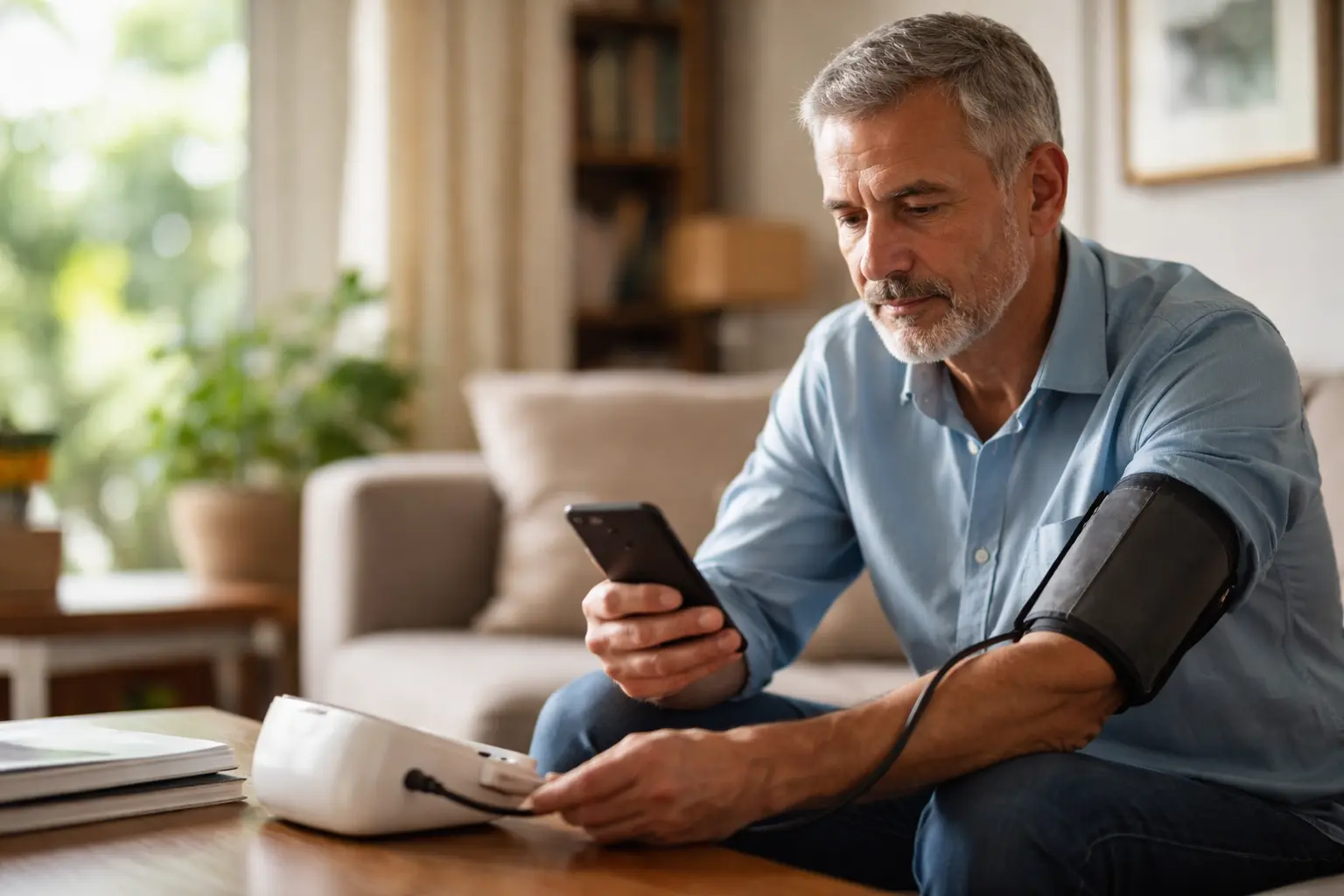
Your doctor mentions your blood pressure is creeping up, but you only see them twice a year, so you’re left wondering what’s really happening in between appointments and whether telemonitoring blood pressure effectiveness could actually give you the real picture of your cardiovascular health instead of just those stressful clinic readings.
Understanding telemonitoring blood pressure
Telemonitoring blood pressure means taking regular readings at home using a quality monitor, and it fundamentally changes how you understand your own health. Instead of relying on a single snapshot during a doctor’s visit, you build a comprehensive picture of your blood pressure patterns across days and weeks. Consider Sarah, a 52-year-old woman who discovered through home monitoring that her readings spiked every morning before work but remained stable on weekends, revealing stress as her primary trigger rather than a chronic condition. This kind of insight is impossible to gain from occasional clinic visits. Home monitoring also eliminates white coat syndrome, where anxiety about being at the doctor’s office artificially raises your readings. You get to see your true baseline, track how lifestyle changes affect your numbers, and catch concerning patterns early. The data you collect becomes a conversation starter with your healthcare provider, giving them concrete information to make better treatment decisions tailored specifically to you.
- Choose a high-quality blood pressure monitor recommended by healthcare professionals.
- Establish a consistent monitoring routine at the same time daily for accurate results.
- Record your blood pressure readings along with the date and time to track changes over time.
- Consult your healthcare provider for guidance on interpreting the readings and adjusting your management plan.
- Stay consistent with your monitoring schedule to ensure accurate and reliable results.
Setting up your monitoring area
Your monitoring space matters more than you might think. Find a quiet corner of your home, ideally your bedroom or a peaceful spot away from household activity, where you can sit undisturbed for five minutes. Good lighting helps you read the monitor clearly and see any numbers you need to record. Keep your blood pressure monitor, a notebook or tracking app, and a comfortable chair with back support all within arm’s reach so you’re not fumbling around when it’s time to measure. Temperature matters too, so avoid measuring right after coming in from the cold or after a hot shower, as extreme temperatures can temporarily affect your readings. Many women find that setting up a small dedicated station with their monitor, a log book, and perhaps a glass of water creates a ritual that makes monitoring feel less like a chore and more like a normal part of their routine. Some prefer placing their setup near a window for natural light, while others choose a bedroom corner for privacy. The key is consistency, so your brain recognizes this as your health checkpoint and you’re more likely to stick with it long term.
📘 Fix your day in under 2 minuteschoose where to begin:
Proper blood pressure measurement technique
Technique directly impacts accuracy, so getting this right transforms your data from guesswork into reliable information. Sit with your back fully supported against a chair, feet flat on the floor, and your arm at heart level, which typically means resting your arm on a table or armrest. Wait at least five minutes after sitting down before measuring, as your body needs time to settle. Remove tight sleeves and place the cuff directly on your bare skin of your upper arm, not over clothing, since fabric creates a barrier that distorts readings. Stay silent and still during the measurement, as talking or moving triggers false spikes. Take your reading at the same time each day, ideally in the morning before eating or exercising, since activity and caffeine can raise your numbers temporarily. Many women find it helpful to take two readings, one minute apart, and average them for a more accurate picture. Avoid measuring right after stressful situations, as your body’s stress response will artificially elevate your numbers. If you get an unexpectedly high reading, wait a few minutes and retake it to confirm.
Interpreting your blood pressure readings
Your blood pressure reading has two numbers, and both tell you something important. The top number, called systolic pressure, measures the force of blood pushing against your artery walls when your heart beats. The bottom number, diastolic pressure, measures the pressure between heartbeats when your heart is resting. A reading of 120/80 mm Hg is considered normal, but your individual target may differ based on your age, health history, and any existing conditions. Readings below 120/80 are ideal, between 120 and 139 systolic or 80 to 89 diastolic falls into elevated range, and anything above 140/90 is considered high blood pressure. However, these categories are guidelines, not absolute rules. A woman managing diabetes or kidney disease might have a different target than someone without these conditions. Track your readings over weeks and months to spot trends rather than fixating on single numbers, since one high reading doesn’t mean crisis but a pattern of high readings warrants a conversation with your doctor. Some women notice their readings fluctuate with their menstrual cycle or seasonal changes, which is normal and worth noting in your log.
Healthy lifestyle habits for blood pressure management
Medication helps, but lifestyle changes often make the biggest difference in managing blood pressure long term. Regular movement, even 30 minutes of brisk walking five days a week, strengthens your cardiovascular system and naturally lowers your numbers. A diet rich in fruits, vegetables, whole grains, and lean proteins provides nutrients that support heart health, while limiting salt intake reduces fluid retention that can spike your pressure. Stress management is equally critical, since chronic stress keeps your body in fight-or-flight mode, constantly elevating your readings. Try yoga, meditation, deep breathing exercises, or simply spending time in nature, whatever genuinely calms your nervous system. Quality sleep matters too, as poor sleep disrupts hormones that regulate blood pressure. Aim for seven to nine hours nightly and maintain a consistent sleep schedule. Avoid smoking and limit alcohol to no more than one drink daily, as both directly affect your cardiovascular system. Many women find that combining these habits creates a positive feedback loop, where feeling better from exercise and better sleep motivates them to make healthier food choices, which further improves their readings and overall sense of control over their health.
Telemonitoring blood pressure at home offers a convenient and effective way for women to track their cardiovascular health. By following a simple step-by-step monitoring strategy, you can stay proactive in managing your blood pressure levels and overall well-being.
How often should I monitor my blood pressure at home?
It is recommended to monitor your blood pressure at least once a day at the same time each day for accurate results. However, your healthcare provider may suggest a different monitoring schedule based on your individual health needs.
What should I do if I notice consistently high blood pressure readings?
If you observe consistently high blood pressure readings at home, it is important to contact your healthcare provider for further evaluation and guidance. They can assess your readings, recommend lifestyle changes, or adjust your treatment plan accordingly.
Others also read:
Disclaimer: This article is for informational purposes only and is not a substitute for professional medical advice. Always consult a healthcare professional for personal guidance.
This guide has been prepared and reviewed by the GlobalHealthBeacon editorial team and reflects current medical research as of 2026. It provides structured, evidence-based information to support informed health decisions.
← Go to the telemonitoring blood pressure effectiveness main guide
