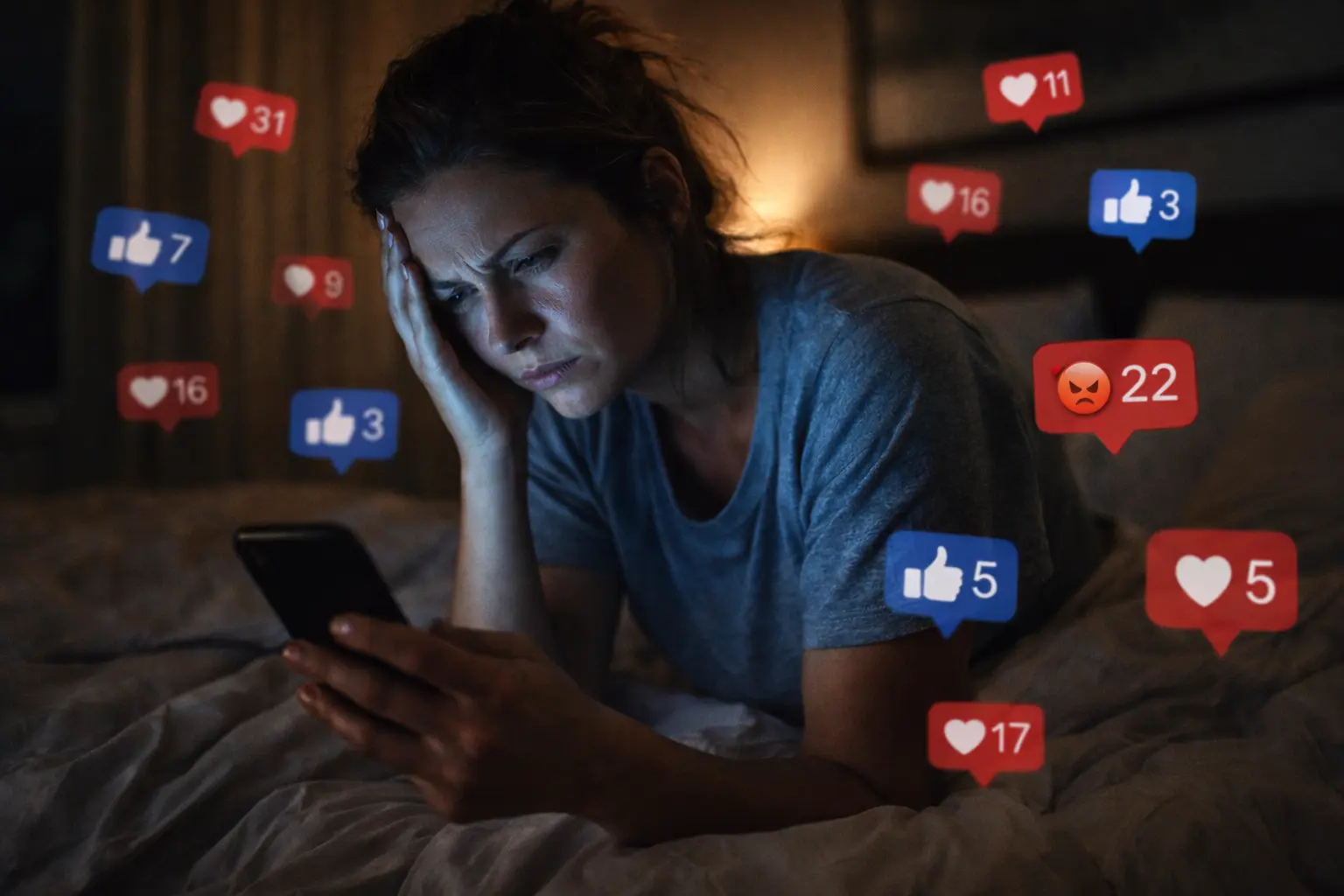
You scroll for five minutes and suddenly two hours have vanished, your chest feels tight, and you’re comparing your life to highlight reels that don’t even exist, so let’s talk about why social media harms health and what you can actually do about it.
The impact of social media on mental health
Social media creates a constant feedback loop that can quietly erode your mental well-being. When you’re exposed to curated versions of other people’s lives day after day, your brain starts to believe that everyone else is thriving while you’re falling behind. This comparison trap fuels anxiety and depression in ways that feel invisible at first. You might notice you’re checking your phone more, sleeping worse, or feeling a knot in your stomach before posting something. The validation cycle is real: you post, you wait for likes, your dopamine spikes, then crashes. Over time, this trains your brain to seek external approval rather than building genuine self-worth from within. Women especially report feeling pressure to maintain a perfect image online, which creates exhaustion and self-doubt. The mental toll isn’t just about feeling sad; it’s about losing touch with who you actually are beneath the filters and captions.
- Increased anxiety and stress levels due to constant comparison
- Negative impact on body image and self-worth
- Potential addiction to validation and likes, affecting self-esteem
Physical health consequences of social media usage
Your body pays a price for hours spent hunched over a screen. Prolonged social media use leads to eye strain, neck tension, and headaches that can become chronic if left unchecked. The blue light from your phone disrupts your circadian rhythm, making it harder to fall asleep even when you’re exhausted. Many women find themselves scrolling in bed, which trains their brain to associate the bedroom with stimulation rather than rest. This disrupted sleep then affects everything: your immune system weakens, your metabolism slows, and your mood suffers the next day, which often leads to more scrolling as a coping mechanism. Beyond screen time, sedentary behavior while using social media contributes to poor posture, weight gain, and reduced physical activity. Some women develop repetitive strain injuries from constant phone use. The physical symptoms often go unnoticed until they become painful, at which point the habit is deeply ingrained. Breaking the cycle requires awareness of how your body feels and intentional changes to your daily routine.
📘 Fix your day in under 2 minuteschoose where to begin:
Social media and relationships: a closer look
While social media promises connection, it often delivers the opposite. You might have hundreds of followers but feel profoundly alone, because likes and comments aren’t the same as real conversation. Excessive scrolling steals time from the people physically present in your life. Imagine sitting across from your partner or friend, but you’re mentally somewhere else, reading about someone’s vacation or drama. Real relationships require presence, vulnerability, and messy moments that don’t photograph well. Social media trains us to present polished versions of ourselves, which makes authentic connection harder. Women often use social media to maintain relationships, but research shows that passive scrolling actually increases loneliness rather than decreasing it. Active engagement, like direct messaging, helps more than endless browsing. The comparison extends to relationships too: you see other couples looking happier, other friendships looking deeper, which can breed resentment or dissatisfaction with your own connections. Over time, the habit of performing for an audience can make genuine intimacy feel risky or unnecessary.
Setting boundaries and cultivating a healthy digital lifestyle
Creating a sustainable relationship with social media starts with honest assessment of your current habits. Track how much time you actually spend on apps for three days without changing anything; most women are shocked by the number. Then set a realistic daily limit, not zero but something manageable, like 20 or 30 minutes. Use app timers or built-in screen time limits to enforce this. Next, audit your feed: unfollow accounts that trigger comparison, anxiety, or inadequacy, even if they’re from friends. You don’t need permission to curate your digital environment. Replace social media time with activities that genuinely restore you, whether that’s reading, walking, cooking, or calling someone you care about. Establish phone-free zones and times, like during meals or the first hour after waking. Keep your phone out of the bedroom entirely if possible. Consider deleting apps from your phone and accessing them only through a browser, which adds friction and reduces mindless scrolling. These aren’t punishments; they’re boundaries that protect your peace.
Seeking support and prioritizing self-care
If you notice that social media is significantly affecting your mood, sleep, or relationships, reaching out for support is a sign of strength, not weakness. Talk to a trusted friend or family member about what you’re experiencing; you might be surprised how many people share your struggle. A therapist or counselor can help you understand the underlying needs that social media is trying to fill, whether that’s connection, validation, or distraction from stress. Self-care isn’t just bubble baths; it’s intentional practices that restore your nervous system. This might include daily movement like yoga or walking, meditation or breathing exercises, creative hobbies that absorb your attention, time in nature, or journaling to process your thoughts. Build a life that’s interesting enough offline that you don’t need constant digital stimulation. Invest in relationships that require showing up in person. Notice what you’re feeling when you reach for your phone and ask if scrolling actually addresses that feeling or just postpones it. Small, consistent changes compound over time into a fundamentally different relationship with technology.
Social media can have a detrimental effect on mental and physical health, leading to anxiety, poor sleep, and strained relationships. By setting boundaries, seeking support, and prioritizing self-care, women can mitigate the negative impact and safeguard their well-being.
Can social media addiction be harmful?
Yes, excessive social media use can lead to addiction, affecting mental health and overall well-being. It’s essential to recognize the signs and seek support if needed.
How can I protect my mental health while using social media?
To protect your mental health, set boundaries on screen time, unfollow triggers, and engage in activities that promote well-being outside of social media.
Others also read:
Disclaimer: This article is for informational purposes only and is not a substitute for professional medical advice. Always consult a healthcare professional for personal guidance.
This guide has been prepared and reviewed by the GlobalHealthBeacon editorial team and reflects current medical research as of 2026. It provides structured, evidence-based information to support informed health decisions.
