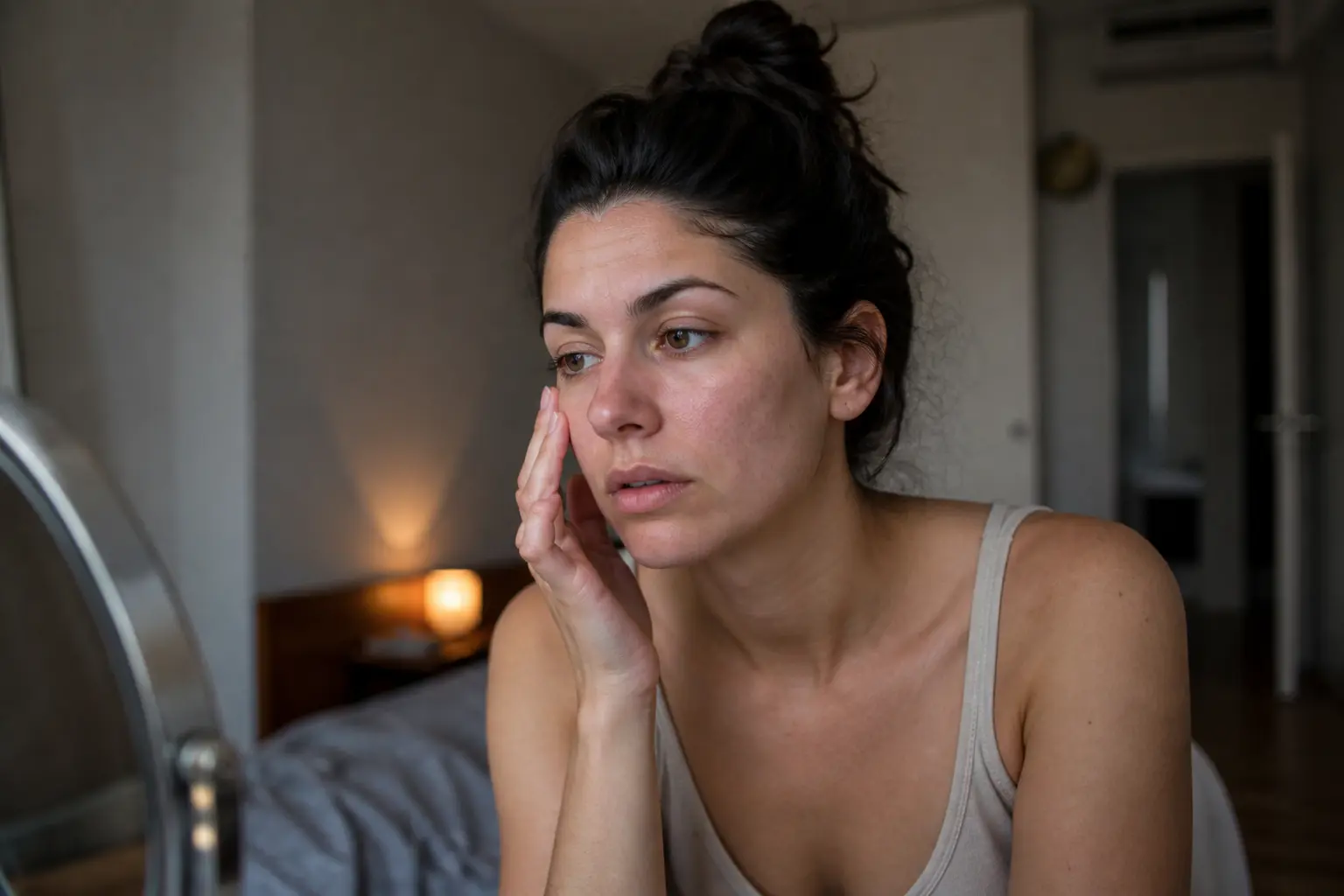
Your skin is breaking out, your under-eye circles look like you haven’t slept in weeks, and that dull, exhausted complexion staring back at you in the mirror feels like a physical manifestation of every stressful deadline and sleepless night, because stress cortisol skin effects are absolutely real and they’re wrecking your confidence right now.
Understanding stress and cortisol
When stress hits hard, your body doesn’t just feel the mental weight of it all. Your nervous system kicks into overdrive and floods your bloodstream with cortisol, a hormone designed to help you survive emergencies but absolutely wreaks havoc when it stays elevated day after day. Imagine cortisol as a tiny alarm system that never shuts off. It disrupts your skin’s protective barrier, making it more vulnerable to irritation and infection. You might notice your skin suddenly feels tight and uncomfortable, or you break out in places you never used to. High cortisol also cranks up oil production while simultaneously breaking down the natural moisturizing factors your skin relies on, creating this frustrating cycle where your skin feels simultaneously oily and dehydrated. Over time, this constant hormonal stress impairs your skin’s ability to maintain collagen and elastin, those crucial proteins that keep your skin looking plump and youthful.
- Cortisol can trigger conditions like eczema and psoriasis, exacerbating skin issues.
- High cortisol levels can impair the skin’s ability to repair itself, leading to slower healing of wounds and blemishes.
- Stress-induced cortisol spikes can worsen existing skin conditions like acne, rosacea, and dermatitis.
Impact of stress on skin aging
Here’s what nobody really tells you about chronic stress and aging: it’s not just about looking tired in the moment. Prolonged stress literally accelerates your skin’s aging process at a cellular level. Think of it like this – imagine your skin cells are tiny factories working to produce and maintain collagen. When cortisol stays elevated, it’s like someone keeps hitting the emergency shutdown button. Cortisol actively breaks down collagen and elastin, the structural proteins that give your skin its bounce and firmness. Young adults in their twenties and thirties who experience chronic stress often find themselves with fine lines and loss of elasticity that shouldn’t appear for years. The frustrating part is that this aging happens faster than you’d expect, and it can genuinely affect how you see yourself. You might catch your reflection and feel shocked at how much older you suddenly look compared to your peers who seem to have their stress under control.
💬 Ready to feel better in 2 minutes?choose where to begin:
Effective coping strategies
The good news is that you’re not stuck with stress-damaged skin forever. The key is interrupting the stress cycle before cortisol causes more damage. Start with mindfulness practices like meditation or even just five minutes of focused breathing when you feel stress building. Yoga is genuinely helpful because it combines movement with breath control, actively lowering cortisol levels. But here’s the practical part: prioritize sleep like your skin depends on it, because it absolutely does. During deep sleep, your skin enters repair mode and your cortisol levels naturally drop. Pair this with a diet rich in antioxidants like berries, leafy greens, and fatty fish that fight inflammation from the inside out. Your skincare routine matters too – look for products with soothing ingredients like niacinamide, centella asiatica, or ceramides that repair your barrier while you’re managing stress. Even small changes like reducing caffeine, staying hydrated, and taking regular breaks from your phone can meaningfully lower your stress response.
Seeking professional help
If you’ve tried stress management techniques and your skin still feels like it’s falling apart, or if the stress itself is becoming unmanageable, that’s your signal to reach out to professionals. A dermatologist can assess whether your skin issues are purely stress-related or if there’s an underlying condition amplified by stress, and they can recommend prescription treatments or professional procedures if needed. But don’t overlook the mental health side of this equation. A therapist or counselor can help you develop real coping mechanisms for the root stress, not just the skin symptoms. Sometimes young adults carry stress they don’t even realize is affecting them until a professional helps them identify patterns. The combination of dermatological care and mental health support addresses both the physical breakouts and the emotional toll, which is what actually creates lasting change.
Stress and cortisol wreak havoc on skin by disrupting the skin barrier, triggering conditions like eczema, exacerbating aging, and causing collagen breakdown. Effective coping strategies and professional help can mitigate these effects and restore skin health.
Can stress cause permanent damage to the skin?
While stress can lead to various skin issues, with proper care and management, most stress-induced skin problems can be improved. However, chronic stress can accelerate skin aging, so it’s essential to address stress levels for long-term skin health.
What skincare products are beneficial for stress-induced skin problems?
Skincare products with calming ingredients like chamomile, aloe vera, and hyaluronic acid can help soothe stressed skin. Additionally, products containing antioxidants like vitamin C and E can protect the skin from free radical damage caused by stress.
Others also read:
Disclaimer: This article is for informational purposes only and is not a substitute for professional medical advice. Always consult a healthcare professional for personal guidance.
This article presents an experience-based perspective and has been reviewed by the GlobalHealthBeacon editorial team in 2026. It provides structured, evidence-based information to support informed health decisions.
