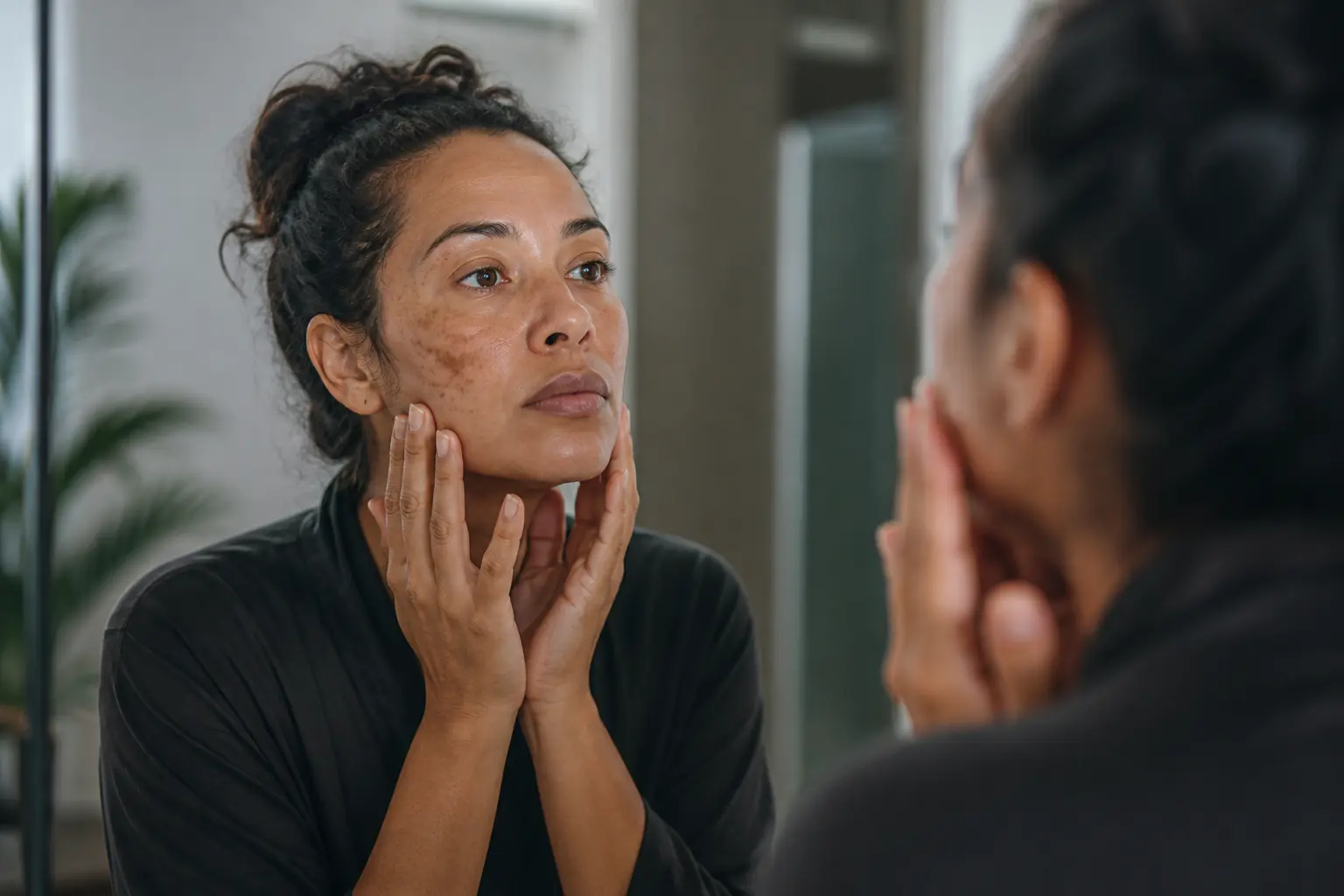
Those stubborn brown spots creeping across your face and hands feel like they’ve taken over, and you’re tired of feeling like you need to cover them up just to feel like yourself again, but there’s good news: you can treat hyperpigmentation without peels and actually see real results.
Understanding hyperpigmentation
Hyperpigmentation happens when melanin, the pigment that gives your skin its color, gets produced unevenly in certain spots. For seniors, this is incredibly common and nothing to feel self-conscious about. Sun exposure over decades is often the main culprit, but hormonal shifts, certain medications, and even past skin injuries can trigger it too. Think of it like this: when you spend years in the sun without proper protection, your skin responds by creating darker patches as a defense mechanism. Age spots on the back of your hands, melasma across your cheeks, or uneven tone on your face all fall into this category. The key to managing it effectively is understanding what caused it in your specific case. Did you spend summers at the beach without sunscreen? Were you on certain medications? Did you have a skin injury that healed with discoloration? Once you pinpoint the trigger, you can address it and prevent new spots from forming while treating the ones you already have.
- Sun protection is key to preventing further darkening of pigmented areas.
- Regular exfoliation helps in reducing the appearance of dark spots over time.
- Topical treatments like vitamin C serums can aid in fading hyperpigmentation.
Gentle skincare regimen
Your skin at this stage of life needs a different approach than aggressive treatments. A gentle routine means choosing products that work with your skin, not against it. Start with a mild cleanser that doesn’t strip away natural oils, then follow with a hydrating toner or essence to prep your skin. Look for ingredients like niacinamide, which calms redness and supports skin barrier function, kojic acid, which gently inhibits melanin production, or licorice extract, known for its brightening and soothing properties. Apply a targeted serum to areas with hyperpigmentation, then seal everything with a good moisturizer and broad-spectrum SPF 30 or higher every single day, even on cloudy days. Many seniors find that consistency matters more than intensity. Using the same gentle routine twice daily for three to six months often yields better results than switching between harsh products. Avoid anything labeled as exfoliating scrubs or strong acids until you’ve consulted a dermatologist about what your skin can handle.
📘 Fix your day in under 2 minuteschoose where to begin:
Natural remedies
Natural ingredients have been used for centuries to brighten skin and reduce discoloration, and modern research backs up many of these traditions. Green tea extract contains powerful antioxidants that protect skin and may help fade dark spots when applied consistently. Aloe vera soothes inflammation and supports skin healing, making it especially useful if your hyperpigmentation came from sun damage or irritation. Turmeric, with its active compound curcumin, has anti-inflammatory and skin-brightening properties that work gradually but steadily. You can incorporate these into your routine by using products containing them, or you can make simple at-home applications. For example, steep green tea, let it cool, and use it as a toner twice daily. Mix aloe vera gel with a drop of turmeric powder and apply it as a mask once or twice weekly. The catch is patience: natural remedies work slowly, typically taking eight to twelve weeks of consistent use before you notice meaningful fading. Many seniors appreciate this gentler pace because it means less risk of irritation or adverse reactions. Keep a simple log of what you use and when so you can track what actually works for your unique skin.
Professional treatments
When at-home care isn’t moving the needle fast enough, professional treatments offer more targeted results. Laser therapy works by targeting melanin directly, breaking up pigmented cells so your body can naturally clear them away. Microdermabrasion uses tiny crystals or a diamond tip to gently sand away the outer layer of skin, revealing fresher, less pigmented skin beneath. IPL (intense pulsed light) therapy is similar to laser but covers a broader area and works well for widespread discoloration. Before pursuing any professional treatment, schedule a consultation with a board-certified dermatologist who can examine your skin type, the depth and extent of your pigmentation, and any underlying conditions. This matters because certain treatments work better for specific skin tones and types of hyperpigmentation. For instance, someone with deeper skin tones may need different settings or alternative treatments than someone with fair skin to avoid complications. Your dermatologist can also discuss realistic timelines, number of sessions needed, cost, and potential side effects so you can make an informed decision that aligns with your comfort level and expectations.
Lifestyle adjustments
What you do every day matters just as much as what you apply to your skin. Sun protection is non-negotiable: wear SPF 30 or higher daily, reapply every two hours if you’re outside, and consider wearing a wide-brimmed hat and long sleeves during peak sun hours. A balanced diet rich in antioxidants, vitamins C and E, and omega-3 fatty acids supports skin health from the inside out. Think colorful vegetables, fatty fish, nuts, and berries. Staying hydrated by drinking adequate water helps your skin maintain elasticity and supports natural detoxification. If you smoke, quitting is one of the single best things you can do for your skin because smoking accelerates aging and can worsen pigmentation issues. Stress management through activities like walking, yoga, meditation, or time with loved ones also plays a role because chronic stress triggers inflammation and hormonal shifts that can worsen hyperpigmentation. Sleep quality matters too: aim for seven to nine hours nightly because your skin repairs and regenerates during deep sleep. These lifestyle factors work together synergistically, meaning the more of them you address, the better your results will be.
Managing hyperpigmentation as a senior doesn’t require harsh peels or invasive procedures. Start by understanding what caused your discoloration, then build a consistent gentle skincare routine with brightening ingredients. Layer in natural remedies for gradual improvement, consider professional treatments if needed, and support everything with sun protection and healthy lifestyle choices. Real results take time and consistency, but they’re absolutely achievable.
Are natural remedies effective in treating hyperpigmentation?
Natural remedies like green tea extract, aloe vera, and turmeric can help in reducing hyperpigmentation gradually due to their antioxidant and anti-inflammatory properties. However, consistency in application is essential for visible results.
How can I prevent further hyperpigmentation?
To prevent further hyperpigmentation, ensure regular sun protection, exfoliation, and use of topical treatments like vitamin C serums. Additionally, consider professional treatments or consult with a dermatologist for personalized advice.
Others also read:
Disclaimer: This article is for informational purposes only and is not a substitute for professional medical advice. Always consult a healthcare professional for personal guidance.
This guide has been prepared and reviewed by the GlobalHealthBeacon editorial team and reflects current medical research as of 2026. It provides structured, evidence-based information to support informed health decisions.
← Go to the treat hyperpigmentation without peels main guide
