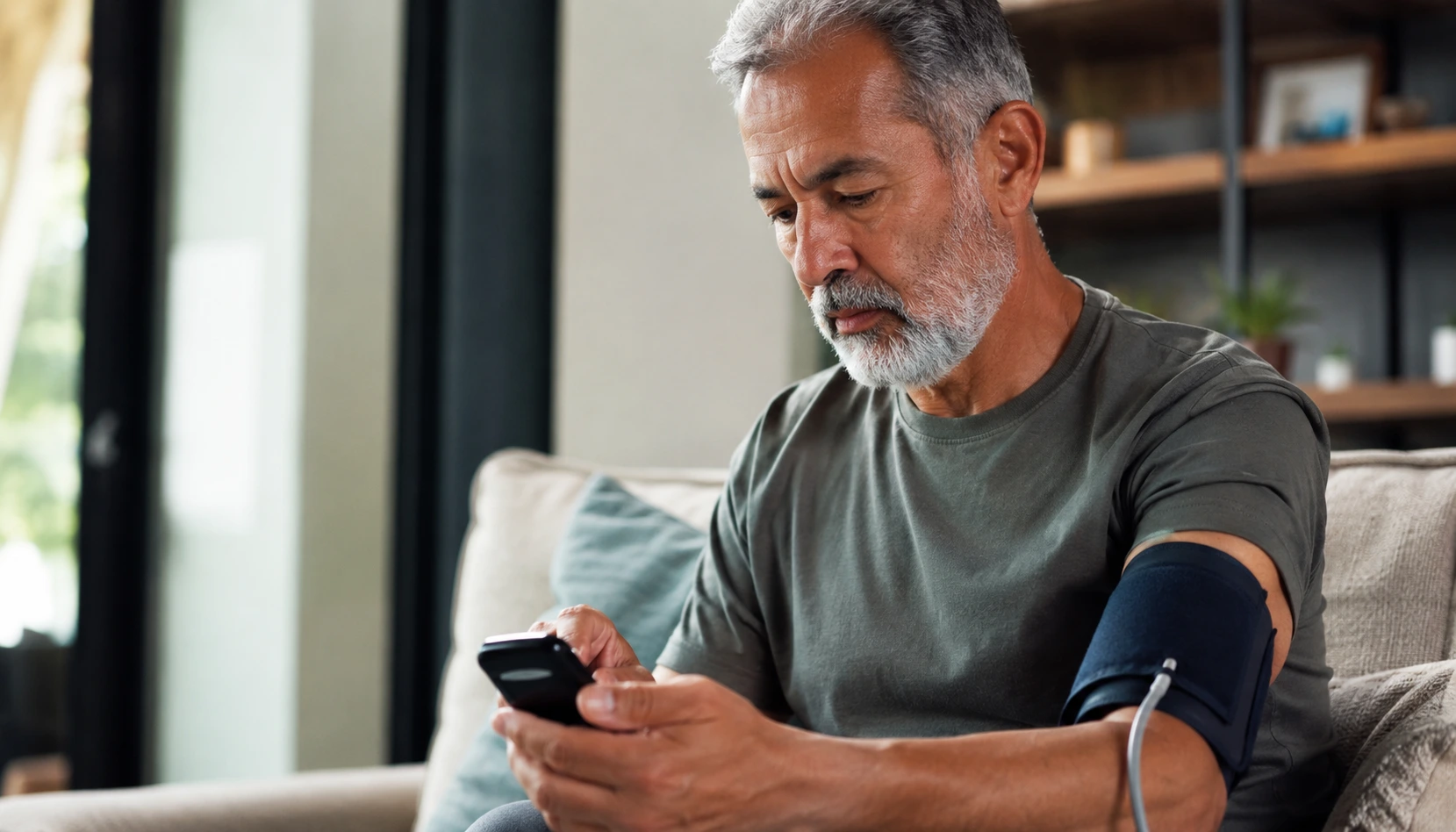
Tired of waiting weeks for test results or feeling like your doctor only sees you for 15 minutes a year? Remote patient monitoring devices let you track what’s actually happening in your body in real time, giving you and your healthcare team the data needed to catch problems before they become serious.
Understanding remote patient monitoring devices
Remote patient monitoring devices are sophisticated medical instruments that continuously collect health data from patients outside traditional clinical settings. These tools measure vital parameters including heart rate, blood pressure, blood glucose levels, oxygen saturation, weight, and electrocardiogram readings. Think of them as a bridge between your home and your doctor’s office. A woman managing hypertension might wear a blood pressure monitor that automatically records readings three times daily. Another woman with gestational diabetes could use a continuous glucose monitor that tracks blood sugar patterns throughout the day and night. The devices work through wireless technology, transmitting collected information to secure servers where healthcare providers can access and review the data. This continuous stream of information provides a much more complete picture of your health than occasional clinic visits ever could, capturing patterns and trends that might otherwise go unnoticed.
Benefits of RPM technology for women
Remote patient monitoring devices offer women tangible advantages in managing their health on their own terms. The convenience factor alone is significant: instead of arranging childcare, taking time off work, or traveling to appointments, women can monitor their conditions from home while managing their daily responsibilities. For those with chronic conditions like diabetes, hypertension, or heart disease, continuous monitoring means earlier detection of concerning changes. Consider a woman in her 50s managing multiple health conditions. Rather than visiting three different specialists monthly, she uses integrated monitoring devices that feed data to all her providers simultaneously, creating better coordination of care. Women also report feeling more empowered and engaged with their health when they can see their own data in real time. This active participation often leads to better medication adherence and lifestyle choices. The reduction in unnecessary emergency room visits and hospitalizations translates to both better health outcomes and lower healthcare costs for women and their families.
How RPM technology works
The mechanics of remote patient monitoring involve three interconnected stages that work seamlessly together. First, data collection happens continuously through wearable devices or home-based equipment. A woman using a wearable heart rate monitor, for example, might have her pulse recorded every few seconds throughout the day and night, capturing how her heart responds to stress, exercise, sleep, and medication. Second, this collected data transmits wirelessly to secure cloud-based platforms using encrypted connections, ensuring patient privacy while making information instantly available to authorized healthcare providers. The transmission happens automatically without requiring the patient to manually upload or send anything. Third, healthcare professionals analyze the incoming data using specialized software that flags abnormal readings, identifies trends, and generates alerts when intervention might be needed. A doctor reviewing a patient’s blood pressure data might notice a gradual increase over two weeks, prompting an earlier appointment or medication adjustment before a crisis occurs. This three-step process creates a feedback loop where continuous monitoring leads to proactive adjustments rather than reactive emergency treatment.
- Collect real-time data on vital signs through wearable or home-based devices
- Transmit encrypted data wirelessly to secure healthcare provider platforms
- Healthcare professionals analyze data patterns and generate timely clinical alerts
🔬 Science-backed benefits in 2 minuteschoose where to begin:
Remote monitoring in pregnancy
Pregnancy represents a unique period where remote patient monitoring devices provide particularly valuable benefits for both mother and baby. Pregnant women can use devices to track blood pressure, weight gain patterns, and glucose levels without frequent clinic visits, reducing stress and inconvenience during an already demanding time. Consider a woman with a history of preeclampsia who is now pregnant again. Daily blood pressure monitoring at home allows her care team to detect early warning signs of the condition returning, potentially preventing serious complications. Fetal monitoring devices can track the baby’s heart rate patterns, and some advanced systems monitor uterine contractions during the third trimester. Women with gestational diabetes benefit enormously from continuous glucose monitoring, which shows exactly how different foods and activities affect blood sugar, enabling better management without multiple daily finger sticks. The psychological benefit matters too: many pregnant women feel reassured knowing their providers have real-time access to their health data and can intervene quickly if concerns arise. This continuous connection reduces anxiety and creates a sense of partnership between the mother and her healthcare team throughout pregnancy.
Future of RPM in women’s health
The landscape of remote patient monitoring continues evolving rapidly with emerging technologies that promise even greater capabilities for women’s health management. Artificial intelligence algorithms are becoming increasingly sophisticated at recognizing patterns in health data that human providers might miss, potentially predicting health events before they occur. Wearable technology is becoming less intrusive and more accurate, with devices that integrate seamlessly into everyday life rather than requiring special equipment. Imagine a smart ring that monitors heart rate variability, sleep quality, and stress levels while looking like regular jewelry. Integration with electronic health records means data flows automatically between devices, home monitoring systems, and all of a woman’s healthcare providers, eliminating the fragmented care that currently plagues many patients. Hormonal monitoring devices are in development that could track estrogen and progesterone levels throughout the menstrual cycle, providing unprecedented insights into reproductive health. Telehealth platforms paired with RPM devices create comprehensive remote care ecosystems where women can have virtual visits with specialists while their providers review real-time health data simultaneously. These advancements suggest a future where women have unprecedented control over their health information and can receive truly personalized, proactive care.
Challenges and considerations
Despite the promise of remote patient monitoring technology, several practical challenges require careful attention. Data security and privacy remain paramount concerns, as sensitive health information travels across networks and resides on cloud servers. Women need assurance that their data is encrypted, that access is restricted to authorized providers, and that their information cannot be breached or misused. Device accuracy varies across manufacturers and product types, and occasional technical glitches or user errors can produce unreliable readings. A woman might get an abnormally high blood pressure reading due to improper cuff placement rather than actual hypertension, potentially triggering unnecessary interventions. Patient compliance presents another hurdle: some women struggle with consistent device use, forgetting to wear monitors or charge batteries, which creates gaps in data collection. Healthcare provider burden is real too, as the volume of incoming data can overwhelm clinical teams without proper systems and staffing. Additionally, not all insurance plans cover remote monitoring devices, creating access disparities based on socioeconomic status. Despite these challenges, the potential benefits of RPM technology for improving women’s health outcomes continue to drive innovation and refinement of these systems.
Remote patient monitoring devices represent a meaningful shift in how women can engage with their healthcare, offering continuous insight into their health status rather than relying solely on periodic clinic visits. By enabling real-time data collection, secure transmission to healthcare providers, and timely clinical analysis, RPM technology supports earlier detection of health changes and more proactive management of chronic conditions. For pregnant women, those managing multiple chronic diseases, and women seeking greater autonomy in their healthcare decisions, these devices offer practical benefits alongside psychological reassurance. As technology advances and healthcare systems integrate RPM more fully into clinical workflows, women will have increasingly sophisticated tools for understanding and managing their health throughout different life stages.
How accurate are remote patient monitoring devices?
Remote patient monitoring devices are engineered to provide accurate measurements when used correctly, with many devices undergoing rigorous clinical validation before reaching the market. However, accuracy depends on several factors including proper device placement, correct user technique, device calibration, and the specific technology being used. For example, blood pressure monitors must have the cuff positioned at heart level to produce accurate readings, and wrist-based monitors are generally less accurate than upper arm devices. Occasional technical issues, battery problems, or connectivity glitches can affect data transmission. Users should follow manufacturer instructions carefully, maintain devices properly, and report consistently abnormal readings to their healthcare providers for interpretation and verification. Healthcare providers understand device limitations and typically look for patterns across multiple readings rather than relying on single measurements.
Can remote monitoring devices replace traditional healthcare visits?
Remote patient monitoring devices are designed to complement rather than replace traditional healthcare visits. While these devices provide valuable continuous data between appointments, they cannot replicate the comprehensive physical examination, detailed history-taking, and clinical judgment that in-person visits provide. A healthcare provider needs to examine you directly, listen to your heart and lungs, assess your overall condition, and discuss complex health decisions that require nuanced conversation. Remote monitoring is most effective when integrated into a complete care plan that includes regular appointments with your healthcare team. The devices enhance communication between visits, allow providers to make more informed decisions, and can reduce the frequency of unnecessary appointments, but they work best as part of a partnership with your healthcare providers rather than as a standalone solution.
Others also read:
Disclaimer: This article is for informational purposes only and is not a substitute for professional medical advice. Always consult a healthcare professional for personal guidance.
This article has been prepared and reviewed by the GlobalHealthBeacon editorial team and is based on current medical research and published scientific literature available in 2026. It provides structured, evidence-based information to support informed health decisions.
← Back to the Main page on: remote patient monitoring devices
