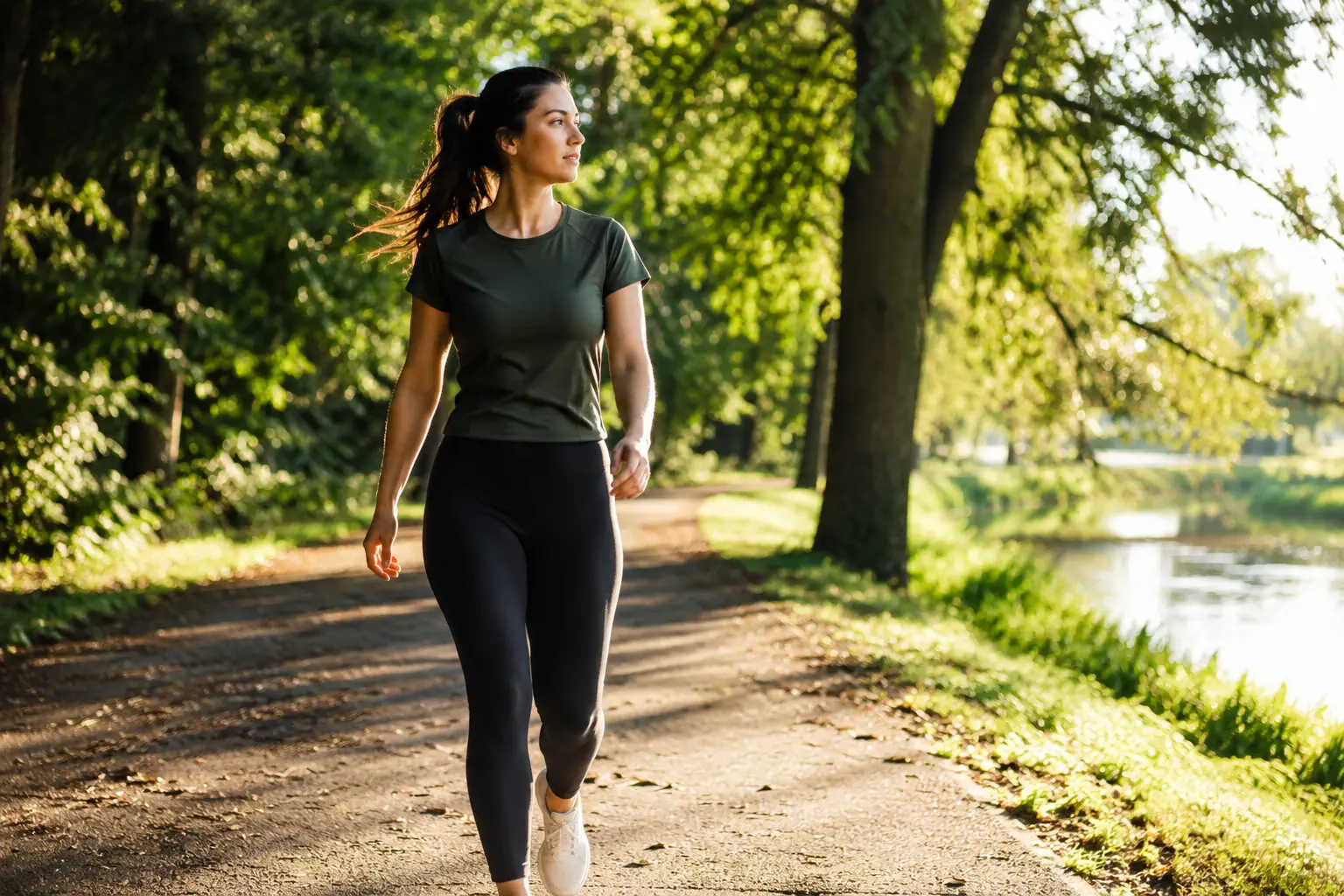
That afternoon energy crash after lunch, the brain fog by 3pm, the constant hunger two hours after dinner – your blood sugar is on a rollercoaster, and walking after meals blood sugar control might be the simplest fix you haven’t tried yet.
The science behind walking after meals
Walking after meals works because your muscles become glucose sinks the moment you start moving. When you eat, your body breaks down carbohydrates into glucose. Without movement, that glucose floods your bloodstream all at once, causing a spike. But here’s what happens when you walk: your muscles start pulling glucose directly from your blood to fuel the activity, bypassing the typical insulin surge. Think of it like opening a drain valve right after filling a tank. Research shows that even light walking activates muscle contractions that enhance glucose uptake without requiring insulin. For women specifically, this matters because hormonal fluctuations throughout the month can make blood sugar management more challenging. A 5-minute walk after meals essentially gives your body a head start on processing what you just ate, reducing the peak blood sugar spike by up to 30 percent in some studies. This isn’t about intense exercise or burning calories – it’s about timing and consistency.
- Increases insulin sensitivity
- Accelerates glucose uptake by muscles
- Aids in weight management
5-minute walking protocol
The timing here is crucial, so let’s walk through this step by step. After you finish eating, wait 10 to 15 minutes before you start walking. This gives your digestive system time to begin breaking down food and moving it into your small intestine. Waiting too long defeats the purpose, but jumping up immediately can cause discomfort. Once that window passes, stand up and take a leisurely stroll at a comfortable conversational pace – you should be able to talk but not sing. This isn’t a power walk or a cardio session. You’re aiming for steady, gentle movement. Walk for exactly 5 minutes. Set a timer on your phone if you need to. After those 5 minutes, you can sit down, continue your day, or keep moving if you feel like it. The magic happens during those first few minutes when your muscles are actively pulling glucose from your bloodstream. Repeat this after breakfast, lunch, and dinner for maximum benefit. A woman who does this consistently after all three meals can see noticeable changes in her energy levels within a week.
📘 Fix your day in under 2 minuteschoose where to begin:
Finding the right time to walk
The ideal timing is within 15 to 30 minutes after finishing your meal, but real life isn’t always ideal. If you work in an office, a walk around the building or parking lot works perfectly. If you’re at home, a lap around your living room or a stroll through your neighborhood both count. Some women find that walking right after meals fits their schedule best, while others prefer waiting 20 minutes until they’ve cleared their plate and settled their stomach. The key is experimenting to find what feels sustainable for you. Pay attention to how your body responds. Do you feel less hungry mid-afternoon when you walk after lunch? Does your evening energy improve when you walk after dinner? Keep notes for a week or two. You might discover that walking after certain meals matters more than others – many women find that the post-lunch walk has the biggest impact on their afternoon energy. The consistency matters far more than the exact timing, so choose a routine you can actually maintain.
Tips for success
Start by making this a non-negotiable part of your meal routine, just like drinking water. Set a phone reminder for 15 minutes after your main meals until it becomes automatic. Wear comfortable shoes that support your feet, especially if you’re walking on hard floors or pavement. Dehydration can worsen blood sugar swings, so drink water before your walk and after. If weather is a barrier, plan indoor alternatives now – around your home, at a mall, or even marching in place while watching a show counts. Many women find it helpful to walk with a family member or friend, which adds accountability and makes it more enjoyable. If you have joint pain or mobility issues, adjust your pace to what feels manageable. Even a slow shuffle provides benefits. Track how you feel in a simple notebook or phone notes app. Write down your energy level, mood, and any cravings you notice. After two weeks, you’ll have real data showing whether this works for your body. Some women see results immediately, while others need three to four weeks to notice changes.
Monitoring your progress
Keep a simple log for at least two weeks. Each day, note what time you walked after meals and how you felt one to two hours later. Did your energy hold steady or did you crash? Were you hungry before your next meal or satisfied? Did your mood feel stable? If you have access to a blood glucose monitor, you can track actual numbers to see the difference in your glucose response. Many women are surprised to see their peaks drop from 160 mg/dL to 120 mg/dL after just a few days of consistent post-meal walks. Beyond blood sugar, notice other changes: clearer skin, better sleep, fewer afternoon headaches, or improved focus. These are all signs that your metabolic health is improving. If you’re on diabetes medication or have any health conditions, talk with your doctor before starting, especially if you’re on insulin. They can help you understand what changes to expect and whether your medication needs adjustment. After four weeks, reassess. Are you seeing the benefits you hoped for? If yes, keep going. If not, consider whether you’re walking consistently enough or if other factors like sleep or stress might be interfering.
Walking after meals blood sugar control is one of the simplest, most effective tools available to you. By taking a 5-minute walk within 15 to 30 minutes after eating, you help your muscles absorb glucose directly, reducing blood sugar spikes and stabilizing your energy throughout the day. The protocol is straightforward: wait 10 to 15 minutes after finishing your meal, walk at a comfortable pace for 5 minutes, and repeat after each meal. Consistency matters more than perfection, and most women notice improvements in energy, mood, and overall wellbeing within one to two weeks. This isn’t a complicated diet or expensive supplement – it’s a practical, sustainable habit that works with your body’s natural physiology.
Does the duration of the walk matter?
Even a short 5-minute walk can be beneficial in helping manage blood sugar levels. The key is consistency, so aim to walk after each meal for optimal results.
Can I walk indoors if the weather is not suitable?
Absolutely! Walking indoors, whether it’s around your home or office, can be just as effective in regulating blood sugar. The focus is on incorporating physical activity after your meals.
Others also read:
Disclaimer: This article is for informational purposes only and is not a substitute for professional medical advice. Always consult a healthcare professional for personal guidance.
This guide has been prepared and reviewed by the GlobalHealthBeacon editorial team and reflects current medical research as of 2026. It provides structured, evidence-based information to support informed health decisions.
