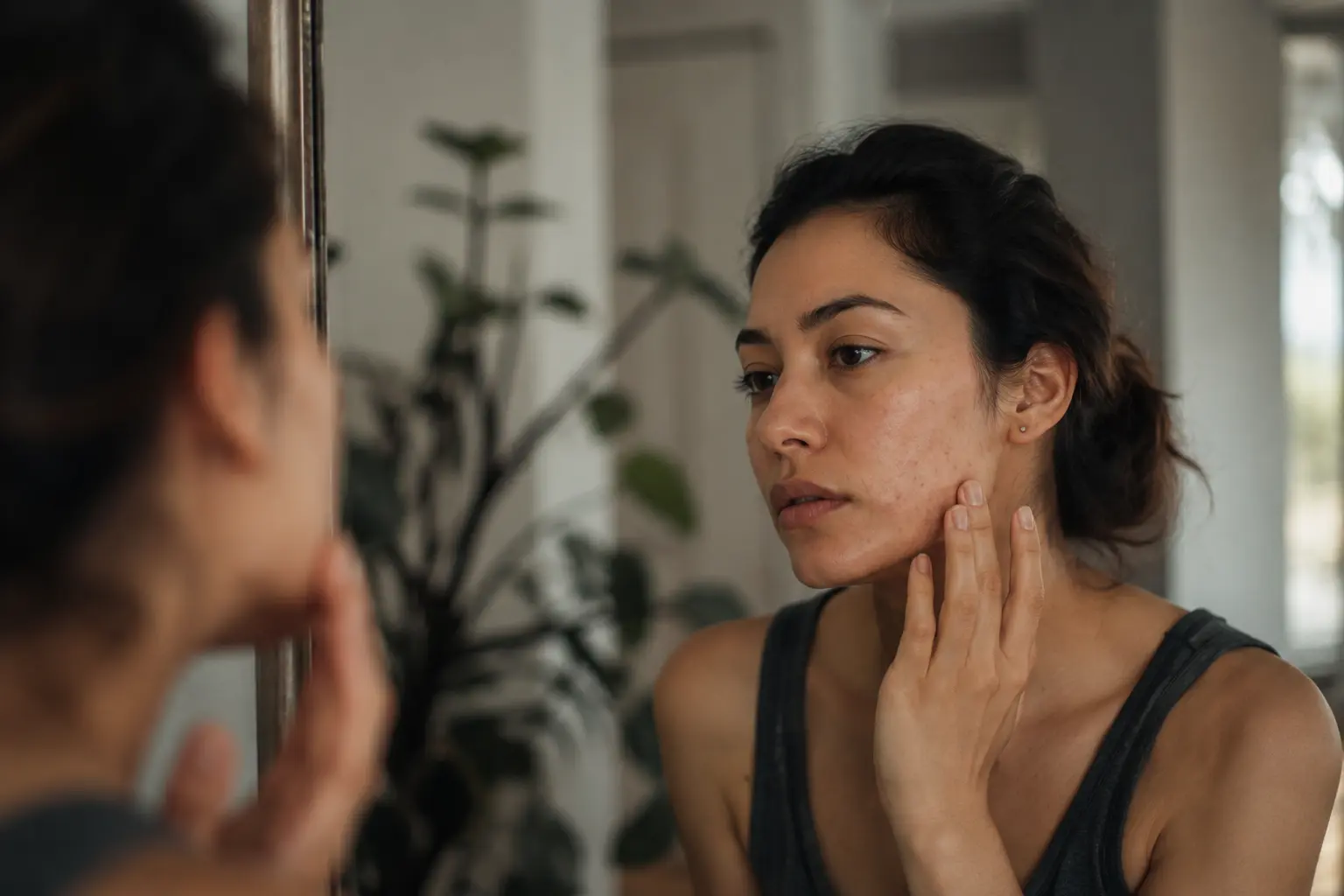
Your skin feels drier, looks thinner, and those fine lines seem to multiply overnight, but nobody warns you that hormonal skin changes after 50 are completely normal and absolutely manageable once you understand what’s happening beneath the surface.
Understanding hormonal skin changes
After 50, your body produces less estrogen and progesterone, and this shift affects your skin in measurable ways. Collagen production slows down significantly, which is why your skin loses that plump, firm quality you had in your 30s and 40s. Moisture retention becomes harder because your skin barrier weakens, leaving you dealing with persistent dryness even if you never had dry skin before. Think of it like this: your skin’s natural moisturizing factory is operating at reduced capacity. You might notice your face feels tight after showering, or your usual moisturizer suddenly feels insufficient. The good news is that understanding these changes means you can address them directly. Many people in their 50s and 60s report that once they adjusted their skincare approach to account for these hormonal shifts, their skin actually looked healthier and felt more comfortable than it had in years. The key is recognizing that your skin’s needs have changed, not that your skin has failed you.
- Reduce sun exposure to prevent premature aging.
- Maintain a healthy diet rich in antioxidants and essential nutrients.
- Hydrate skin by using moisturizers specifically designed for mature skin.
Navigating hormonal acne
You might expect acne to be a teenage problem, but hormonal imbalances after 50 can trigger stubborn breakouts along your jawline, chin, and cheeks. This happens because fluctuating hormone levels can increase oil production in certain skin areas while other areas become dry and sensitive. A 58-year-old woman might suddenly find herself dealing with cystic acne for the first time in decades, which feels confusing and frustrating. The solution requires a gentler approach than harsh acne treatments designed for younger skin. Start by switching to a creamy, non-stripping cleanser that removes makeup and daily grime without disrupting your skin barrier. Look for products labeled non-comedogenic, meaning they won’t clog pores. Avoid over-exfoliating, which many people do thinking it will help, but actually irritates mature skin further. If breakouts persist after two to three weeks of consistent gentle care, schedule a consultation with a dermatologist who can recommend targeted treatments like low-dose retinoids or professional extractions. Many dermatologists now specialize in hormonal acne in mature skin and can offer solutions that work with your skin’s current chemistry rather than against it.
📘 Fix your day in under 2 minuteschoose where to begin:
Dealing with age spots
Age spots, also called sun spots or liver spots, appear as brown or tan patches on your face, hands, and chest. They develop because hormonal changes increase melanin production in certain areas, and decades of sun exposure finally shows up as visible pigmentation. If you spent your 20s and 30s in the sun without consistent sunscreen, your skin is now displaying that history. The spots themselves are harmless, but many people find them cosmetically bothersome. Daily sunscreen with at least SPF 30 is your first line of defense to prevent new spots from forming and existing ones from darkening. Apply it every morning, even on cloudy days, because UV rays penetrate clouds. For existing age spots, several effective treatments exist. Laser therapy targets pigmented cells and breaks them down, often requiring two to four sessions spaced weeks apart. Chemical peels use controlled acids to remove the outer skin layer where pigment accumulates. Some people see results with topical treatments containing hydroquinone or tretinoin, though these require consistent use over several months. Consult a dermatologist to determine which option suits your skin type and the severity of your spots.
Combatting skin thinning
Skin thinning is one of the most noticeable changes after 50 because it affects how your face looks and feels. Your skin literally becomes thinner as collagen and elastin production decline, which means less structural support under the surface. This is why fine lines become more pronounced and your skin bruises more easily. You might notice that your skin tears slightly from minor bumps that never would have caused damage before. Retinol-based products are among the most effective tools for combating this because retinol stimulates your skin cells to produce new collagen and turn over faster. Start with a low concentration, like 0.25 percent, used two to three times weekly, because retinol can irritate sensitive mature skin initially. Gradually increase frequency as your skin builds tolerance. Pair retinol with a rich moisturizer because the increased cell turnover can feel drying. Peptide-based serums also help by signaling your skin to maintain collagen production. Many people combine retinol with peptides for enhanced results. Be patient with this approach because collagen rebuilding takes time, typically showing visible improvement after eight to twelve weeks of consistent use. Sun protection remains critical because UV damage accelerates collagen breakdown, undoing your efforts.
Embracing self-care rituals
Your skincare routine after 50 becomes more than just applying products; it becomes a ritual that supports both your skin’s health and your overall sense of well-being. Gentle facial massage, performed for just five minutes daily using upward strokes, improves circulation and helps your skin absorb products more effectively. Many people find this calming ritual helps them start or end their day with intention. Stress directly impacts your skin through cortisol release, which can trigger inflammation and worsen sensitivity. Incorporating stress-reducing activities like walking, meditation, or even sitting quietly with tea creates a protective buffer against stress-related skin flare-ups. Adequate sleep is not optional; your skin repairs and regenerates most actively during sleep, so consistent seven to nine hours nightly makes a visible difference. Consider your skincare routine as self-respect in action. Taking time to cleanse, moisturize, and care for your skin sends a message to yourself that you matter. This psychological component shouldn’t be underestimated because confidence in your appearance affects how you move through the world. Many women report that establishing a consistent, intentional skincare routine after 50 becomes a grounding practice that benefits far more than just their skin.
Hormonal skin changes after 50 are a natural transition, not a problem to fix. By understanding what’s happening beneath your skin’s surface, you can adjust your approach strategically. Whether you’re managing dryness, acne, age spots, or thinning skin, targeted solutions exist. The most important step is recognizing that your skin’s needs have shifted and responding with intention rather than frustration. Consistency matters more than complexity, and small daily habits compound into visible improvements over time.
Can hormonal skin changes be reversed?
While hormonal skin changes can’t be completely reversed, adopting proper skincare habits and treatments can improve skin health and appearance. Retinol, peptides, consistent sun protection, and professional treatments like laser therapy can restore significant firmness and clarity. Think of it as managing the changes rather than erasing them.
Are hormonal skin changes permanent?
Hormonal skin changes are usually persistent but can be managed effectively with consistent skincare practices and professional treatments. The changes themselves are permanent because hormone levels remain lower after 50, but your skin’s appearance and texture can improve substantially with the right approach. Many people find their skin stabilizes and looks better at 55 than it did at 51 once they’ve adapted their routine.
Others also read:
Disclaimer: This article is for informational purposes only and is not a substitute for professional medical advice. Always consult a healthcare professional for personal guidance.
This guide has been prepared and reviewed by the GlobalHealthBeacon editorial team and reflects current medical research as of 2026. It provides structured, evidence-based information to support informed health decisions.

