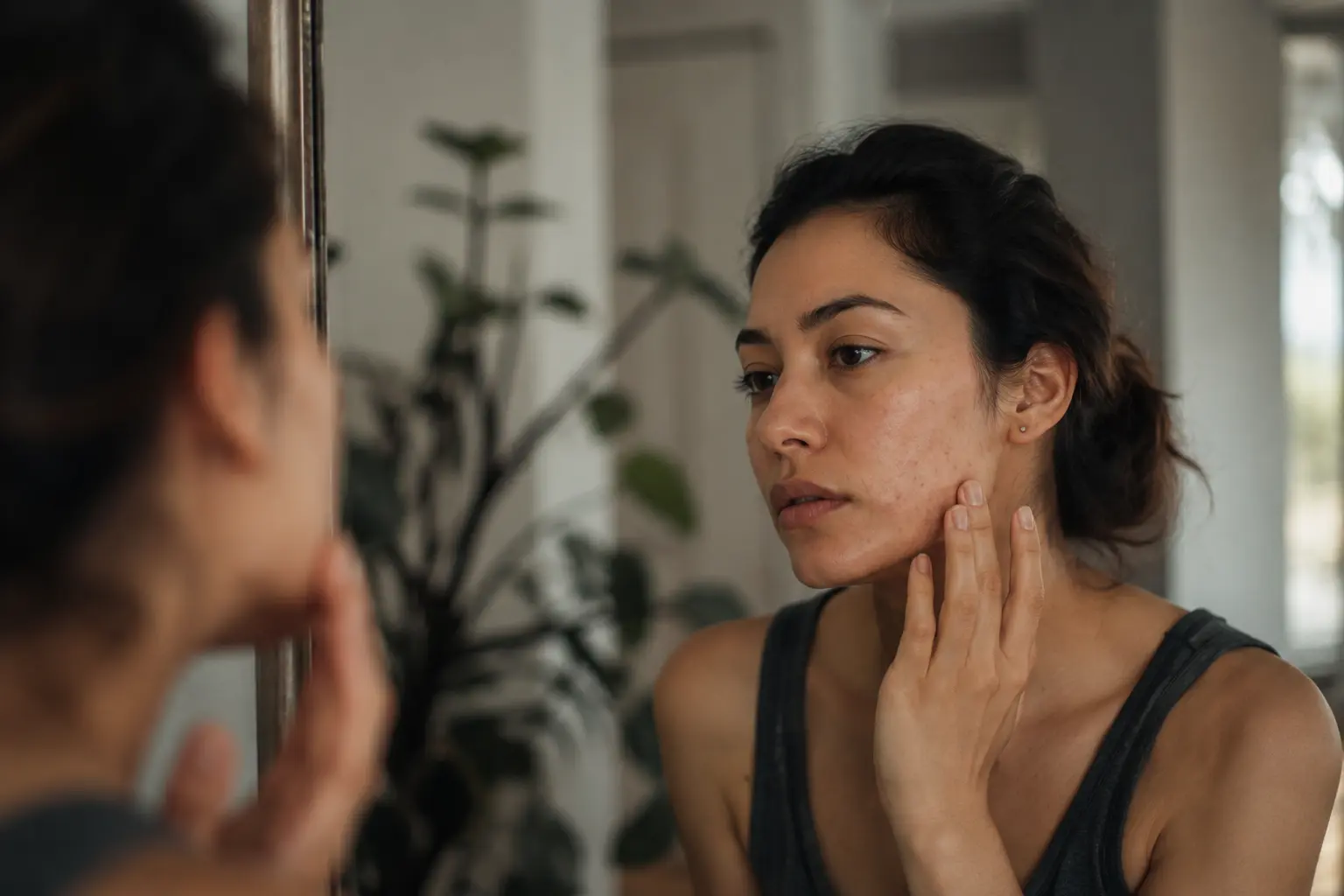
Your skin is breaking out at the worst possible times, your face feels like an oil slick one day and a desert the next, and hormonal skin changes are literally sabotaging your confidence when you need it most.
Understanding hormonal skin changes
Hormonal imbalances hit different when you’re a young adult trying to figure out who you are. One month your skin is clear, the next you’re dealing with cystic acne along your jawline that won’t quit. These aren’t random breakouts either. Hormonal fluctuations trigger real changes in your skin’s oil production, inflammation levels, and barrier function. Decreased estrogen can leave your skin feeling tight and flaky, while androgen spikes cause your pores to produce excess sebum, creating that frustrating combination of oily and dry patches. The unpredictability is what gets to most people. You can’t plan around it, and it affects how you feel about yourself on days when you’re already stressed or anxious.
- Acne breakouts are common during hormonal fluctuations, often appearing along the chin and jawline.
- Dry skin can occur due to decreased estrogen levels, making your skin feel tight and uncomfortable.
- Excess oil production may lead to shiny skin and clogged pores, sometimes happening in specific zones.
Navigating skincare during hormonal changes
Finding your skincare rhythm during hormonal shifts requires patience and some trial and error. The key is gentle consistency rather than aggressive treatments that backfire. Start by identifying what your skin actually needs right now, not what it needed three months ago. If you’re experiencing breakouts, resist the urge to strip your skin with harsh cleansers or heavy actives. Instead, use a mild cleanser morning and night, follow with a lightweight hydrating toner, and apply a non-comedogenic moisturizer even if your skin feels oily. When dryness hits, layer a hydrating serum under your moisturizer and consider adding a facial oil at night. Sunscreen is non-negotiable every single day because hormonal changes can increase skin sensitivity and sun damage risk. Avoid switching products constantly, as your skin needs at least two to three weeks to adjust and show real results.
💬 Ready to feel better in 2 minutes?choose where to begin:
Managing hormonal skin changes holistically
Your skin is a window into what’s happening inside your body, so treating hormonal skin changes means looking beyond topical solutions. Stress directly impacts your hormones, which then impacts your skin, creating a frustrating cycle. Incorporating movement you actually enjoy, whether that’s yoga, running, or dancing, helps regulate cortisol and supports hormonal balance. Meditation and breathing exercises calm your nervous system and reduce inflammation from the inside out. Your diet matters more than you might think. Foods rich in omega-3 fatty acids like salmon and walnuts support skin barrier health, while antioxidant-packed fruits and vegetables fight inflammation. Staying hydrated helps your skin maintain elasticity and flush out toxins. Sleep is equally critical because hormonal regulation happens during deep sleep cycles. Aim for seven to nine hours consistently, and notice how your skin responds within a week or two of better sleep habits.
Seeking professional help for persistent issues
Sometimes your own efforts aren’t enough, and that’s completely okay. If hormonal skin changes are affecting your mental health, causing severe breakouts, or persisting despite your best efforts, it’s time to see a dermatologist. They can identify whether your issues stem from hormonal imbalance, a skin condition like rosacea or eczema, or something else entirely. A dermatologist might recommend prescription treatments like topical retinoids, oral antibiotics, or hormonal birth control if appropriate. Some offer professional treatments like chemical peels or laser therapy for stubborn acne scars. Don’t wait until you’re frustrated and exhausted. Getting professional guidance early can prevent long-term skin damage and save you months of guessing. Your skin health is worth investing in, and a dermatologist can provide clarity and a real treatment plan tailored to your specific situation.
Hormonal skin changes can feel like your body is working against you, but understanding what’s happening and taking intentional steps makes a real difference. Whether you’re adjusting your skincare routine, managing stress differently, or reaching out to a dermatologist, you have options. The journey isn’t always linear, but it’s manageable when you approach it with patience and the right support.
Can hormonal skin changes occur at any age?
Hormonal skin changes can affect individuals of all ages, not just teenagers. Factors like stress, diet, and hormonal fluctuations can trigger skin issues in young adults as well.
How long do hormonal skin changes typically last?
The duration of hormonal skin changes varies for each individual. Some may experience temporary fluctuations, while others may deal with persistent issues. Seeking professional advice can help manage these changes effectively.
Others also read:
Disclaimer: This article is for informational purposes only and is not a substitute for professional medical advice. Always consult a healthcare professional for personal guidance.
This article presents an experience-based perspective and has been reviewed by the GlobalHealthBeacon editorial team in 2026. It provides structured, evidence-based information to support informed health decisions.

