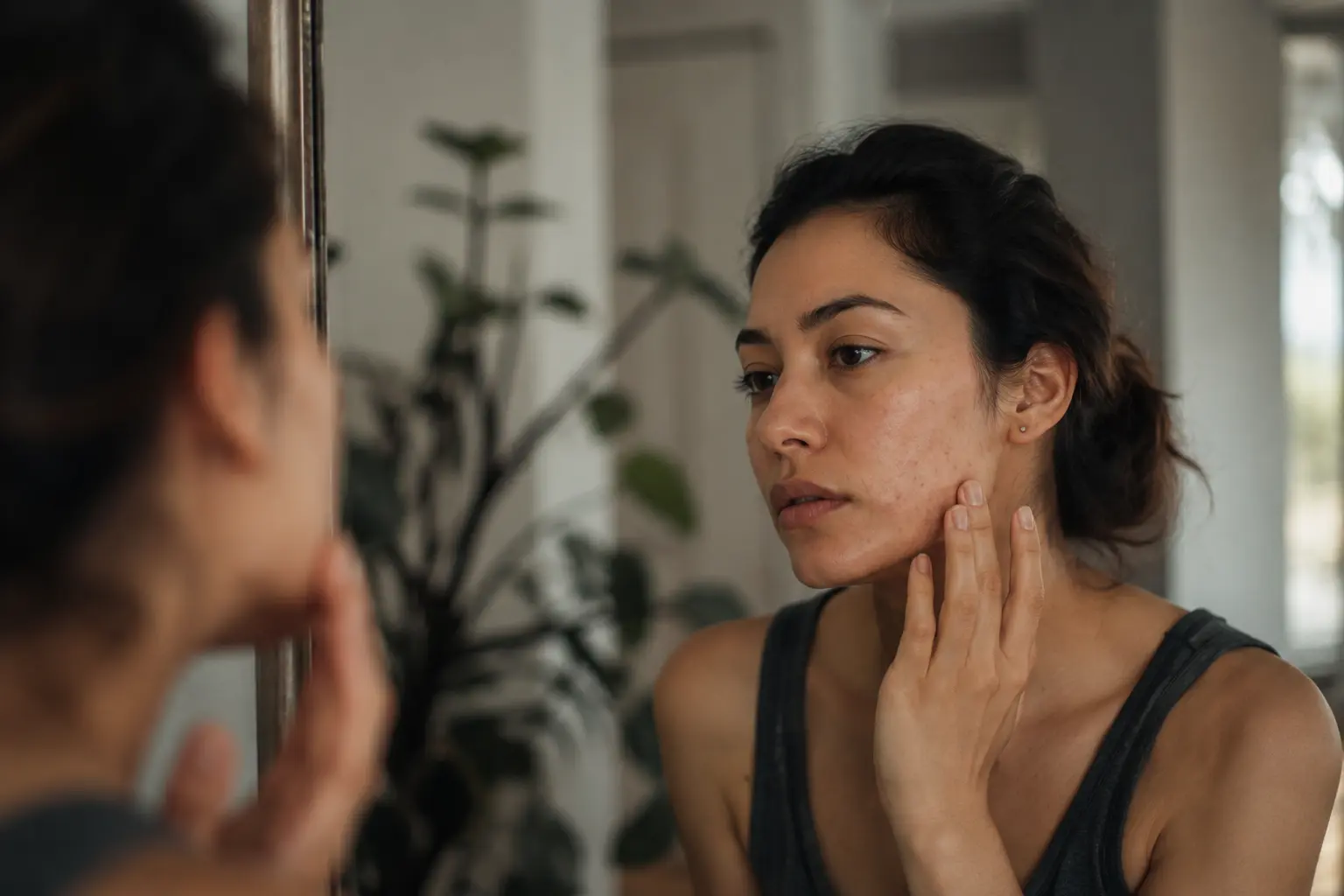
One day your skin feels like yours, and the next you’re staring in the mirror at dryness, breakouts, and spots you’ve never seen before, all because of hormonal skin changes that hit like a tidal wave during menopause.
Understanding hormonal imbalances
When menopause arrives, your body’s estrogen production takes a nosedive, and your skin pays the price immediately. Think of estrogen as your skin’s best friend for decades, keeping collagen production steady and maintaining that plump, dewy look. Once those levels drop, everything changes. Your skin starts producing less collagen, which means fine lines deepen, wrinkles appear where you never had them before, and that firmness you took for granted simply vanishes. Some women describe it as watching their skin deflate in real time. Beyond wrinkles, you might notice your complexion looks dull and tired even after eight hours of sleep. The reduced hyaluronic acid means moisture escapes faster, leaving your skin parched and flaky. At the same time, uneven pigmentation can create age spots or dark patches that feel impossible to cover. It’s frustrating because your skin is simultaneously breaking out like a teenager while also looking like parchment paper.
- Increased sebum production can cause acne flare-ups
- Reduced hyaluronic acid levels result in dryness and dullness
- Uneven pigmentation due to melanin imbalances
Managing hormonal skin changes
The good news is that a thoughtful skincare routine can genuinely help you reclaim your skin’s health during this transition. Start with a gentle cleanser that doesn’t strip away natural oils, because your skin is already struggling to retain moisture. Follow up with a rich moisturizer that actually sinks in rather than sitting on the surface. Many women in their 50s and 60s find that layering a hydrating serum underneath their moisturizer makes a real difference. Sun protection becomes non-negotiable now, as UV damage accelerates the appearance of age spots and deepens existing wrinkles. Consider adding targeted treatments like retinoid creams, which boost collagen production over time, or serums containing peptides and antioxidants to fight free radical damage. Some women see improvement within weeks, though patience is key because skin cell turnover takes time. Avoid common mistakes like over-exfoliating or using too many active ingredients at once, which can irritate already sensitive skin. Think of your skincare routine as a gentle reset button rather than a fix-it-all solution.
💬 Ready to feel better in 2 minutes?choose where to begin:
Embracing the skin’s evolution
Here’s something that took many women years to understand: your skin is telling the story of your life, and that’s actually beautiful. Every wrinkle represents laughter, every age spot is a badge from sunny vacations and outdoor adventures, and the texture changes reflect decades of living fully. When you stop fighting against these changes and start seeing them as evidence of resilience, something shifts emotionally. The stress and frustration that comes from obsessing over every new line actually accelerates skin aging through cortisol production, so letting go paradoxically helps your skin look better. This doesn’t mean you stop caring for your skin, but rather you care for it from a place of self-love rather than self-criticism. Many women report feeling more confident in their 60s than they ever did in their 40s, partly because they’ve made peace with these natural transitions. Your skin is still you, still worthy of care and attention, just in a different chapter of your life.
Seeking professional guidance
If your skin concerns feel overwhelming or home remedies aren’t delivering results, a dermatologist can be your secret weapon. They understand menopausal skin in ways that general practitioners often don’t, and they can recommend treatments tailored specifically to your situation. Retinoid treatments, whether prescription strength or over-the-counter, can genuinely transform skin texture and fine lines over several months. Chemical peels performed by professionals gently exfoliate away damaged surface layers and stimulate collagen renewal. Laser therapies like fractional lasers can address pigmentation issues, sun damage, and skin laxity without downtime. Some women explore microneedling or radiofrequency treatments for deeper rejuvenation. The key is having a conversation with a dermatologist who listens to your concerns and explains realistic expectations rather than promising miracles. Professional treatments aren’t vanity, they’re a legitimate part of managing your health and confidence during a significant life transition.
Menopausal hormonal imbalances can wreak havoc on the skin, leading to issues like dryness, acne, and pigmentation changes. To navigate these changes, adopt a targeted skincare routine, embrace the skin’s evolution, and seek professional guidance as needed.
Can hormonal changes during menopause be reversed?
Hormonal changes during menopause are a natural part of aging and cannot be reversed. However, adopting a healthy skincare regimen can help manage the effects of these changes.
Are there specific skincare ingredients to look for during menopause?
During menopause, look for products containing hyaluronic acid, retinoids, antioxidants, and peptides to address common skin concerns like dryness, wrinkles, and loss of elasticity.
Others also read:
Disclaimer: This article is for informational purposes only and is not a substitute for professional medical advice. Always consult a healthcare professional for personal guidance.
This article presents an experience-based perspective and has been reviewed by the GlobalHealthBeacon editorial team in 2026. It provides structured, evidence-based information to support informed health decisions.

