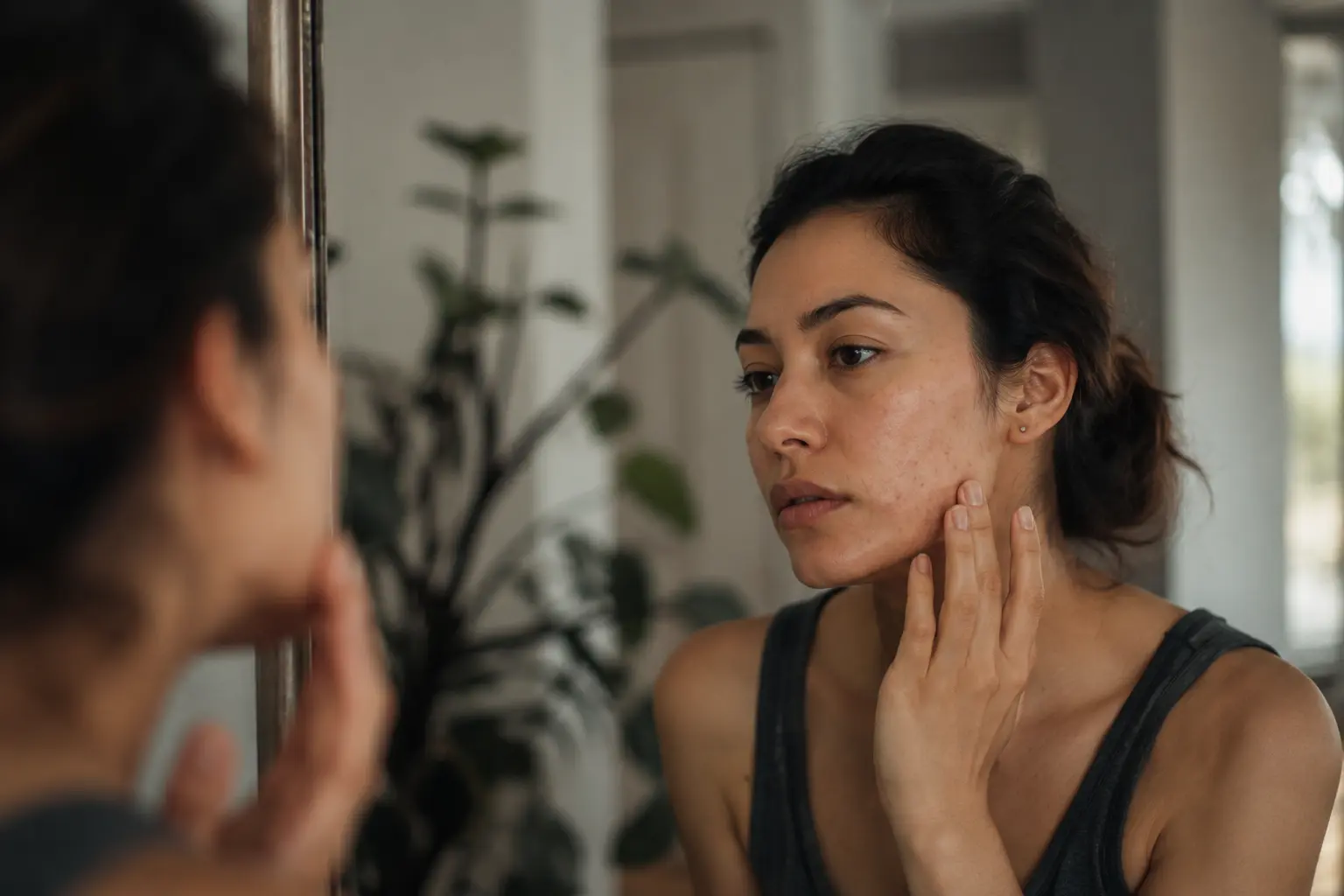
You wake up, look in the mirror, and there it is again: another cluster of painful breakouts right along your jawline, perfectly timed with your cycle, and you’re exhausted from the hormonal skin changes that seem to control your face more than you do.
Hormonal imbalance and acne: the connection
When hormones fluctuate, your skin doesn’t just react mildly. Your sebaceous glands, which produce the oil that keeps skin lubricated, become hypersensitive to hormonal signals. Androgens like testosterone trigger these glands to produce excess sebum, creating an environment where bacteria thrive and pores become clogged. Think of it this way: imagine your skin’s oil production as a faucet that normally runs at a steady trickle. During hormonal shifts, someone turns that faucet to full blast. The excess oil mixes with dead skin cells, bacteria colonize the blocked pores, and inflammation follows. Research shows this process intensifies during specific phases of the menstrual cycle and can persist for years if left unaddressed. Young adults often experience this most acutely during late teens and early twenties, when hormonal systems are still stabilizing. Understanding this biological mechanism helps explain why your acne isn’t simply a hygiene issue or a temporary blemish problem.
Skin changes during menstrual cycle
Your menstrual cycle creates a predictable hormonal rhythm that directly influences your skin. During the follicular phase, estrogen rises and sebum production typically decreases, leaving skin clearer and more balanced. Then comes ovulation, followed by the luteal phase, when progesterone dominates and sebum production spikes dramatically. This is why many young adults notice breakouts appearing like clockwork around days 21 to 28 of their cycle, clustering along the chin, jawline, and cheeks. Some people even track their breakouts on a calendar and realize the pattern is eerily consistent. The inflammation during this phase also intensifies, making existing blemishes appear redder and more painful. Understanding this cyclical pattern isn’t just interesting trivia; it’s practical knowledge that helps you anticipate flare-ups and adjust your skincare intensity accordingly. You might use gentler products during clear phases and introduce stronger treatments during high-breakout weeks. This strategic timing can significantly reduce overall acne severity compared to using the same routine year-round.
Recommended hormonal acne protocol
A solid hormonal acne protocol works on multiple levels simultaneously. First, establish a consistent skincare routine using gentle cleansers that remove excess oil without stripping your skin’s protective barrier. Non-comedogenic products are essential, meaning they won’t clog pores. Many young adults make the mistake of over-cleansing or using harsh scrubs, which actually triggers more oil production as the skin tries to compensate. Second, incorporate topical treatments strategically. Salicylic acid exfoliates inside pores to prevent blockages, while benzoyl peroxide kills acne-causing bacteria. However, timing matters: use these during your high-breakout phases rather than daily year-round, which can cause irritation and resistance. Third, recognize that skincare alone has limits. Dermatologists can prescribe targeted treatments like retinoids, which normalize skin cell turnover, or hormonal therapies such as birth control or spironolactone, which directly address the hormonal drivers of acne. Many young adults see dramatic improvements only after adding a prescription component. The key is viewing this as a layered approach, not a single solution.
- Establish a gentle skincare routine with pH-balanced cleansers and non-comedogenic moisturizers
- Use topical treatments with acne-fighting ingredients strategically during high-breakout phases
- Seek professional dermatological advice for prescription medications or hormonal therapies tailored to your specific needs
🔬 Science-backed benefits in 2 minuteschoose where to begin:
Lifestyle factors and hormonal acne
Hormones don’t exist in isolation. Stress, diet, and sleep create a feedback loop that either amplifies or dampens hormonal acne. When you’re stressed, your body releases cortisol, which triggers inflammation and can worsen acne severity. A young adult pulling all-nighters before exams often notices their skin deteriorates during that exact period. Sleep deprivation also disrupts hormone regulation, making sebum production more erratic. Diet plays a supporting role: while chocolate and greasy food don’t directly cause acne, high-glycemic foods and excessive dairy may trigger inflammatory responses in some people. A diet rich in fruits, vegetables, and omega-3 fatty acids supports skin barrier function and reduces systemic inflammation. Stress management through exercise, meditation, or even simple breathing techniques can noticeably calm both your nervous system and your skin. Many young adults report that adding 30 minutes of daily movement or a consistent sleep schedule produces visible improvements within 4 to 6 weeks. These lifestyle factors won’t replace medical treatment, but they create the optimal conditions for any acne protocol to work more effectively.
Impact of hormonal changes in young adults
Young adulthood is when hormonal acne often peaks. During puberty and the early twenties, hormonal systems are actively rebalancing, and acne can persist for years if not addressed. Many young adults feel frustrated because they expected acne to disappear after their teens, only to face new breakouts in college or their early career. This timing coincides with increased stress, irregular sleep, and dietary changes, creating a perfect storm for hormonal skin issues. For those assigned female at birth, the impact can be particularly pronounced, with some experiencing severe cystic acne during specific cycle phases. For those assigned male at birth, androgens may drive persistent breakouts across the face and body. The psychological impact shouldn’t be underestimated either: acne during young adulthood affects confidence during formative social and professional years. Recognizing that this is a common, biologically-driven condition rather than a personal failure is the first step toward seeking appropriate treatment. Early intervention during these years can prevent scarring and reduce the long-term impact on skin health and self-esteem.
Future advances in hormonal acne treatment
Research into hormonal acne treatment is rapidly evolving. Scientists are developing therapies that target specific hormonal pathways without the side effects of traditional hormonal medications. Some emerging approaches focus on sebaceous gland sensitivity to androgens, exploring ways to reduce that sensitivity at the cellular level. Others investigate the role of the skin microbiome, recognizing that acne-causing bacteria interact with hormonal signals in complex ways. Newer topical retinoids and combination therapies are showing promise in clinical trials, offering faster results with fewer irritation issues. Additionally, personalized medicine approaches are emerging, where genetic testing might help predict which treatments will work best for your specific hormonal profile. Young adults entering the acne treatment landscape now have more options than previous generations. Staying informed about these advances through reputable dermatological sources means you can discuss emerging options with your healthcare provider. The future of acne management is moving toward precision and personalization rather than one-size-fits-all protocols.
Hormonal acne stems from predictable biological processes involving sebaceous gland sensitivity to androgens and cyclical hormone fluctuations. Young adults can effectively manage hormonal skin changes through a multi-layered approach combining consistent skincare, strategic topical treatments, lifestyle optimization, and professional medical guidance when needed. Understanding your personal hormonal patterns and recognizing common mistakes like over-cleansing or expecting permanent cures helps set realistic expectations. While hormonal acne may not be permanently cured, it can be controlled to the point where breakouts become manageable and predictable rather than overwhelming. The combination of targeted treatments, lifestyle adjustments, and emerging therapies offers genuine hope for clearer skin during these formative years.
Can hormonal acne be cured permanently?
Hormonal acne typically cannot be permanently cured because it’s driven by ongoing hormonal cycles, but it can be managed effectively to the point where breakouts become minimal and predictable. With consistent skincare routines, appropriate topical or prescription treatments, and lifestyle modifications, many young adults achieve clear skin for extended periods. Some people find that acne naturally improves as hormones stabilize in their late twenties or thirties, while others maintain management strategies long-term. The goal is control and confidence, not necessarily permanent elimination.
Are hormonal therapies safe for treating acne?
Hormonal therapies prescribed by dermatologists for acne treatment are generally safe when used under professional supervision. Common options like hormonal birth control or spironolactone have been used for decades with well-documented safety profiles. These medications work by balancing hormone levels or reducing androgen sensitivity, directly addressing the root cause of hormonal acne rather than just treating symptoms. Like all medications, they carry potential side effects that vary by individual, which is why medical supervision and regular check-ins with your healthcare provider are essential. Your dermatologist will assess your health history to determine if hormonal therapy is appropriate for you.
Others also read:
Disclaimer: This article is for informational purposes only and is not a substitute for professional medical advice. Always consult a healthcare professional for personal guidance.
This article has been prepared and reviewed by the GlobalHealthBeacon editorial team and is based on current medical research and published scientific literature available in 2026. It provides structured, evidence-based information to support informed health decisions.

