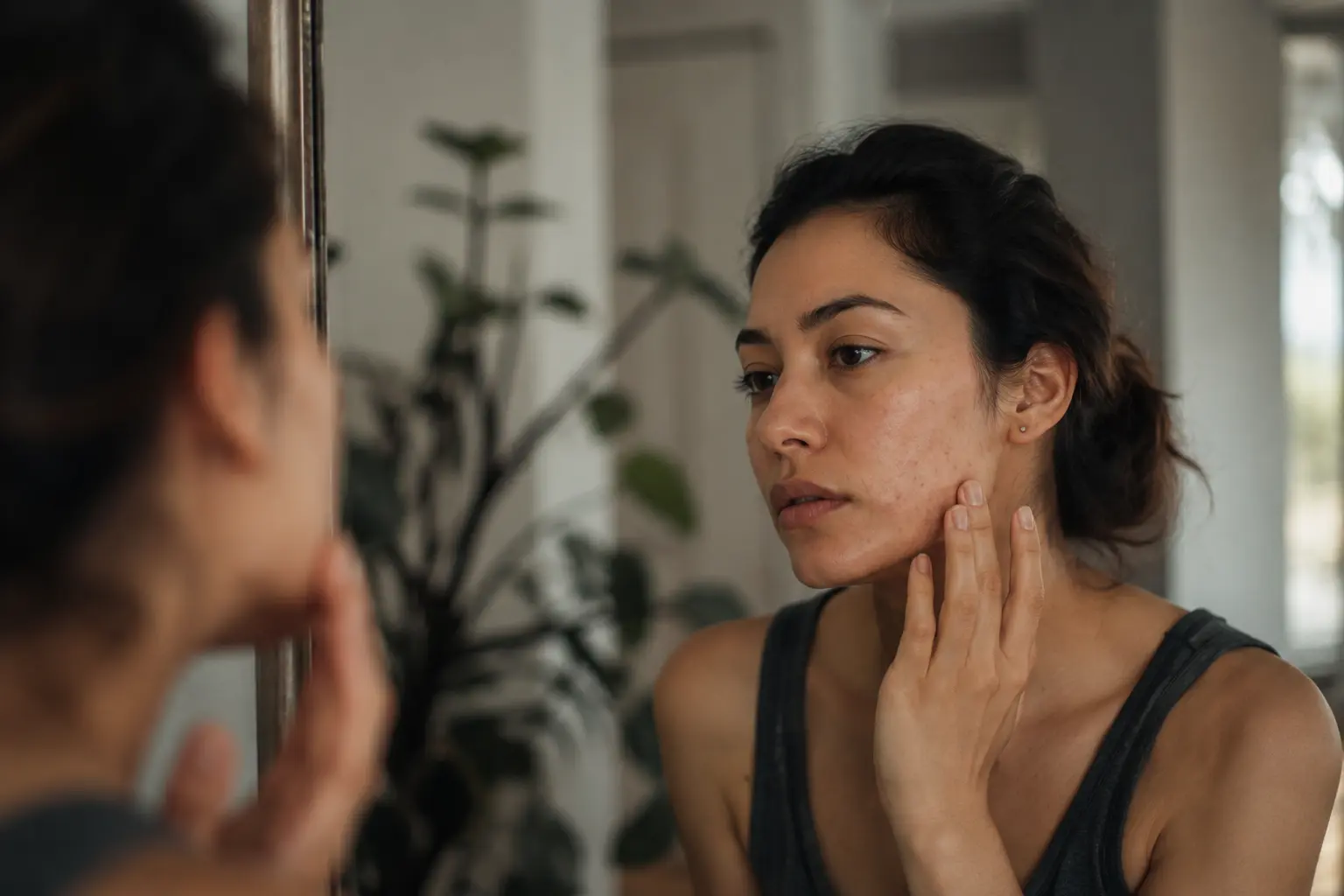
You wake up, look in the mirror, and there it is again—another cluster of angry red bumps spreading across your chin right before an important day, and you know hormonal skin changes are calling the shots on your confidence.
Understanding hormonal skin changes
Picture this: you’re 22, your skin was fine last week, and now you’re dealing with breakouts that seem to follow your cycle like clockwork. That’s hormonal skin changes in action, and you’re definitely not alone. These shifts happen when your body’s hormone levels fluctuate, whether from puberty, menstrual cycles, stress spikes, or underlying imbalances. Your sebaceous glands get extra sensitive to hormonal signals, pumping out more oil than usual, which clogs pores and creates the perfect breeding ground for acne. The frustrating part? It’s not just about what you eat or how often you wash your face. Your hormones are literally telling your skin to behave differently. Understanding this connection is the first step toward taking back control. Many young adults spend months trying random products before realizing the real culprit is hormonal, not just poor skincare habits.
- Balancing hormones through a healthy diet and lifestyle can mitigate skin issues.
- Consulting a dermatologist for personalized skincare routines can target hormonal acne effectively.
- Using non-comedogenic products can prevent clogged pores and reduce acne flare-ups.
Combatting hormonal acne naturally
You don’t always need prescription strength treatments to see real improvement. Take Sarah, a 24-year-old who started incorporating tea tree oil into her routine and noticed softer, less inflamed skin within two weeks. Aloe vera and witch hazel work similarly by calming inflammation and balancing your skin’s pH without stripping it dry. But here’s what actually moves the needle: hydration, movement, and stress relief. When you’re stressed, your cortisol spikes, which triggers more oil production and inflammation. Regular exercise, even a 20-minute walk, helps regulate hormones naturally. Drinking enough water supports your skin’s barrier function and helps flush out toxins. Meditation or journaling for just 10 minutes daily can lower stress levels significantly. These aren’t quick fixes, but they work because they address the root cause rather than just treating the symptom.
💬 Ready to feel better in 2 minutes?choose where to begin:
Skincare habits for hormonal balance
Your routine doesn’t need to be complicated, but it does need to be consistent. Start with a gentle cleanser in the morning and evening, something that removes oil without making your skin tight or uncomfortable. Follow with a lightweight, non-comedogenic moisturizer because dehydrated skin actually produces more oil to compensate. Add a mild exfoliant two to three times weekly to clear dead skin cells without irritating. Avoid products with harsh chemicals, alcohol, or heavy fragrances that can trigger sensitivity. Sun protection is non-negotiable, especially if you’re using any active ingredients. Many young adults skip this step and end up with hyperpigmentation from acne scars. Think of your skincare routine as a conversation with your skin, not a punishment. If something burns or causes redness, stop using it. Your skin is telling you something. Consistency matters more than perfection here.
Embracing inner wellness for outer glow
Clear skin starts from the inside out, and this isn’t just wellness jargon. When you practice mindfulness or yoga regularly, you’re literally reducing the stress hormones that trigger breakouts. Meditation doesn’t have to be 30 minutes of sitting in silence, either. Even five minutes of focused breathing before bed can shift your nervous system into a calmer state. Sleep is where your body repairs itself, including your skin. If you’re getting five hours a night and wondering why your acne won’t clear, that’s a major factor. Aim for seven to nine hours and notice the difference within a week. Your diet matters too, especially foods rich in antioxidants like berries, leafy greens, and omega-3s from fish or flaxseed. These support your skin’s natural healing process. Young adults who combine skincare with genuine self-care practices report not just clearer skin, but also better mood and energy. It’s a ripple effect.
By understanding hormonal skin changes, implementing natural remedies, adopting healthy skincare habits, and prioritizing inner wellness, young adults can effectively manage hormonal acne for clearer, healthier skin.
Can hormonal skin changes be resolved with over-the-counter products?
While some over-the-counter products may help manage hormonal acne, severe cases may require prescription medication or dermatological intervention.
Are hormonal skin changes permanent?
Hormonal skin changes are often temporary and can be controlled through lifestyle modifications, skincare routines, and proper stress management.
Others also read:
Disclaimer: This article is for informational purposes only and is not a substitute for professional medical advice. Always consult a healthcare professional for personal guidance.
This article presents an experience-based perspective and has been reviewed by the GlobalHealthBeacon editorial team in 2026. It provides structured, evidence-based information to support informed health decisions.

