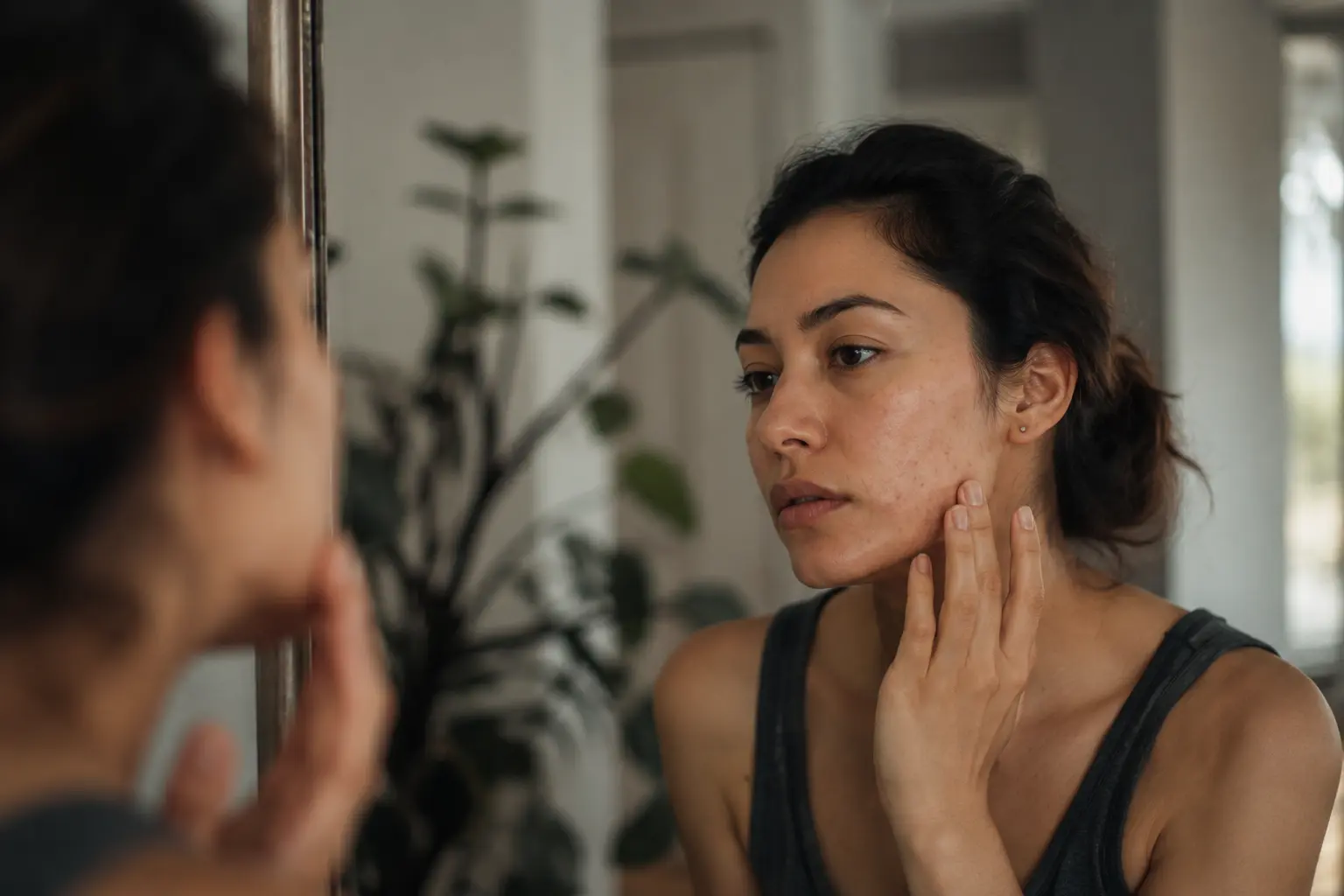
Your skin feels dry, tight, and suddenly looks like it aged five years overnight, and hormonal skin changes during menopause are the culprit behind every frustrating wrinkle, age spot, and loss of that plumpness you used to take for granted.
Understanding hormonal skin changes
When estrogen levels drop during menopause, your skin loses its ability to retain moisture and produce the collagen that keeps it firm and youthful. Think of estrogen as the glue holding your skin together. Without it, your skin becomes thinner, drier, and more prone to sagging. Many women notice this shift happens gradually at first, then accelerates. You might wake up one morning and realize your jawline looks softer or your cheeks have lost definition. This happens because estrogen regulates oil production, collagen synthesis, and skin thickness. The decrease in elastin, another protein responsible for skin bounce, compounds the problem. Some women experience this change over months, while others notice dramatic shifts within weeks. Understanding this biological reality helps you stop blaming yourself and start taking targeted action.
- Stay hydrated to maintain skin moisture and elasticity.
- Eat a balanced diet rich in antioxidants to protect your skin from damage.
- Avoid excessive sun exposure to prevent premature aging and skin damage.
Skincare routine for menopausal skin
Your pre-menopause skincare routine probably does not work anymore, and that is okay. You need products that address dehydration and loss of firmness directly. Start with a gentle cleanser that does not strip your skin of natural oils, because your skin is already struggling to produce them. Follow with a hydrating toner or essence to prep your skin for better absorption of serums and moisturizers. Apply a serum containing hyaluronic acid or peptides to boost hydration and stimulate collagen production. Layer a rich moisturizer over damp skin to lock in hydration. At night, use a retinoid product two to three times per week to encourage cell turnover and collagen rebuilding, starting low and increasing frequency as your skin adjusts. Consider adding a facial oil as the final step to seal everything in. For example, a 58-year-old woman might switch from a lightweight gel moisturizer to a heavier cream with ceramides and niacinamide, seeing visible improvement in skin texture within six weeks.
📘 Fix your day in under 2 minuteschoose where to begin:
Lifestyle changes for healthy skin
Your skin reflects your overall health, and during menopause, lifestyle choices matter more than ever. Exercise improves blood circulation, delivering oxygen and nutrients to your skin cells while promoting collagen production. Aim for at least 150 minutes of moderate activity weekly, whether that is brisk walking, swimming, or yoga. Sleep quality directly impacts skin repair and regeneration, so prioritize seven to nine hours nightly. Stress triggers cortisol release, which breaks down collagen and increases inflammation, so practice stress management through meditation, deep breathing, or hobbies you enjoy. Smoking accelerates skin aging by restricting blood flow and damaging collagen, so if you smoke, quitting is one of the most powerful skin interventions available. Limit alcohol, which dehydrates skin from the inside out. A woman who adds evening walks, starts a meditation practice, and improves her sleep schedule often notices skin improvements within weeks, even before new skincare products take effect.
Consulting a dermatologist
If your skin concerns persist despite consistent skincare and lifestyle changes, a dermatologist can offer solutions beyond what you can do at home. They can prescribe stronger retinoids, recommend professional treatments like microneedling or chemical peels to stimulate collagen, or discuss hormone replacement therapy if appropriate for your situation. Some women benefit from laser treatments to address hyperpigmentation or broken capillaries that become more visible during menopause. Others find that prescription-strength moisturizers or compounded skincare products formulated specifically for their skin chemistry work better than over-the-counter options. A dermatologist can also rule out skin conditions that mimic menopausal changes, such as rosacea or dermatitis, which require different treatment approaches. Do not wait until you feel desperate to seek professional guidance. A consultation early in your menopausal transition can prevent years of frustration and help you build a treatment plan tailored to your specific skin type and concerns.
Embracing age-positive skincare
The pressure to look ageless can make menopausal skin changes feel like a personal failure, but shifting your mindset transforms how you approach skincare. Age-positive skincare means taking excellent care of your skin not to erase signs of aging, but to support your skin health and feel confident in your appearance at this stage of life. Your skin tells the story of decades of experiences, sun exposure, laughter, and resilience. Instead of fighting every wrinkle, focus on skin that looks healthy, hydrated, and well-maintained. This might mean accepting fine lines while ensuring your skin glows and feels supple. Practice self-compassion when you see changes you did not expect. Cultivate confidence by investing in skincare rituals that feel nurturing rather than punitive. Many women find that once they stop obsessing over erasing aging signs and start focusing on skin vitality, they feel more at peace with their appearance and actually enjoy their skincare routine.
Hormonal skin changes during menopause can be mitigated through hydration, a balanced diet, sun protection, gentle skincare, healthy lifestyle habits, dermatologist consultations, and an age-positive skincare approach.
Can hormonal skin changes be reversed?
While hormonal skin changes during menopause are natural and inevitable, adopting a holistic skincare routine and making healthy lifestyle choices can help improve and maintain skin health.
Are there specific skincare products for menopausal skin?
Yes, there are skincare products formulated to address the unique needs of menopausal skin, such as moisturizers with hyaluronic acid, serums with peptides, and creams with retinoids for collagen stimulation.
Others also read:
Disclaimer: This article is for informational purposes only and is not a substitute for professional medical advice. Always consult a healthcare professional for personal guidance.
This guide has been prepared and reviewed by the GlobalHealthBeacon editorial team and reflects current medical research as of 2026. It provides structured, evidence-based information to support informed health decisions.

