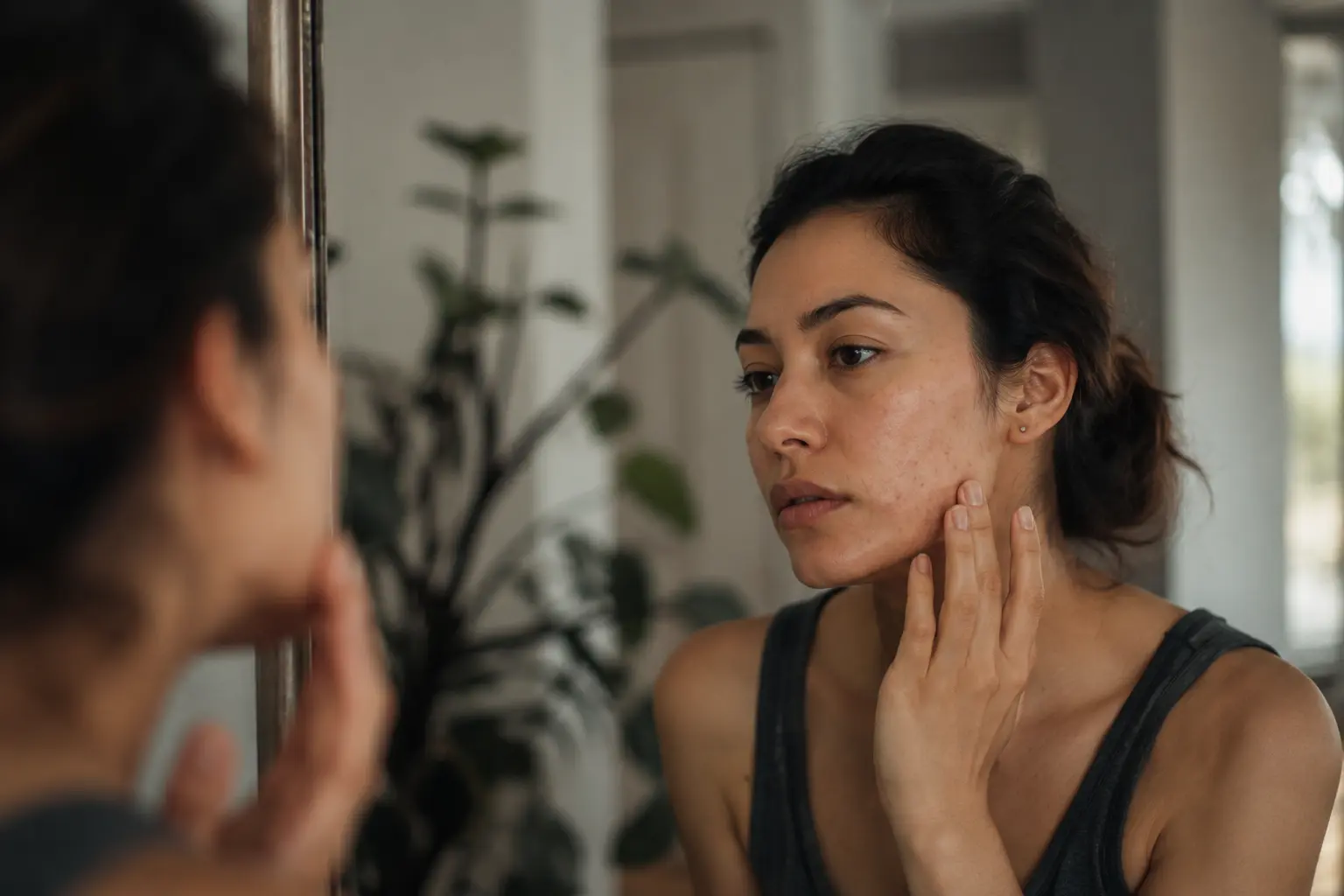
Waking up to new breakouts right before an important event, dealing with painful cystic acne that won’t budge no matter what you try, or watching your skin spiral during your cycle is exhausting, but hormonal skin changes are completely manageable once you understand what’s actually happening beneath the surface.
Understanding hormonal acne
Hormonal acne works differently than regular breakouts because it’s triggered by fluctuations in androgens and other hormones that signal your skin to produce excess oil. When these hormones spike, your sebaceous glands go into overdrive, creating an environment where bacteria thrive and pores become clogged. This typically shows up as deeper, more painful breakouts along your jawline, chin, and sometimes your neck and shoulders. Picture this: you’re two weeks before your period, and suddenly you notice tender bumps forming in the same spots as last month. That’s not coincidence, that’s your hormones sending signals to your skin. The inflammation runs deeper than surface-level acne, which is why spot treatments alone often fail. Understanding this mechanism helps you stop blaming yourself and start addressing the root cause with targeted strategies that actually work for hormonal triggers.
- Maintain a consistent skincare routine to keep your skin clean and balanced.
- Look for products with salicylic acid or benzoyl peroxide to target acne-causing bacteria.
- Incorporate gentle exfoliation to prevent dead skin cells from clogging your pores.
Healthy lifestyle habits
Your skin is a direct reflection of what’s happening inside your body, and hormonal acne responds powerfully to lifestyle adjustments. Start with hydration, which sounds basic but actually helps regulate sebum production and flush out toxins that aggravate breakouts. Drink at least two liters of water daily and notice how your skin texture improves within weeks. Next, examine your diet. Foods high in refined carbohydrates and dairy can trigger hormonal fluctuations that worsen acne in susceptible individuals. Consider reducing processed foods and increasing omega-3 rich options like salmon, walnuts, and flaxseeds, which actively reduce inflammation. Exercise is equally critical because it improves circulation, reduces cortisol, and helps regulate hormonal balance. Aim for 30 minutes of movement most days, whether that’s running, yoga, or strength training. Finally, prioritize sleep. During deep sleep, your body repairs skin cells and balances hormones naturally. Consistently getting seven to nine hours signals your body to regulate sebum production and reduce inflammation, which directly translates to fewer breakouts.
📘 Fix your day in under 2 minuteschoose where to begin:
Stress management techniques
Stress hormones like cortisol directly trigger your body to produce more androgens, which then signals your skin to create excess oil and inflammation. This is why you often see acne flare-ups during stressful periods like exam season or after a difficult week at work. Breaking this cycle requires intentional stress management. Yoga is particularly effective because it combines physical movement with breathing techniques that calm your nervous system. Even 15 minutes of gentle yoga three times weekly can reduce cortisol levels measurably. Meditation and deep breathing exercises work similarly, activating your parasympathetic nervous system and signaling your body that the threat has passed. Try the 4-7-8 breathing technique: inhale for four counts, hold for seven, exhale for eight. This simple practice can be done anywhere and immediately lowers stress hormones. Additionally, consider journaling, spending time in nature, or engaging in hobbies that genuinely relax you. The key is consistency. Sporadic stress relief won’t cut it, but building these practices into your weekly routine creates lasting hormonal balance that your skin will reflect.
Consulting with a dermatologist
If you’ve committed to skincare routines, lifestyle changes, and stress management for three to four months without seeing improvement, professional intervention becomes the logical next step. A dermatologist can identify whether your acne is truly hormonal or if other factors are at play, and they can prescribe treatments that over-the-counter products simply cannot match. For hormonal acne specifically, dermatologists often recommend birth control pills that regulate hormone levels, spironolactone which blocks androgen receptors, or topical retinoids that accelerate skin cell turnover. They might also suggest professional treatments like chemical peels or laser therapy that address inflammation and scarring. The consultation itself is valuable because a dermatologist can rule out other conditions mimicking acne and create a personalized treatment plan based on your specific hormone profile and skin type. Don’t view this as failure, view it as upgrading your toolkit with professional-grade solutions. Many young adults see dramatic improvements within two to three months of starting prescribed treatments, especially when combined with the lifestyle habits you’ve already established.
Consistency is key
Managing hormonal acne is genuinely a marathon, not a sprint, and this is where most people stumble. You might start a new skincare routine with enthusiasm, stick with it for three weeks, see no dramatic changes, and abandon it. But skin cell turnover takes 28 to 40 days, and hormonal acne takes even longer to respond because you’re working against deeper biological processes. Set realistic expectations: you should see initial improvements around six to eight weeks, with more significant results by three to four months. Create a simple system to stay consistent. Use phone reminders for your skincare routine, mark your calendar with your menstrual cycle to anticipate breakout patterns, and track which products actually work for you. Keep a simple journal noting what you did, what you ate, your stress levels, and your skin condition. Over time, patterns emerge that help you predict and prevent flare-ups. Remember that consistency doesn’t mean perfection. Missing one day of skincare won’t undo your progress, but abandoning your routine entirely will. The goal is building sustainable habits that become automatic, so managing hormonal acne feels like second nature rather than a constant battle.
Hormonal acne responds best to a multi-layered approach that addresses the biological root cause while supporting your body’s natural healing processes. By understanding how hormones trigger excess oil production and inflammation, adopting targeted skincare practices, making lifestyle adjustments around diet and exercise, managing stress intentionally, and seeking professional help when needed, young adults can effectively manage their skin condition and regain confidence. The key is patience and consistency, recognizing that improvements build gradually over weeks and months rather than days.
Can hormonal acne be treated effectively?
Yes, hormonal acne can be effectively managed through a combination of skincare routines, lifestyle changes, and if necessary, professional guidance from a dermatologist. Most people see meaningful improvement within three to four months of consistent effort.
Is hormonal acne a common issue among young adults?
Yes, hormonal acne is a common skin condition among young adults, typically resulting from hormone fluctuations during puberty or menstrual cycles. You are not alone in experiencing this, and it is completely manageable with the right approach.
Others also read:
Disclaimer: This article is for informational purposes only and is not a substitute for professional medical advice. Always consult a healthcare professional for personal guidance.
This guide has been prepared and reviewed by the GlobalHealthBeacon editorial team and reflects current medical research as of 2026. It provides structured, evidence-based information to support informed health decisions.

