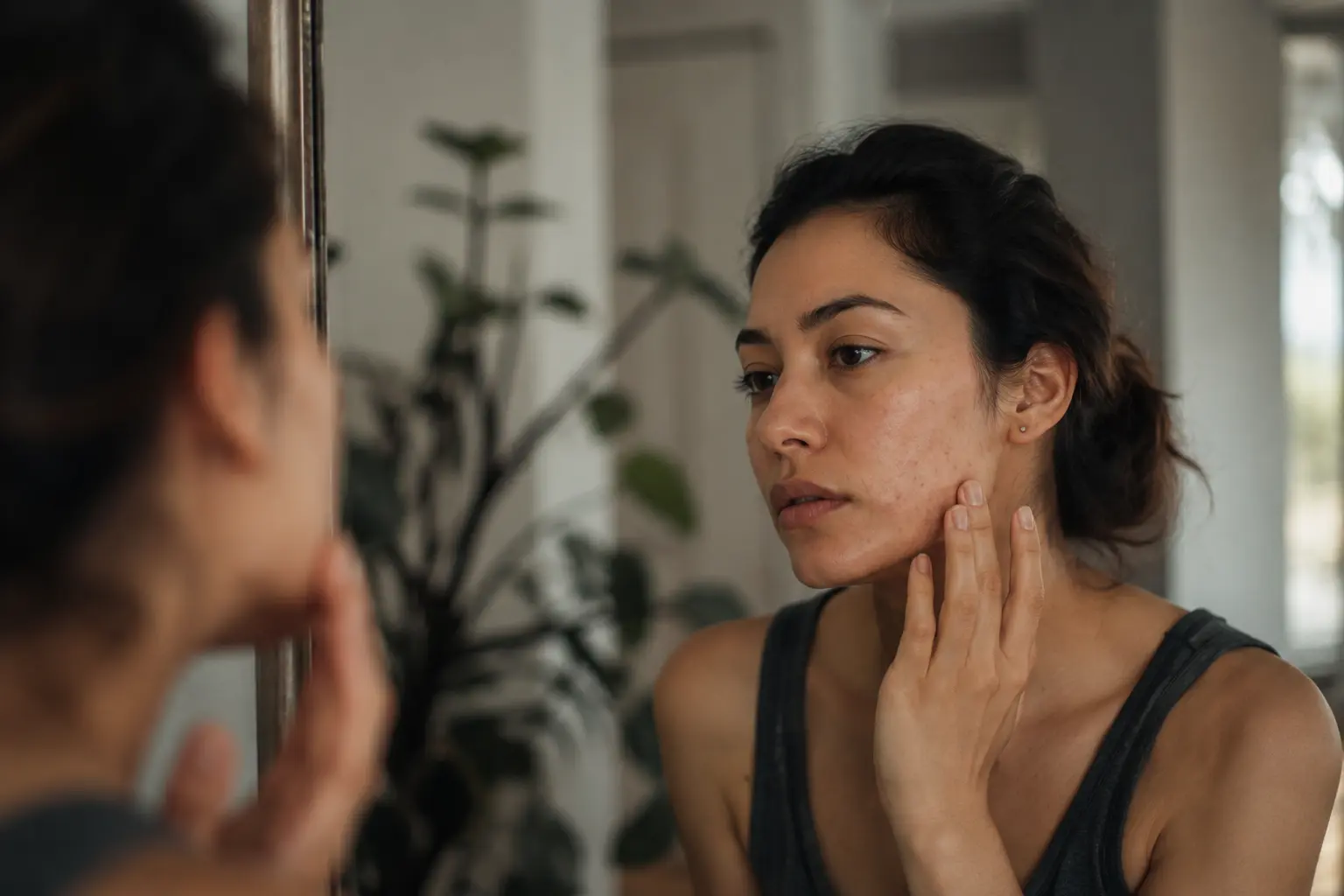
Your skin breaks out before your period, feels impossibly dry one month and oily the next, and you’re left wondering if you’re losing your mind or if hormonal skin changes are actually real and worth understanding.
Hormones and skin functions
Your skin is far more than just a protective barrier. It’s a dynamic organ constantly responding to chemical signals coursing through your body. Hormones act like messengers, instructing your skin cells to produce oil, retain moisture, and maintain structural integrity. Estrogen and progesterone are the primary players in this hormonal orchestra, but androgens also influence how your skin behaves. When these hormones fluctuate, your skin follows suit. Consider a typical menstrual cycle: during the follicular phase when estrogen rises, many women notice their skin looks clearer and more radiant. As progesterone increases in the luteal phase, sebaceous glands become more active, potentially triggering breakouts. This isn’t imagination or coincidence. It’s biology. The sebaceous glands contain androgen receptors, meaning they’re exquisitely sensitive to hormonal shifts. When androgens spike, these glands produce excess sebum, creating an environment where acne-causing bacteria thrive. Simultaneously, hormonal fluctuations can compromise your skin’s natural moisture barrier, leading to dehydration and sensitivity. Understanding these mechanisms helps you recognize that your skin isn’t misbehaving. It’s responding exactly as it should to your body’s chemical environment.
Impact of estrogen on skin
Estrogen is often called the skin’s best friend, and there’s solid science behind that reputation. This hormone stimulates fibroblasts, the cells responsible for producing collagen and elastin, the proteins that keep skin plump, firm, and youthful-looking. When estrogen levels are optimal, you’ll typically notice your skin appears thicker, more hydrated, and has a natural luminosity. This glow isn’t just cosmetic. Estrogen increases blood flow to the skin, delivering more oxygen and nutrients to skin cells. It also enhances hyaluronic acid production, a humectant that can hold up to 1000 times its weight in water. Think of estrogen as the conductor ensuring your skin’s hydration orchestra plays in perfect harmony. However, the story changes dramatically during menopause. As estrogen production declines, collagen synthesis slows by approximately 1 percent annually after age 30, and even more sharply after menopause. Women often report that their skin becomes noticeably thinner, drier, and more prone to wrinkles during this transition. The loss of estrogen’s protective effects can also trigger increased sensitivity and a dull, tired appearance. This isn’t a personal failure. It’s a predictable biological shift that millions of women experience. Recognizing this connection empowers you to adjust your skincare approach accordingly.
Understanding hormonal imbalance
Hormonal imbalance occurs when your body produces too much or too little of certain hormones, disrupting the delicate equilibrium your skin depends on. Elevated androgens, whether from polycystic ovary syndrome (PCOS), thyroid dysfunction, or other conditions, frequently manifest as acne clustered along the chin and jawline. This pattern is so consistent that dermatologists often use it as a diagnostic clue. Beyond acne, hormonal imbalance can trigger melasma, a condition where patches of hyperpigmentation appear on the cheeks, forehead, and upper lip. This occurs because hormonal fluctuations stimulate melanocytes, the cells producing skin pigment. Women with darker skin tones are particularly susceptible. Consider Sarah, a 35-year-old woman who developed persistent jawline acne and dark patches on her cheeks. After consulting a dermatologist, she discovered elevated testosterone levels related to undiagnosed PCOS. Once she addressed the hormonal root cause through medical intervention, her skin gradually improved. This illustrates a crucial point: treating only the skin symptoms without addressing the underlying hormonal cause often yields disappointing results. Hormonal imbalance also affects skin barrier function, making skin more reactive to environmental stressors and skincare products. The key is recognizing that persistent, pattern-specific skin changes warrant professional evaluation rather than endless product experimentation.
- Consult a dermatologist or endocrinologist to identify whether hormonal imbalance is contributing to your skin concerns, as this determines your treatment approach.
- Maintain a balanced diet rich in antioxidants, omega-3 fatty acids, and minerals like zinc and iron, which support hormonal regulation and skin health.
- Incorporate stress-reducing practices such as yoga, meditation, or regular exercise, as chronic stress elevates cortisol and can worsen hormonal skin issues.
🔬 Science-backed benefits in 2 minuteschoose where to begin:
Debunking skin myths
The narrative that hormones alone cause all your skin problems is incomplete and frankly, misleading. Yes, hormones matter enormously, but they’re one player in a much larger game. Environmental factors like UV radiation, air pollution, and harsh weather conditions damage skin cells and accelerate aging regardless of your hormone levels. Your skincare products themselves can trigger reactions. A moisturizer that worked beautifully last year might irritate your skin during hormonal shifts when your barrier is compromised. Diet, sleep quality, hydration status, and gut health all influence skin appearance and resilience. Many women blame hormones for acne that’s actually triggered by a new foundation or a skincare ingredient their skin has become sensitive to. Another common myth: that hormonal skin changes are inevitable and unchangeable. While you can’t eliminate hormonal fluctuations, you absolutely can minimize their visible impact through strategic skincare, lifestyle adjustments, and when necessary, medical intervention. The myth that only teenagers get hormonal acne is equally false. Adult women experience hormonal acne throughout their reproductive years and beyond. Understanding that skin health results from multiple interconnected factors, not just hormones, shifts you from passive victim to informed decision-maker capable of meaningful change.
Adapting skincare routine
Your skincare routine shouldn’t be static. It should evolve with your hormonal cycle and life stage. During the follicular phase when estrogen is rising, your skin typically tolerates more active ingredients and benefits from lighter hydration. This is an ideal time to use gentle exfoliants or vitamin C serums. As you enter the luteal phase and progesterone rises, your skin becomes more reactive and your barrier more vulnerable. Switch to richer moisturizers, skip potentially irritating actives, and focus on soothing ingredients like centella asiatica and niacinamide. Non-comedogenic products are essential if you’re acne-prone, as they won’t clog pores already primed for breakouts by hormonal shifts. Hyaluronic acid deserves special mention because it supports skin hydration at the cellular level, counteracting the dryness hormonal changes often trigger. Retinoids are powerful for hormonal skin, but introduce them gradually and avoid them during the luteal phase when skin sensitivity peaks. Many women make the mistake of using the same routine year-round, then wonder why their skin suddenly rebels. Consider keeping a simple skin diary noting your cycle phase, what products you used, and how your skin responded. Over a few months, patterns emerge. You’ll discover that your skin thrives with a cyclical approach rather than a one-size-fits-all regimen. This personalized strategy transforms skincare from frustrating guesswork into intentional, effective practice.
Consulting a professional
If your skin concerns persist despite thoughtful skincare adjustments and lifestyle modifications, professional guidance becomes invaluable. A dermatologist can distinguish between hormonal acne, bacterial acne, fungal issues, and other conditions that look similar but require different approaches. They can also identify whether an underlying hormonal disorder like PCOS or thyroid dysfunction is contributing to your skin problems. Topical treatments like retinoids, azelaic acid, and prescription-strength benzoyl peroxide are significantly more potent than over-the-counter options and may be necessary for stubborn hormonal acne. For some women, hormonal therapy such as birth control pills or spironolactone, a medication that blocks androgen effects, provides dramatic improvement. These aren’t cosmetic band-aids. They’re medical interventions addressing the root cause. A dermatologist can also rule out conditions like rosacea or perioral dermatitis that can mimic hormonal skin changes. They’ll consider your full health picture, including medications, supplements, and medical history. The investment in professional consultation often saves months of ineffective experimentation and the emotional toll of struggling with persistent skin concerns. Think of it as getting a personalized roadmap rather than wandering in the dark hoping to stumble upon solutions.
Hormonal skin changes in women are a natural, predictable phenomenon rooted in the complex interplay between estrogen, progesterone, androgens, and skin physiology. The evidence is clear: hormones profoundly influence oil production, collagen synthesis, hydration, and barrier function. However, hormones tell only part of the story. Environmental factors, skincare products, diet, stress, and sleep quality all contribute to skin health. By understanding the science behind these changes, dispelling myths about inevitability and causation, and adopting a cyclical, personalized skincare approach, you move from frustration to empowerment. Professional guidance becomes essential when self-care strategies plateau, offering targeted treatments addressing root causes rather than surface symptoms. Your skin isn’t misbehaving. It’s communicating. Learning to listen and respond thoughtfully transforms hormonal skin changes from a source of anxiety into a manageable aspect of your health journey.
Can hormonal skin changes be reversed?
Hormonal skin changes cannot be completely reversed because they’re driven by natural biological processes, but their visible impact can be substantially minimized. Proper skincare tailored to your hormonal cycle, lifestyle adjustments including stress management and sleep optimization, dietary improvements, and when appropriate, medical treatments like topical retinoids or hormonal therapy can dramatically improve skin appearance and resilience. The key is addressing both the hormonal component and the external factors within your control.
What skincare products are best for hormonal skin?
The best products for hormonal skin depend on your cycle phase and specific concerns, but generally include non-comedogenic formulations with ingredients like niacinamide for sebum regulation, hyaluronic acid for hydration, salicylic acid for gentle exfoliation during less sensitive phases, and retinol for collagen support. During the luteal phase when skin is more reactive, prioritize soothing ingredients like centella asiatica and azelaic acid. Avoid overly stripping cleansers and consider cycling active ingredients rather than using them daily year-round.
Others also read:
Disclaimer: This article is for informational purposes only and is not a substitute for professional medical advice. Always consult a healthcare professional for personal guidance.
This article has been prepared and reviewed by the GlobalHealthBeacon editorial team and is based on current medical research and published scientific literature available in 2026. It provides structured, evidence-based information to support informed health decisions.

