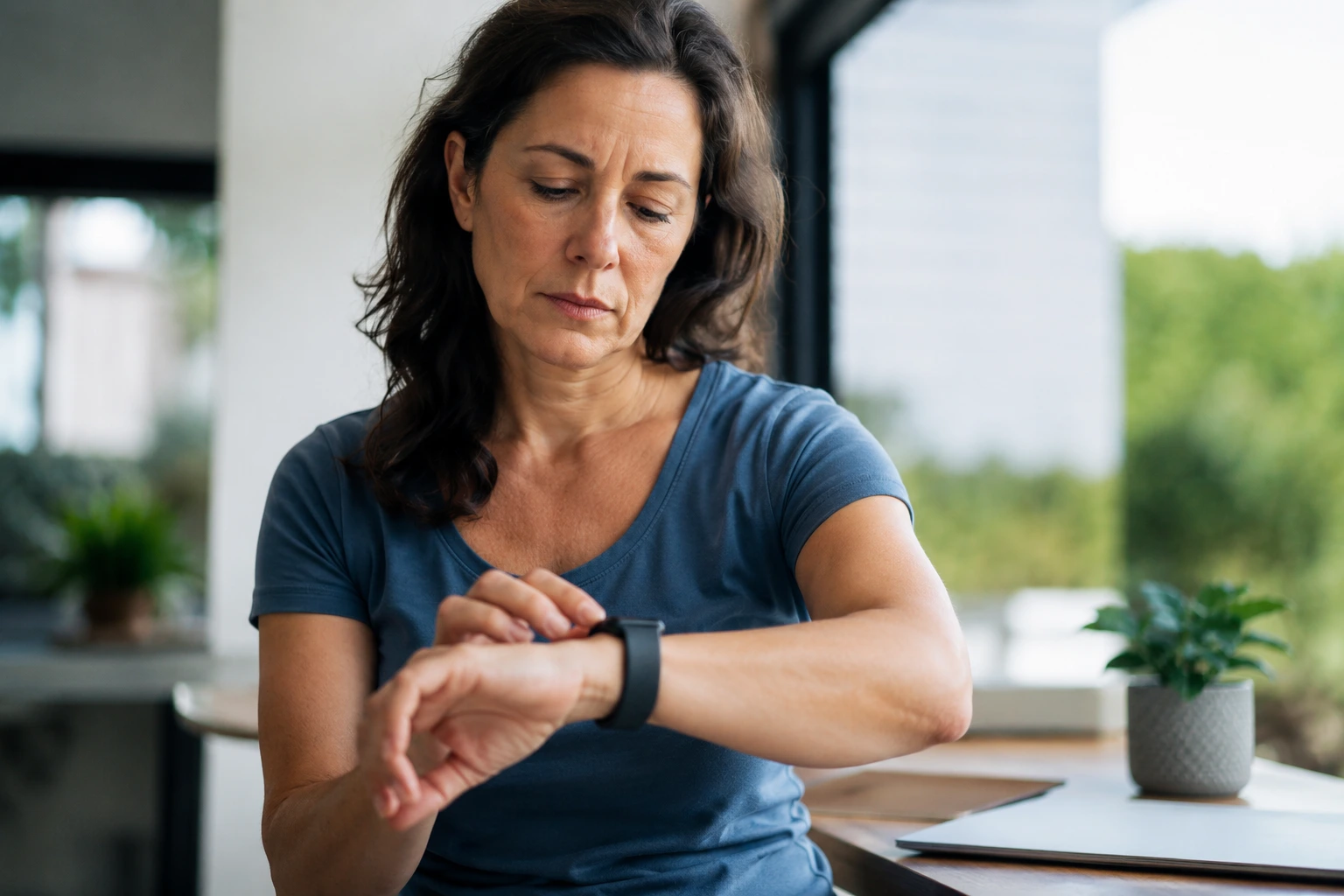
Your smartwatch just sent another heart rate alert and now you’re spiraling, wondering if something’s actually wrong or if you’re just stressed about the alert itself, but understanding what’s really happening inside your body when smartwatch health alerts pop up could be the difference between panic and peace of mind.
The role of smartwatches in health monitoring
Smartwatches have quietly become personal health assistants sitting on your wrist. These devices are packed with multiple sensors that work together to paint a picture of your overall health. Beyond just counting steps, modern smartwatches monitor heart rate patterns, track how many hours you actually sleep versus how many you spend tossing and turning, measure blood oxygen saturation, and even estimate stress levels throughout your day. For many women, especially those managing multiple responsibilities or navigating hormonal changes, having continuous access to this data means you’re no longer guessing about what’s happening in your body. You can see patterns emerge over weeks and months. Maybe you notice your heart rate spikes every Tuesday afternoon, or that your sleep quality dips during certain times of your cycle. These devices transform abstract feelings of fatigue or unease into concrete data points that you can discuss with your healthcare provider. They serve as a bridge between your lived experience and medical evidence.
Heart rate monitoring: how do smartwatches work?
The technology behind smartwatch heart rate monitoring is surprisingly elegant. Your smartwatch uses something called photoplethysmography, or PPG for short. Here’s what actually happens: tiny LED lights in the sensor emit light wavelengths into your skin, usually green light because it penetrates just deep enough to reach your blood vessels without going too far. As your heart pumps blood through those vessels, the amount of light absorbed changes with each beat. The sensor detects these minute fluctuations in light reflection and absorption, then calculates your heart rate based on how frequently these changes occur. It’s non-invasive, requires no finger pricks or chest straps, and happens continuously throughout your day. The smartwatch essentially watches your blood flow in real time. However, accuracy can vary based on skin tone, tattoos, how tightly you wear the device, and even your movement. A woman exercising vigorously might get less accurate readings than one sitting quietly at her desk. Understanding this helps you interpret alerts with appropriate context rather than treating every notification as a medical emergency.
Interpreting heart alerts on your smartwatch
When your smartwatch sends a heart alert, the first thing to do is pause and assess your context. Are you anxious about something? Did you just finish a workout? Are you running a fever? Your baseline heart rate is your personal normal, and it varies from person to person. A resting heart rate of 60 beats per minute is healthy for one woman but might be elevated for another who typically runs at 50. Start tracking your own patterns so you recognize what’s normal for you. An alert about an irregular rhythm is different from an alert about elevated heart rate, and both are different from a low heart rate alert. Rather than fixating on a single reading, look for trends. If your resting heart rate has gradually climbed over several weeks, that’s worth noting. If it spiked once during a stressful meeting and returned to normal, that’s likely just your body responding appropriately to stress. Common mistakes include panicking over isolated readings, ignoring patterns that develop over time, or conversely, dismissing all alerts as false alarms. The sweet spot is informed awareness: take the data seriously enough to notice patterns, but not so seriously that you’re checking your wrist every five minutes.
- Establish your personal baseline by noting your typical resting heart rate over several weeks of normal days.
- When you receive an alert, pause and consider your current activity, stress level, caffeine intake, and any illness symptoms.
- Track patterns in a notes app or health app rather than reacting to individual readings.
- Distinguish between different alert types: irregular rhythm, elevated rate, and low rate each mean different things.
- Consult your healthcare provider if you notice persistent irregularities, new patterns, or alerts accompanied by symptoms like dizziness or chest discomfort.
🔬 Science-backed benefits in 2 minuteschoose where to begin:
Sleep patterns and heart health
Your smartwatch tracks sleep, and this matters more for your heart than you might realize. During sleep, your body goes through different stages, and your heart rate naturally fluctuates. In deep sleep, your heart rate drops and your blood pressure decreases, giving your cardiovascular system a chance to recover from the day’s demands. When sleep is fragmented or shallow, your heart doesn’t get this restorative period. Over time, poor sleep quality is linked to increased resting heart rate, higher blood pressure, and greater cardiovascular strain. Your smartwatch can reveal if you’re spending enough time in deep sleep or if you’re stuck in light sleep all night. Many women find that tracking sleep patterns helps them see how lifestyle factors affect their rest. Maybe you notice that exercising too close to bedtime keeps you in light sleep, or that three cups of coffee before noon disrupts your sleep architecture that night. The connection between sleep and heart rate variability is particularly important. Heart rate variability, or HRV, measures the time intervals between heartbeats. Higher HRV generally indicates better cardiovascular fitness and stress resilience. When sleep suffers, HRV often declines, which your smartwatch can detect. This gives you early warning signs that your body needs more recovery time.
The importance of active lifestyle monitoring
Physical activity is one of the most powerful tools for heart health, and your smartwatch makes it visible. When you exercise, your heart becomes more efficient. Over time, regular activity lowers your resting heart rate because your heart doesn’t have to work as hard to pump blood throughout your body. Your smartwatch tracks this improvement. A woman who starts a walking routine might notice her resting heart rate gradually decrease from 75 to 65 beats per minute over several months. That’s not just a number; that’s her heart becoming stronger. The device also shows you how your heart rate responds to different activities. A brisk walk might raise your heart rate to 110, while the same effort on an incline might push it to 130. This helps you understand your cardiovascular capacity and adjust intensity appropriately. Many women use their smartwatch data to stay motivated. Seeing that you’ve hit your activity goal three days in a row, or that your average heart rate during exercise has improved, provides tangible evidence of progress. The smartwatch transforms abstract health advice like move more into concrete daily targets and visible results. This feedback loop encourages consistency, which is what actually builds cardiovascular fitness over time.
The future of smartwatch health alerts
Smartwatch technology is evolving rapidly, and the next generation of devices will likely offer even more comprehensive health monitoring. Current research is focused on non-invasive blood pressure measurement directly from the wrist, which would eliminate the need for separate cuff devices. Blood oxygen monitoring is already available on many models, providing insights into respiratory health and sleep quality. Stress level detection is becoming more sophisticated, using heart rate variability and other biometric signals to identify when your nervous system is in overdrive. Some manufacturers are exploring skin temperature monitoring, which can indicate infection or hormonal shifts. The ultimate vision is a smartwatch that acts as an early warning system, detecting subtle changes in your health patterns before they become serious problems. For women specifically, future devices might include better tracking of menstrual cycle impacts on heart rate and other metrics, since hormonal fluctuations genuinely affect cardiovascular function. As these technologies advance, the data becomes richer and more actionable. However, this also means the importance of understanding what the data means increases. A smartwatch that can measure five different health parameters is only useful if you know how to interpret those measurements and when to seek professional guidance.
Smartwatches equipped with heart alerts use photoplethysmography technology to monitor your heart rate continuously, providing data that can reveal patterns and trends in your cardiovascular health. Understanding how these alerts work, interpreting them in context, and connecting them to your sleep quality, physical activity, and overall lifestyle empowers you to take a more informed approach to your health. While smartwatch data is valuable, it works best as a complement to professional medical care rather than a replacement for it. As technology advances, these devices will likely offer even more comprehensive health insights, making personal health monitoring more accessible and detailed than ever before.
Can smartwatch heart alerts replace medical consultations?
Smartwatch heart alerts serve as supplementary tools for health monitoring and should not replace professional medical advice. Consult healthcare professionals for detailed analysis and interpretation of heart rate data.
Are smartwatch heart alerts always accurate?
Smartwatch heart alerts provide valuable insights but may have limitations in accuracy compared to medical-grade devices. Use heart rate data as indicators rather than definitive diagnostic tools.
Others also read:
Disclaimer: This article is for informational purposes only and is not a substitute for professional medical advice. Always consult a healthcare professional for personal guidance.
This article has been prepared and reviewed by the GlobalHealthBeacon editorial team and is based on current medical research and published scientific literature available in 2026. It provides structured, evidence-based information to support informed health decisions.
