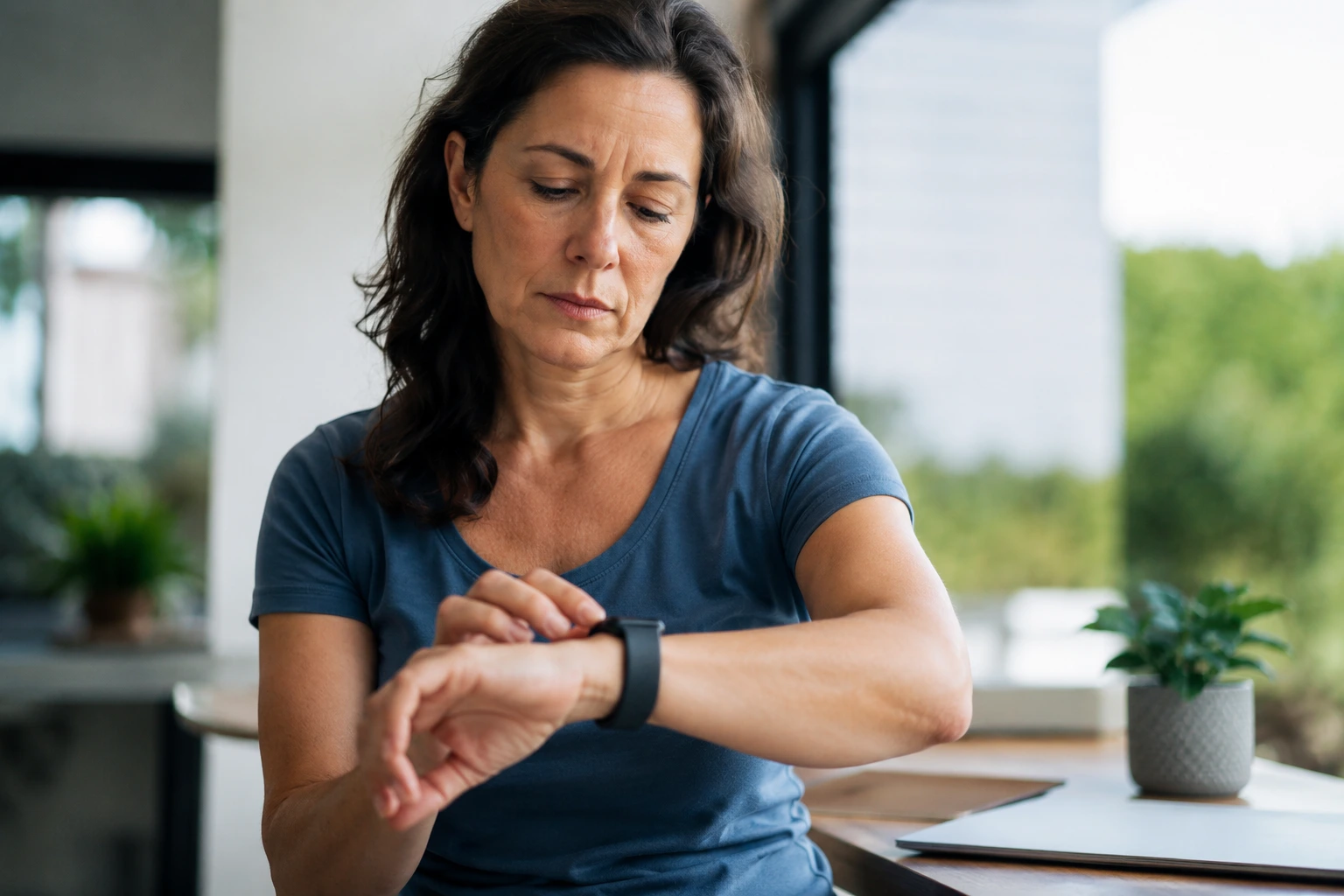
Your smartwatch just buzzed with an irregular heartbeat alert at 2 AM, and now you’re spiraling, wondering if you should panic or ignore it, because honestly, smartwatch health alerts feel like they cry wolf half the time.
How smartwatches detect health alerts
Inside your wrist sits a surprisingly sophisticated piece of technology. Smartwatches rely on multiple sensors working in concert to monitor your body’s signals. The optical heart rate sensor uses LED lights to detect blood flow through your wrist, while accelerometers measure movement and gyroscopes track rotation and orientation. These devices collect data continuously, sometimes hundreds of times per second. Think of it like having a tiny observatory on your wrist that’s constantly watching for changes. The algorithms then process this raw data, looking for patterns that deviate from your baseline. For instance, if your resting heart rate typically sits around 60 beats per minute but suddenly spikes to 100 without physical activity, the system flags this anomaly. Some smartwatches also incorporate electrocardiogram sensors that measure electrical activity in your heart, similar to what you’d see in a medical EKG, though less detailed. The device learns your normal patterns over time, making it increasingly better at spotting genuine deviations from your personal baseline rather than comparing you to generic population averages.
Biological signals and interpretation
Your body communicates through physiological signals constantly, and smartwatches are designed to listen. When you experience stress, your heart rate climbs, your breathing quickens, and your body temperature may shift slightly. Smartwatches capture these changes and attempt to interpret what they mean. An irregular heartbeat, medically called arrhythmia, shows up as inconsistent intervals between heartbeats. A sudden fall triggers rapid acceleration changes that the device recognizes as a potential injury event. Even sleep quality gets analyzed through movement patterns and heart rate variability. The challenge lies in interpretation. A spike in heart rate could mean you’re anxious, exercising, caffeinated, or experiencing a genuine cardiac issue. Smartwatches use contextual clues like time of day, recent activity, and historical patterns to make educated guesses. However, they lack the full clinical picture that a doctor has access to. They can’t know about your medications, family history, or underlying conditions. This is why a smartwatch might flag something as concerning when it’s actually completely normal for your specific situation, or miss something important because it falls outside the algorithm’s recognition parameters.
Accuracy of smartwatch health alerts
Research has shown that smartwatches perform reasonably well at detecting certain conditions. Studies on atrial fibrillation detection, for example, have demonstrated accuracy rates ranging from 85 to 95 percent in controlled settings. Irregular heartbeat detection has become one of the more reliable features because the pattern is relatively distinctive and consistent. Fall detection also shows strong performance, particularly in older adults where falls pose genuine risks. However, accuracy drops significantly in real-world conditions compared to laboratory settings. A smartwatch might perform perfectly when you’re sitting still in a clinical study, but accuracy can degrade when you’re moving, sweating, or wearing the device loosely. Temperature fluctuations, tattoos, and skin tone variations can all affect sensor readings. More complex conditions like early-stage heart disease, subtle arrhythmias, or metabolic disorders remain largely beyond smartwatch capabilities. These conditions often require specialized medical equipment, blood tests, or imaging studies. The devices also struggle with distinguishing between similar patterns. What looks like an irregular heartbeat might actually be normal variation, or what appears normal might be an early warning sign. Think of it like the difference between a smoke detector and a full fire safety inspection. The smoke detector catches obvious problems, but a professional inspection finds the hidden risks.
- Regularly update your smartwatch software to access the latest health monitoring features and algorithm improvements that manufacturers release.
- Compare health alerts from your smartwatch with measurements from medical devices for confirmation, such as taking your pulse manually or using a blood pressure cuff.
- Consult with a healthcare professional if you receive repeated or concerning health alerts from your smartwatch, bringing your device data to show your doctor.
🔬 Science-backed benefits in 2 minuteschoose where to begin:
Limitations of smartwatch health alerts
False positives and false negatives represent the biggest challenge with smartwatch health monitoring. A false positive occurs when your device alerts you to a problem that doesn’t actually exist, creating unnecessary anxiety and potentially leading to expensive medical visits. A false negative happens when your smartwatch misses something genuinely concerning, giving you false reassurance. Environmental factors significantly impact reliability. If you’re wearing your smartwatch too loosely, the sensors lose contact with your skin and can’t get accurate readings. Sweat, water, and dirt can interfere with optical sensors. Tattoos with certain inks can actually block the LED light from the heart rate sensor. Individual variations matter too. People with naturally irregular heartbeats, athletes with very low resting heart rates, or individuals with certain medical conditions might trigger alerts that are completely normal for them. The algorithms are trained on population averages, so they don’t always account for individual differences. Additionally, smartwatches can’t measure everything. They can’t detect blood pressure changes, blood sugar levels, or oxygen saturation as reliably as dedicated medical devices. They also can’t provide context about symptoms you’re experiencing. You might feel dizzy and get an alert about your heart rate, but the device can’t know whether you’re dizzy because of the heart rate or for some other reason entirely.
Future innovations in smartwatch health monitoring
The smartwatch health monitoring landscape is evolving rapidly. Manufacturers are investing heavily in sensor technology improvements, developing more accurate optical sensors that work better on different skin tones and in various lighting conditions. Machine learning algorithms are becoming more sophisticated, learning from millions of users to recognize patterns that current systems miss. Some companies are exploring non-invasive glucose monitoring, which could revolutionize diabetes management if successfully implemented. Thermal imaging sensors are being tested to detect inflammation and infection. Researchers are also working on continuous blood pressure monitoring without requiring a cuff. Personalization represents another frontier. Future smartwatches will likely create even more individualized baselines, understanding that your normal might be completely different from someone else’s normal. Integration with medical systems is expanding too, allowing your smartwatch data to flow directly to your healthcare provider’s records. Wearable ECG technology continues improving, potentially rivaling medical-grade devices in the near future. However, regulatory approval and clinical validation take time. Any new health feature must prove its accuracy and safety before reaching consumers. The goal isn’t to replace doctors but to provide continuous monitoring that catches problems earlier and gives healthcare providers better information for diagnosis.
Understanding smartwatch health alerts
Smartwatch health alerts occupy an interesting middle ground in healthcare. They’re not medical devices in the traditional sense, yet they provide data that can be medically relevant. The key is understanding their role and limitations. Think of your smartwatch as a helpful observer that can notice some patterns but shouldn’t be trusted as a final authority on your health. It’s similar to how a friend might notice you seem off and suggest you see a doctor, but that friend isn’t qualified to diagnose you. The most responsible approach involves treating smartwatch alerts as starting points for conversations with healthcare providers, not as definitive diagnoses. If your device alerts you repeatedly to something concerning, that’s worth mentioning to your doctor. If you get a one-time alert that seems inconsistent with how you feel, it might just be a sensor glitch. The technology is genuinely useful for tracking trends over time, noticing gradual changes in your baseline that might indicate developing issues. Many people have caught early signs of atrial fibrillation through smartwatch alerts, leading to timely medical intervention. Others have avoided unnecessary panic by understanding that their device’s alert was a false positive. The smartest users combine smartwatch data with self-awareness, medical knowledge, and professional guidance to make informed decisions about their health.
Research indicates that smartwatches can accurately detect common health issues like irregular heartbeats and falls, but they have meaningful limitations in detecting complex conditions. Users should view smartwatch alerts as supportive tools that provide useful data rather than diagnostic devices, and should seek medical advice for in-depth health assessments and confirmation of concerning alerts.
Are smartwatch health alerts always reliable?
While smartwatch health alerts can be accurate for common issues like atrial fibrillation and falls, they are not always reliable due to sensor limitations, environmental factors, and algorithm constraints. Environmental conditions like loose fit, sweat, or tattoos can affect accuracy. It’s essential to verify critical alerts with medical professionals rather than relying solely on your device.
Should I solely rely on smartwatch health alerts for my well-being?
Smartwatch health alerts provide useful insights and can help you notice patterns in your health, but they are not substitutes for professional medical advice. The devices lack full clinical context about your medications, family history, and underlying conditions. It’s advisable to consult healthcare providers for comprehensive health assessments and to confirm any concerning alerts from your smartwatch.
Others also read:
Disclaimer: This article is for informational purposes only and is not a substitute for professional medical advice. Always consult a healthcare professional for personal guidance.
This article has been prepared and reviewed by the GlobalHealthBeacon editorial team and is based on current medical research and published scientific literature available in 2026. It provides structured, evidence-based information to support informed health decisions.
