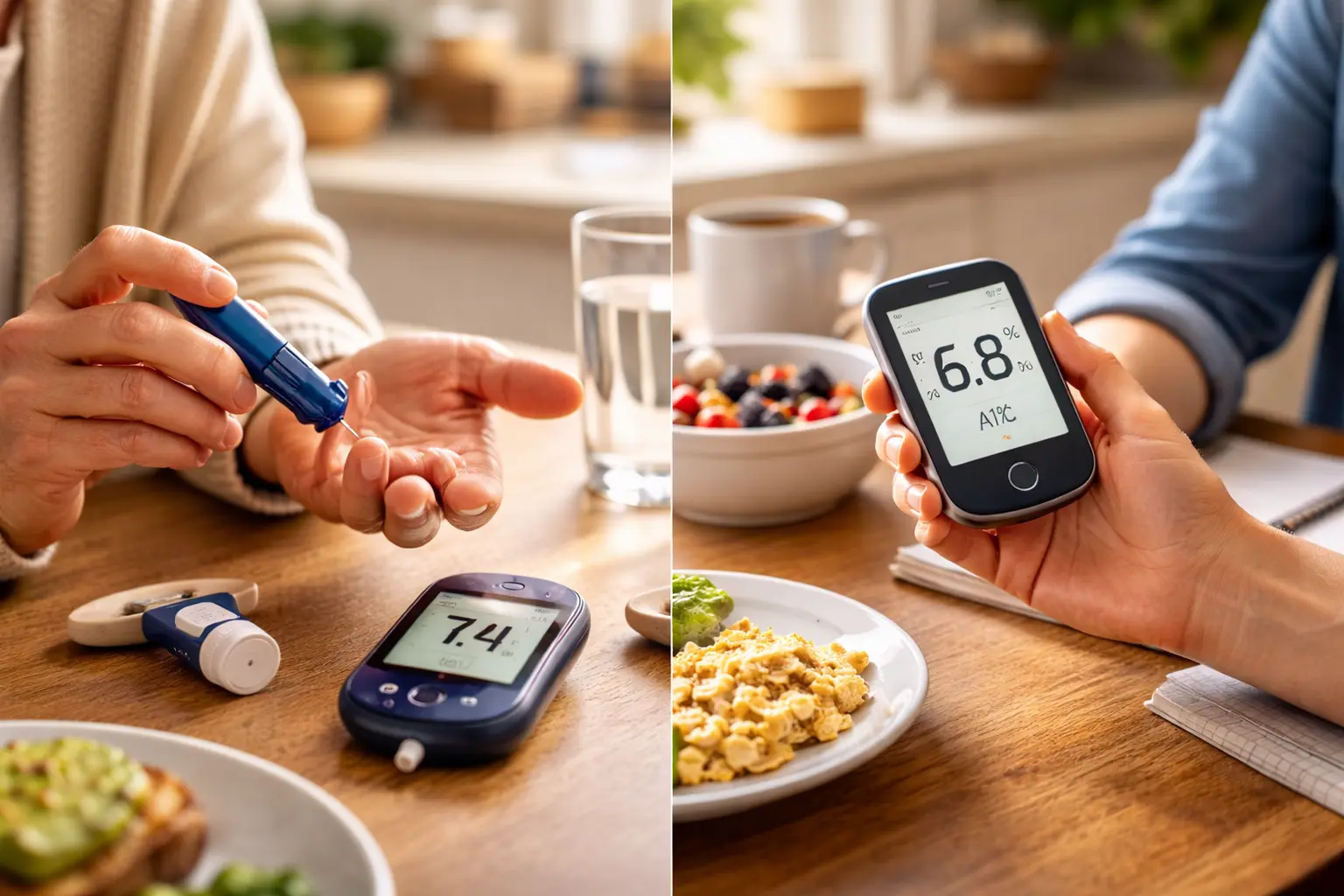
You wake up, check your fasting glucose and it’s higher than yesterday despite eating clean, then your A1C comes back and suddenly you’re questioning everything you thought you understood about managing a1c versus fasting glucose.
Navigating the numbers
Picture this: you’re sitting in your doctor’s office and they hand you two different test results. One shows your blood sugar right now, in this moment. The other shows an average of the past three months. It’s confusing, right? That’s the reality of understanding A1C versus fasting glucose. Fasting glucose is like a snapshot taken first thing in the morning before you eat anything. It tells you how your body is managing blood sugar when it’s at rest. A1C, on the other hand, is more like a time-lapse video of your glucose patterns. It measures how much glucose has attached to your hemoglobin over months. Think of it this way: fasting glucose catches you on a specific day, while A1C reveals the bigger picture of your habits and patterns. For young adults juggling work, school, and social life, both matter equally but for different reasons.
- Regular A1C checks help you monitor your overall glucose management and catch trends before they become problems.
- Fasting glucose tests reveal how your body responds to overnight fasting and immediate food intake the next morning.
- Both tests are important indicators for preventing complications associated with diabetes and supporting long-term health decisions.
The impact on lifestyle
Managing these numbers isn’t just a health thing; it’s a lifestyle thing. You’re at brunch with friends and suddenly you’re calculating whether that pastry will spike your fasting glucose tomorrow. You’re at the gym wondering if today’s workout will help lower your A1C. The mental load is real. Fluctuating readings can mess with your confidence and your choices. You might skip social events because you’re worried about food options, or you might feel guilty after eating something you enjoyed. The emotional weight of watching numbers go up and down affects your sleep, your stress levels, and how you show up in your relationships. Young adults often feel like they’re the only ones dealing with this, but the truth is, managing blood sugar while trying to live a normal life is genuinely hard. It’s not just about following a meal plan; it’s about finding a way to live that doesn’t feel like constant restriction.
💬 Ready to feel better in 2 minutes?choose where to begin:
The emotional rollercoaster
Let’s be honest: seeing a high A1C reading after weeks of trying your best feels like a personal failure. You did everything right, or at least you thought you did, and your numbers still didn’t cooperate. That frustration is valid. Then there’s the opposite feeling when your readings come back stable and you feel this rush of relief mixed with hope. Managing A1C and fasting glucose is genuinely a personal journey because everyone’s body responds differently. Your friend might lower their A1C with just diet changes, while you need to add exercise too. Someone else might need medication alongside lifestyle changes. The fear of complications can creep in during quiet moments, making you feel anxious about your future. But here’s what helps: finding even one person who gets it, whether that’s a friend, a support group, or a healthcare provider who actually listens. Creating a routine that doesn’t feel punishing. Celebrating small wins. Your emotions matter as much as your numbers.
Seeking balance and peace of mind
Learning to interpret your A1C and fasting glucose results is something that takes time and patience with yourself. You’ll start to notice patterns. Maybe your fasting glucose spikes after stressful days. Maybe your A1C improves when you’re consistent with movement rather than doing intense workouts sporadically. These insights are gold because they’re personal to your body. Remember this: these numbers are tools, not judgments. A high reading doesn’t mean you failed. It means your body is sending you information. What matters is what you do with that information next. Some days you’ll nail it, other days you won’t, and both are okay. Finding peace of mind means accepting that managing blood sugar is a process, not a destination. It’s about taking control of what you can control and letting go of perfectionism. You’re not defined by your A1C or fasting glucose. You’re defined by showing up for yourself, learning as you go, and choosing health in ways that actually work for your life.
Understanding the difference between managing A1C and fasting glucose levels is essential for maintaining your overall health. Balancing these readings can be emotionally challenging but is crucial for preventing complications. By seeking support, creating routines, and embracing the journey of self-discovery, young adults can find peace of mind in managing their blood sugar levels effectively.
How often should I get my A1C levels checked as a young adult?
It is recommended to get your A1C levels checked at least twice a year. However, if you have diabetes or are at risk, your healthcare provider may recommend more frequent testing.
Can I lower my A1C and fasting glucose levels through lifestyle changes alone?
Lifestyle modifications, including a healthy diet, regular exercise, and weight management, can help improve your A1C and fasting glucose levels. However, it is essential to work with your healthcare team to develop a comprehensive plan tailored to your individual needs.
Others also read:
Disclaimer: This article is for informational purposes only and is not a substitute for professional medical advice. Always consult a healthcare professional for personal guidance.
This article presents an experience-based perspective and has been reviewed by the GlobalHealthBeacon editorial team in 2026. It provides structured, evidence-based information to support informed health decisions.
