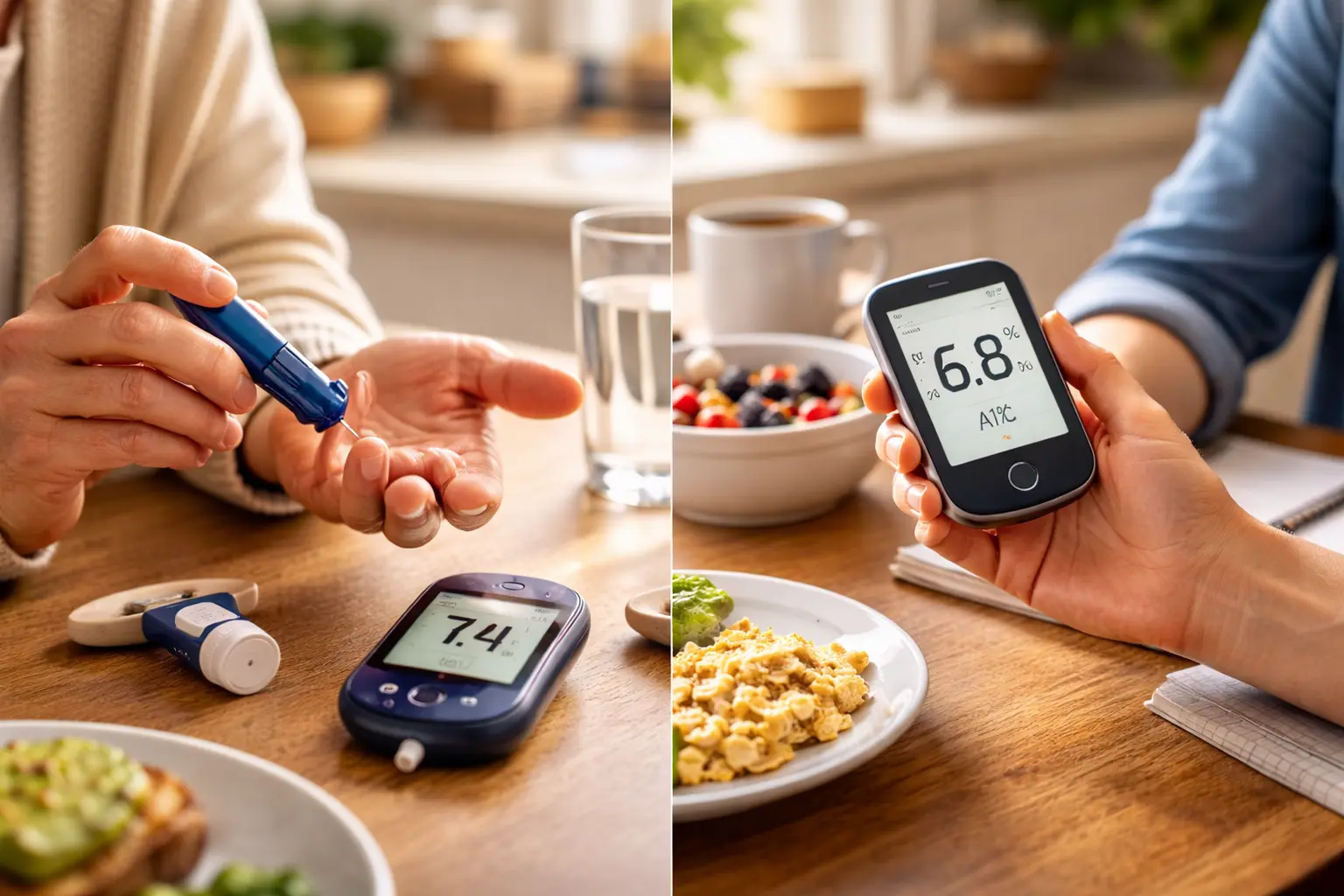
You’re staring at lab results that make zero sense, wondering if your blood sugar is actually a problem or if doctors are just throwing confusing numbers at you to stress you out, and nobody’s explaining what a1c versus fasting glucose actually means for your life right now.
Understanding A1C
A1C, also known as hemoglobin A1C, is a blood test that measures your average blood sugar levels over the past 2 to 3 months. Think of it like a report card for your glucose control. When your blood sugar stays elevated, it attaches to hemoglobin in your red blood cells, and this test measures how much of that attachment has happened. This is crucial because it shows the bigger picture of how your body has been managing glucose over time, not just on the day you got tested. For young adults, understanding A1C matters because it reveals patterns you might not notice day-to-day. If you’ve been stress-eating, skipping workouts, or living on energy drinks, your A1C will tell that story. The test is particularly useful in diagnosing prediabetes and type 2 diabetes, and it helps your doctor see if your current lifestyle or medication is actually working.
- Reflects average blood sugar levels over time
- Measures glycated hemoglobin in the blood
- Used in diagnosing and managing diabetes
Decoding fasting glucose
Fasting glucose is your blood sugar level after you haven’t eaten for at least 8 hours, usually measured first thing in the morning. It’s like a snapshot of what your baseline glucose looks like when your body is at rest and hasn’t had any food fuel recently. This test tells you how well your body manages glucose when it’s not actively digesting food. For young adults, a fasting glucose test can be eye-opening because it shows whether your body is producing enough insulin and using it effectively. Imagine you wake up after sleeping, and your body has been running on stored energy all night. If your fasting glucose is high, it signals that your body is struggling to regulate blood sugar even during rest. This test is particularly valuable for catching prediabetes early, giving you a chance to make changes before a diabetes diagnosis happens. It’s straightforward, requires minimal fasting time, and provides immediate feedback about your metabolic health.
📘 Fix your day in under 2 minuteschoose where to begin:
Choosing the best test
A1C and fasting glucose serve different purposes, and honestly, you might need both to get the full picture. A1C shows your long-term glucose trends, while fasting glucose gives you an immediate snapshot of your current metabolic state. Here’s a practical scenario: say you’ve been eating healthier for the past month, but your A1C is still high. That’s because A1C reflects the previous 2 to 3 months of your habits. Your fasting glucose, however, might already be improving, showing that your recent changes are working. Your healthcare provider will typically recommend both tests because they complement each other. A1C is better for monitoring diabetes management over time, while fasting glucose helps identify acute problems. Young adults often benefit from starting with fasting glucose because it’s simpler and faster, then adding A1C testing to track progress. The key is working with your doctor to determine which tests make sense for your specific situation, health history, and risk factors.
Interpreting results
Your A1C and fasting glucose results tell a story about your metabolic health, and learning to read that story is empowering. For A1C, aim for levels below 5.7 percent, which indicates normal glucose control. Between 5.7 and 6.4 percent suggests prediabetes, and 6.5 percent or higher indicates type 2 diabetes. For fasting glucose, normal is below 100 mg/dL, prediabetes ranges from 100 to 125 mg/dL, and diabetes is 126 mg/dL or higher. Here’s where it gets real: you might have a normal A1C but an elevated fasting glucose, or vice versa. This happens because these tests measure different things at different timeframes. A young adult with a borderline A1C of 5.8 percent isn’t in crisis, but it’s a clear signal to make changes now before it climbs higher. Understanding these ranges helps you avoid panic while staying motivated to take action. Your doctor should explain what your specific numbers mean for your individual health profile, considering your age, family history, and lifestyle.
Taking control of your health
Regular monitoring of your A1C and fasting glucose levels transforms these numbers from abstract medical data into a personal accountability tool. Start by scheduling tests every 3 to 6 months if you’re in the prediabetes range, so you can actually see whether your efforts are working. Make lifestyle modifications that stick: focus on a balanced diet with whole grains, lean proteins, and plenty of vegetables. Regular exercise, even 30 minutes of walking most days, significantly impacts both A1C and fasting glucose. Sleep matters more than you think, too. Poor sleep disrupts insulin sensitivity, so aim for 7 to 9 hours nightly. Here’s a practical step: track your habits for two weeks before your next test, then compare your results to see what actually moves the needle for you. Some people respond better to cutting refined carbs, others to increasing activity. Young adults have a huge advantage: you have time to reverse prediabetes before it becomes diabetes. Small, consistent changes compound over months, and your next lab results will prove it.
A1C and fasting glucose are vital measures in evaluating your blood sugar levels. Understanding these tests, interpreting the results, and taking proactive steps towards a healthy lifestyle can help you manage your diabetes risk effectively.
Is a high A1C level a cause for concern?
Yes, a high A1C level indicates poor blood sugar control over an extended period, increasing the risk of diabetes complications. It’s essential to work with your healthcare provider to lower your A1C levels through lifestyle changes and medication.
Can fasting glucose levels fluctuate throughout the day?
Yes, fasting glucose levels can vary due to factors like stress, physical activity, and dietary intake. To obtain accurate results, it’s advisable to perform the test after an overnight fast and under consistent conditions.
Others also read:
Disclaimer: This article is for informational purposes only and is not a substitute for professional medical advice. Always consult a healthcare professional for personal guidance.
This guide has been prepared and reviewed by the GlobalHealthBeacon editorial team and reflects current medical research as of 2026. It provides structured, evidence-based information to support informed health decisions.
