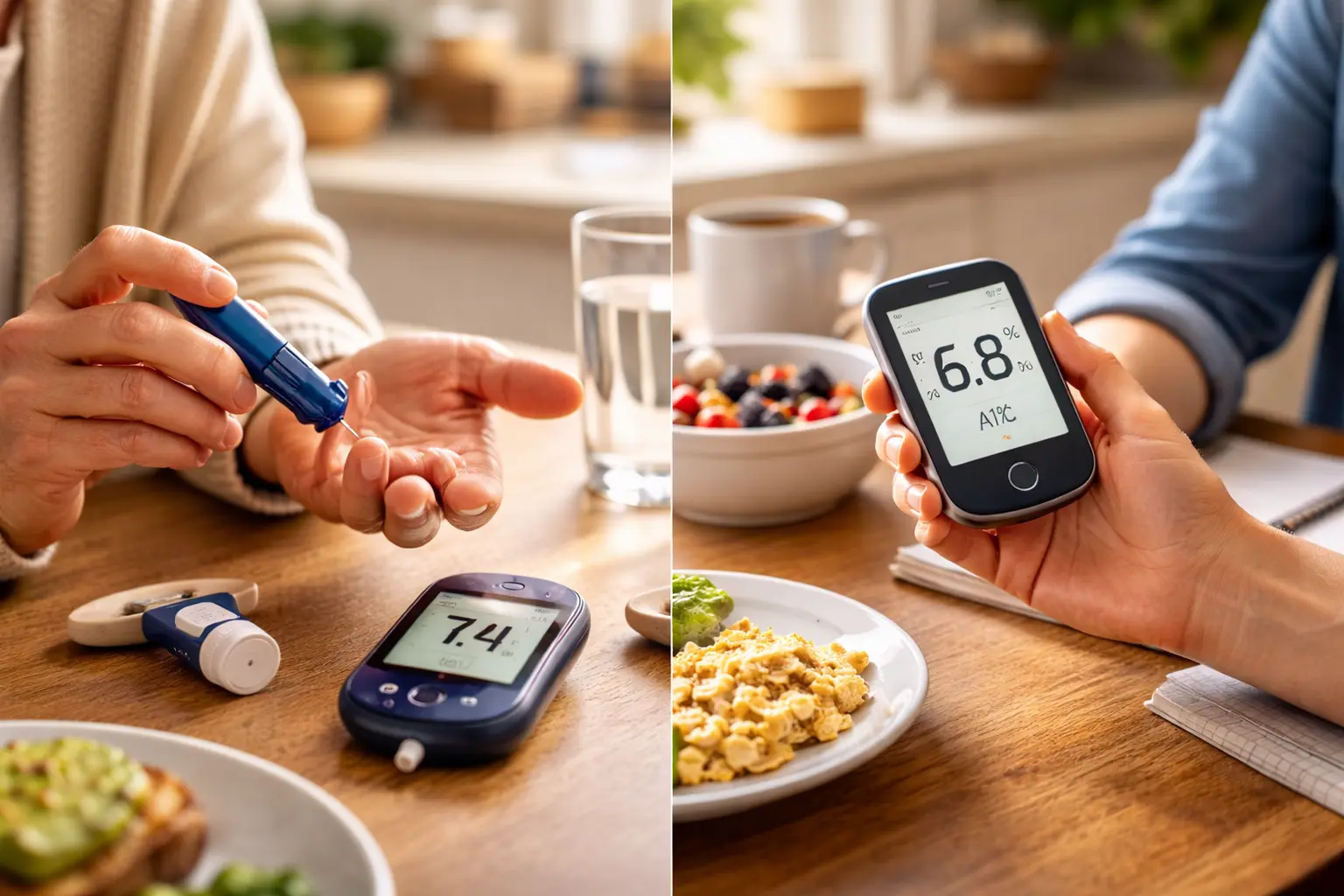
Your doctor keeps throwing around A1C and fasting glucose numbers like you should just know what they mean, and honestly, it’s frustrating when nobody takes five minutes to actually explain what a1c versus fasting glucose really tells you about your body.
Understanding A1C levels
A1C, also known as glycated hemoglobin, measures your average blood sugar levels over the past 2 to 3 months. Think of it like a weather report that shows the overall climate pattern rather than today’s temperature. When glucose enters your bloodstream, some of it attaches to hemoglobin, the protein in red blood cells that carries oxygen. This attachment is permanent for the life of that red blood cell, which is roughly 120 days. By measuring how much glucose has bonded to hemoglobin, doctors get a reliable picture of your glucose management over time. For example, if you had a stressful week with elevated blood sugar, it won’t dramatically skew your A1C because it’s an average. This test is particularly valuable for seniors because it reflects the cumulative effect of daily eating habits, medication adherence, and overall metabolic function over months, not just a single moment.
Fasting glucose explained
Fasting glucose measures your blood sugar level after you haven’t eaten for at least 8 to 10 hours, typically measured first thing in the morning. This is like taking a snapshot of your car’s fuel gauge at one specific moment rather than tracking your gas consumption over weeks. Your body naturally maintains baseline glucose levels even when you’re not eating, and this test reveals how well your liver and pancreas are managing that process. Imagine you skip breakfast and head to your doctor’s appointment at 8 AM after fasting overnight. That blood draw shows your body’s ability to regulate glucose without the influence of food. Elevated fasting glucose can signal that your pancreas is working harder than it should to maintain normal levels, which may indicate prediabetes or diabetes risk. For seniors, this quick snapshot is especially useful during routine check-ups because it requires minimal preparation and provides immediate feedback about your baseline metabolic state.
Key differences and interpretation
A1C and fasting glucose serve complementary roles in understanding your metabolic health. A1C reflects your long-term glucose control and shows the overall trend, while fasting glucose provides immediate insight into your current baseline status. Consider a real-life scenario: Margaret, a 68-year-old, has an A1C of 6.8 percent, suggesting reasonably good control over three months, but her fasting glucose is consistently 130 mg/dL, indicating her baseline is higher than ideal. This combination tells her doctor that while her overall management is acceptable, her body struggles most in the morning before eating. A1C is the primary test for diagnosing diabetes and monitoring treatment effectiveness because it’s more stable and less influenced by daily fluctuations. Fasting glucose, however, is essential for quick assessments and helps track how your body responds to lifestyle changes or medication adjustments. Together, they paint a complete picture: one shows the big-picture trend, the other reveals where the biggest challenges lie.
- Consult your healthcare provider to discuss what your specific A1C results mean for your individual health profile and long-term glucose management strategy.
- Understand how fasting glucose measurements help identify whether your biggest blood sugar challenges occur in the morning or throughout the day.
- Follow recommended guidelines for monitoring both A1C and fasting glucose regularly, typically A1C every three months if managing diabetes and fasting glucose at routine annual check-ups.
🔬 Science-backed benefits in 2 minuteschoose where to begin:
Comparing accuracy and reliability
A1C is a more stable and reliable indicator of blood sugar control because it averages glucose levels across months, smoothing out daily fluctuations. Fasting glucose levels, by contrast, can swing significantly based on factors like stress, illness, poor sleep, or even the timing of your last meal the previous day. Consider this: if you had a stressful day at work yesterday, your fasting glucose might be elevated this morning even though your overall control is excellent. Some individuals experience variations in fasting glucose due to dawn phenomenon, a natural hormonal surge that raises blood sugar in early morning hours, particularly common in seniors. A1C captures the true pattern because temporary spikes or dips average out over time. However, fasting glucose remains valuable because it’s sensitive to immediate changes. If you start a new medication or change your diet, fasting glucose will reflect those changes within days, while A1C takes weeks to shift. For seniors managing multiple health conditions, A1C provides the reassurance of knowing your overall trajectory, while fasting glucose offers early warning signals.
Importance of dual monitoring
Healthcare providers recommend tracking both A1C and fasting glucose because they reveal different aspects of your metabolic story. This combined approach offers a holistic view of your blood sugar dynamics and helps tailor personalized treatment plans. Imagine your glucose management as a house: A1C tells you whether the overall structure is sound, while fasting glucose identifies specific problem areas that need attention. A senior with an excellent A1C but persistently elevated fasting glucose might benefit from adjusting dinner timing or medication schedules. Another person with a borderline A1C and normal fasting glucose might need to focus on post-meal blood sugar spikes. By monitoring both, your doctor can distinguish between different patterns and adjust your approach accordingly. Some individuals respond better to dietary changes, others to medication timing, and some need both. The dual-monitoring strategy also provides motivation because you get feedback from two different angles. If your fasting glucose improves but A1C hasn’t shifted yet, you know your efforts are working and results are coming.
Conclusion
A1C and fasting glucose serve distinct but equally important purposes in evaluating your blood sugar control and diabetes risk. A1C provides the long-term perspective, showing whether your overall management strategy is working over months. Fasting glucose offers immediate insights into your baseline metabolic state and helps identify where your biggest challenges lie. Together, they create a complete picture of your glucose dynamics. For seniors navigating diabetes prevention or management, understanding these two measurements transforms them from confusing numbers into meaningful information. Your A1C might show steady improvement, while fasting glucose reveals that morning is your toughest time. Armed with this knowledge, you and your healthcare provider can make informed decisions about diet, medication timing, and lifestyle adjustments. Neither test is more important than the other; they’re partners in helping you maintain optimal health and catch problems early.
A1C and fasting glucose serve distinct purposes in evaluating blood sugar control. A1C provides a long-term perspective spanning months, while fasting glucose offers immediate insights into your baseline metabolic state. Understanding these measurements helps individuals manage diabetes more effectively and work with their healthcare providers to create personalized treatment strategies.
Which test is more important for monitoring diabetes?
Both A1C and fasting glucose are equally important for monitoring diabetes, just in different ways. A1C reflects long-term control and is the primary diagnostic tool, while fasting glucose provides immediate status updates and helps identify specific problem times of day. Together, they offer a comprehensive view of blood sugar management that neither can provide alone.
Can my A1C level be affected by temporary factors like stress?
While A1C represents an average of your blood sugar over several months, temporary factors like stress can influence glucose levels during that period and impact test results. However, because A1C averages across months, a single stressful week won’t dramatically change your result. It’s essential to consider various factors when interpreting A1C readings and discuss any significant life changes with your healthcare provider.
Others also read:
Disclaimer: This article is for informational purposes only and is not a substitute for professional medical advice. Always consult a healthcare professional for personal guidance.
This article has been prepared and reviewed by the GlobalHealthBeacon editorial team and is based on current medical research and published scientific literature available in 2026. It provides structured, evidence-based information to support informed health decisions.
