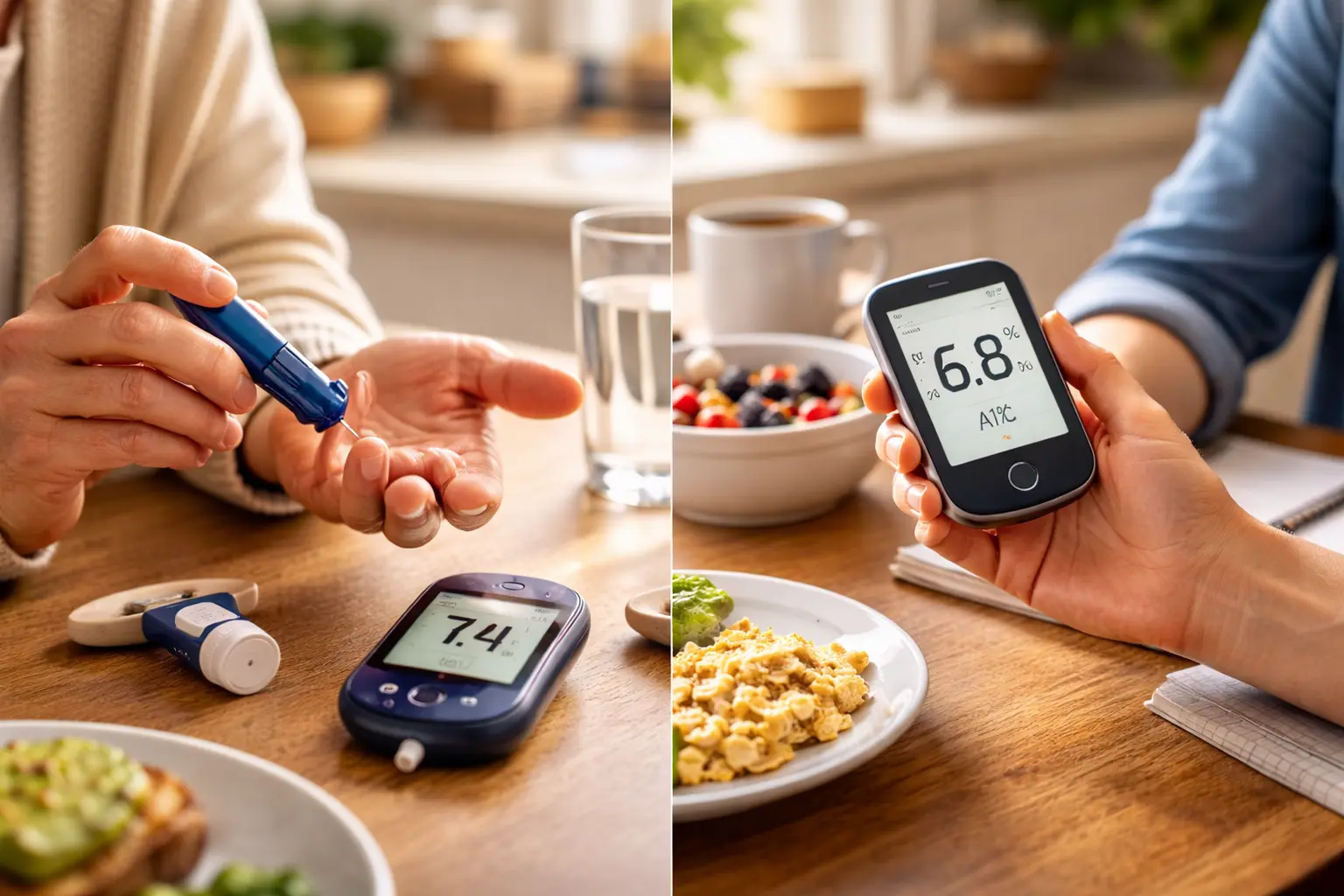
Your doctor throws around terms like A1C and fasting glucose like you should just know what they mean, but honestly, they measure completely different things and understanding a1c versus fasting glucose could be the key to finally making sense of your blood sugar numbers.
A1C: the long-term sugar snapshot
A1C, also known as glycated hemoglobin, reflects your average blood sugar levels over the past 2 to 3 months. This test measures how much sugar is attached to your red blood cells, offering a comprehensive view of your glucose control over time. Think of it like a weather report for the entire season rather than today’s forecast. When glucose circulates in your bloodstream, it binds to hemoglobin, the protein in red blood cells that carries oxygen. The higher your average blood sugar, the more glucose attaches to these cells. Since red blood cells live about 120 days, the A1C test captures what your blood sugar has been doing throughout that entire lifespan. For example, if you had high blood sugar for two weeks in January but controlled it well for the rest of the month, your A1C would reflect that overall pattern, smoothing out the temporary spike. This makes A1C particularly valuable for healthcare providers because it shows the real story of your glucose management, not just a single moment in time.
Fasting glucose: your immediate blood sugar status
Fasting glucose measures the amount of sugar in your blood after an overnight fast, typically 8 to 12 hours without food or drinks other than water. It provides a snapshot of your current blood sugar level, helping healthcare providers assess your risk of diabetes and monitor glucose regulation. Imagine checking your bank account balance right now versus looking at your spending patterns over the past three months. Fasting glucose is that single moment check. Your body naturally produces glucose even when you are not eating, and your liver releases it to maintain energy for basic functions like breathing and thinking. When you fast overnight, your body relies on this internal glucose production, so your fasting glucose reading shows how well your body manages blood sugar when it is not processing food. A woman might have a normal fasting glucose of 85 mg/dL one morning but 105 mg/dL another morning if she was stressed, slept poorly, or had hormonal fluctuations. This variability is why doctors often recommend multiple fasting glucose tests rather than relying on a single reading to make health decisions.
Understanding the numbers
When comparing A1C and fasting glucose results, remember that A1C values are in percentages, with lower percentages indicating better blood sugar control. In contrast, fasting glucose is measured in milligrams per deciliter (mg/dL), with levels below 100 mg/dL considered normal. An A1C of 5.7 percent or lower is generally considered normal, while 5.7 to 6.4 percent suggests prediabetes, and 6.5 percent or higher indicates diabetes. For fasting glucose, normal is below 100 mg/dL, prediabetes ranges from 100 to 125 mg/dL, and diabetes is 126 mg/dL or higher. Here is where it gets interesting: these two tests do not always align perfectly. You might have a normal fasting glucose but a slightly elevated A1C, which suggests your blood sugar spikes after meals or during certain times of the day. Conversely, a normal A1C with a high fasting glucose might indicate that your morning readings are elevated but you manage blood sugar well throughout the day. Understanding both numbers gives your healthcare provider a more complete picture than either test alone. Think of fasting glucose as a single frame from a movie and A1C as the entire film.
- Track your A1C levels regularly for a comprehensive overview of your long-term blood sugar trends and identify patterns over months.
- Monitor your fasting glucose levels to assess your current blood sugar status and diabetes risk, noting any morning variations.
- Consult with your healthcare provider to interpret your A1C and fasting glucose results accurately and discuss what they mean for your individual health.
🔬 Science-backed benefits in 2 minuteschoose where to begin:
Factors influencing A1C and fasting glucose
Various factors, such as diet, exercise, medication, stress, and genetics, can impact both A1C and fasting glucose levels. Understanding these influences can help you make informed choices to manage your blood sugar effectively. Diet plays an obvious role: eating refined carbohydrates and sugary foods raises blood glucose quickly, while whole grains, fiber, and protein create slower, steadier increases. Exercise improves how your cells respond to insulin, the hormone that helps glucose enter cells, so regular physical activity typically lowers both metrics. Stress triggers cortisol release, which can raise blood sugar even without eating, which is why a stressful week might show up in your fasting glucose reading. Sleep deprivation impairs insulin sensitivity, meaning your body becomes less efficient at managing glucose. Medications like corticosteroids can raise blood sugar as a side effect. Genetics also play a role: some women naturally have higher fasting glucose or A1C levels despite similar lifestyles to others. Hormonal cycles add another layer for women. Estrogen and progesterone fluctuations during menstrual cycles can shift insulin sensitivity, sometimes causing higher readings in the luteal phase. Understanding these interconnected factors helps explain why your numbers might vary and why a single lifestyle change rarely fixes everything overnight.
Implications for women’s health
Women may experience unique hormonal fluctuations that affect their blood sugar levels throughout their menstrual cycle, pregnancy, and menopause. Regular monitoring of A1C and fasting glucose is crucial for women, especially those with conditions like polycystic ovary syndrome (PCOS) or gestational diabetes. PCOS, which affects roughly 1 in 10 women of reproductive age, involves insulin resistance, meaning the body does not respond well to insulin and blood sugar tends to run higher. Women with PCOS often see elevated fasting glucose and A1C levels and benefit from close monitoring. Gestational diabetes, which develops during pregnancy, affects blood sugar control temporarily but increases the risk of type 2 diabetes later in life, making postpartum monitoring essential. During perimenopause and menopause, declining estrogen can worsen insulin sensitivity, causing some women to see their A1C and fasting glucose rise even without dietary changes. Hormonal birth control can also influence glucose metabolism in some women. The key insight is that women’s blood sugar does not follow a simple, steady pattern like men’s often does. Your numbers might look different depending on where you are in your cycle, whether you are pregnant or breastfeeding, or what life stage you are in. This is not a flaw in your body; it is simply biology, and recognizing it helps you interpret your results more accurately.
Conclusion
By understanding the differences between A1C and fasting glucose, women can take proactive steps to optimize their blood sugar control and overall health. Regular screenings, lifestyle modifications, and professional guidance are essential components of managing blood sugar effectively. Neither test tells the complete story alone, but together they reveal how your body handles glucose across different timeframes and conditions. A1C shows the long-term trend, while fasting glucose captures a single important moment. Armed with this knowledge, you can have more meaningful conversations with your healthcare provider about what your numbers actually mean for you personally. You can also recognize that fluctuations are normal and expected, especially for women navigating hormonal changes. The goal is not perfection but understanding and gradual improvement. Small changes like adding a 15-minute walk after meals, choosing whole grains over refined carbs, or managing stress through meditation can shift both metrics over time. Remember that these tests are tools for insight, not judgment. They exist to help you and your healthcare team make informed decisions about your health trajectory.
Learn the distinction between A1C and fasting glucose to gain insights into your blood sugar status. Monitoring these metrics can empower women to make informed decisions about their health and well-being.
How often should I get my A1C checked?
For most individuals, it is recommended to check A1C levels at least twice a year to monitor blood sugar trends and assess diabetes risk. If you have prediabetes or diabetes, your healthcare provider may recommend testing every three months. Women with PCOS or a history of gestational diabetes should discuss personalized screening schedules with their provider.
Can hormonal changes affect A1C results in women?
Yes, hormonal fluctuations during menstrual cycles, pregnancy, and menopause can impact A1C levels, highlighting the importance of regular monitoring and tailored healthcare. Some women notice their fasting glucose rises in the luteal phase of their cycle. Hormonal birth control and hormone replacement therapy can also influence glucose metabolism.
Others also read:
Disclaimer: This article is for informational purposes only and is not a substitute for professional medical advice. Always consult a healthcare professional for personal guidance.
This article has been prepared and reviewed by the GlobalHealthBeacon editorial team and is based on current medical research and published scientific literature available in 2026. It provides structured, evidence-based information to support informed health decisions.
