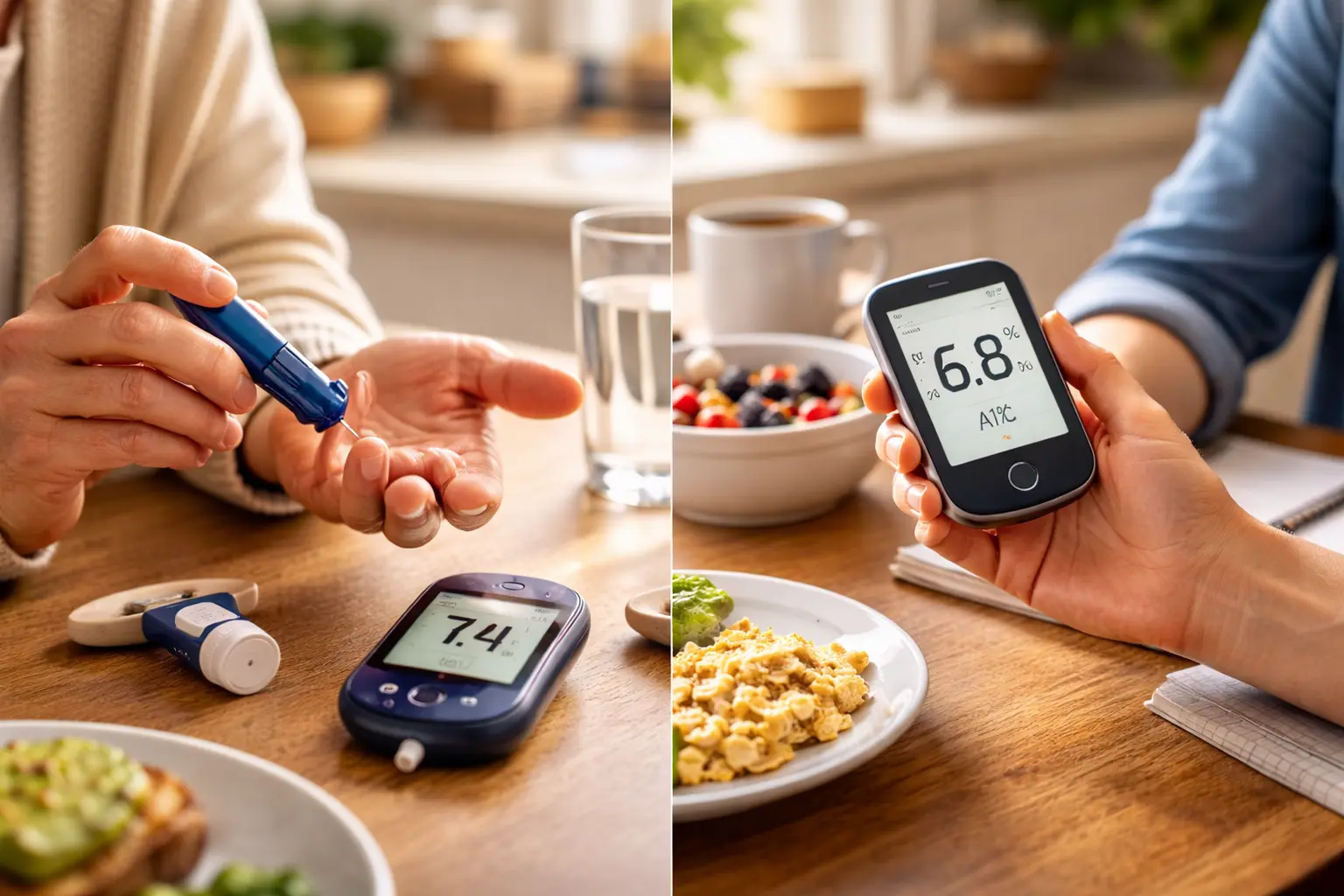
Your doctor casually mentions your A1C is up, then talks about fasting glucose like they’re completely different things, and suddenly you’re sitting in the waiting room feeling like you failed a test you didn’t even know you were taking – but understanding a1c versus fasting glucose is actually the key to finally taking control of your metabolic health instead of letting these numbers control you.
The unsettling A1C reading
A1C, the three-letter code that might signal a rollercoaster of emotions. Your doctor mentions it casually, but those numbers can send shivers down your spine. The A1C test measures your average blood sugar over the past 2 to 3 months, giving you a peek into your long-term blood sugar control. Imagine it like looking at your average mood over an entire season rather than how you felt on one particular Tuesday. For Sarah, a 42-year-old woman managing her metabolic health, her A1C of 6.8 percent felt like a personal failure until her doctor explained it reflected months of her life, not a single bad day. That shift in perspective changed everything. When you see an A1C result, you’re really seeing the cumulative effect of your daily choices, stress levels, sleep patterns, and eating habits all averaged together. It’s not punitive; it’s informative. Understanding this helps you recognize that small, consistent improvements compound over time.
- Insight into your overall blood sugar control
- Reflects your average blood sugar levels over months
- Helps in managing diabetes and preventing complications
Fasting glucose: Understanding the basics
Now, let’s talk fasting glucose. It’s like a snapshot of your blood sugar at a single moment in time, usually first thing in the morning before you’ve eaten anything. Think of A1C as your movie and fasting glucose as a single frame from that film. Fasting glucose readings can vary based on what you ate the night before, how stressed you were, whether you slept well, or even the time of day you tested. This test offers a glimpse into your current blood sugar levels right now. Jennifer, a 38-year-old woman, was confused when her fasting glucose seemed fine but her A1C was elevated. Her doctor explained that her fasting numbers were good, but her post-meal spikes throughout the day were the real issue. That’s when fasting glucose becomes so valuable: it tells you how your body starts the day, while A1C reveals the bigger picture of how you’re managing throughout every single day.
💬 Ready to feel better in 2 minutes?choose where to begin:
Navigating the numbers
Balancing A1C and fasting glucose readings can feel overwhelming, especially when they seem to tell different stories. The key is to understand how they complement each other rather than compete. While A1C gives a broader view of your blood sugar control over months, fasting glucose provides real-time insight into how your body handles glucose at rest. Together, they paint a comprehensive picture of your metabolic health. Consider this: if your fasting glucose is consistently high but your A1C is moderate, it might mean your body struggles with overnight glucose production but you’re managing well throughout the day. Conversely, if your fasting glucose looks good but A1C is elevated, your challenge lies in post-meal spikes. Maria discovered this exact pattern and worked with her healthcare team to adjust her evening routine and meal timing. By understanding what each test reveals, you stop seeing them as separate confusing numbers and start seeing them as a conversation your body is having with you about what it needs.
Empowering choices and actions
By grasping the nuances of A1C versus fasting glucose, you can take charge of your health journey. It’s not just about the numbers; it’s about understanding your body’s signals and responding with informed choices. Start tracking patterns: notice what you eat, how you feel, your stress levels, and your sleep quality. Then correlate these with your test results. When you see your next A1C result, ask your doctor specific questions. What does this number mean for me personally? Are my fasting readings the problem or my post-meal spikes? What’s one change I could make this month? Empower yourself with knowledge, listen to your body, and work hand-in-hand with your healthcare team to achieve optimal well-being. The women who see the most improvement aren’t those with perfect numbers; they’re the ones who understand what their numbers mean and adjust their lives accordingly.
Understanding the difference between A1C and fasting glucose empowers women to take control of their metabolic health. While A1C offers a long-term perspective, fasting glucose provides real-time insights. By combining these tests, women can make informed decisions and navigate their health journey with confidence.
How often should I get my A1C levels checked?
For most women with diabetes, getting an A1C test at least twice a year is recommended. However, your healthcare provider may suggest more frequent tests based on your individual health needs.
Can lifestyle changes affect my A1C and fasting glucose levels?
Absolutely! Healthy lifestyle modifications such as regular exercise, balanced diet, stress management, and adequate sleep can positively impact your A1C and fasting glucose readings. Consult your healthcare provider for personalized guidance.
Others also read:
Disclaimer: This article is for informational purposes only and is not a substitute for professional medical advice. Always consult a healthcare professional for personal guidance.
This article presents an experience-based perspective and has been reviewed by the GlobalHealthBeacon editorial team in 2026. It provides structured, evidence-based information to support informed health decisions.
