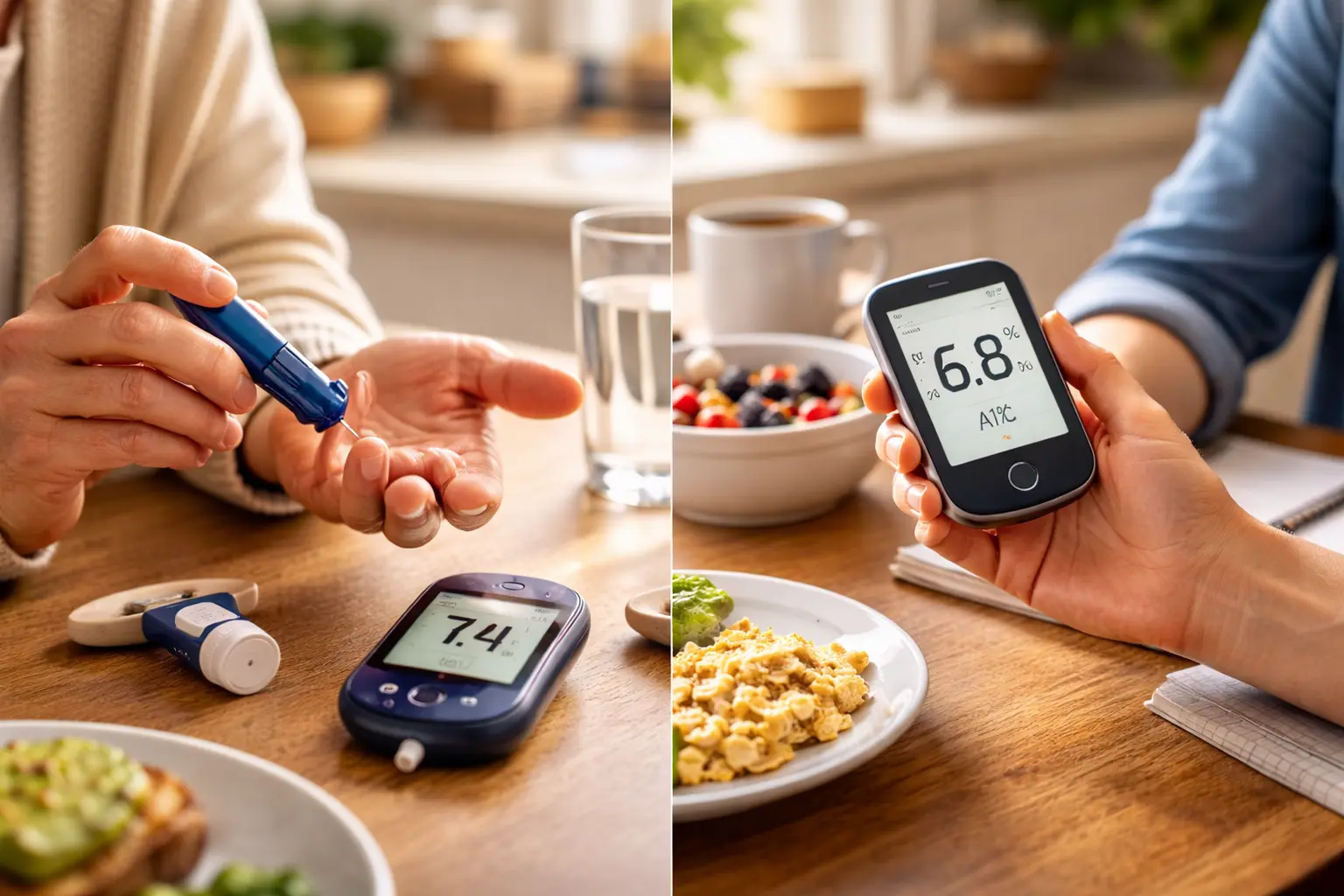
Your doctor throws around A1C and fasting glucose numbers like you should already know the difference, but nobody explains what they actually mean or why one matters more than the other for your health, and that confusion is exactly what’s keeping you from taking real control of your blood sugar.
Understanding A1C and fasting glucose
Think of A1C and fasting glucose as two different cameras capturing your blood sugar story. A1C is like a time-lapse video showing your average blood sugar over the past 2 to 3 months, while fasting glucose is a single snapshot taken first thing in the morning after you have not eaten overnight. Imagine you check your fasting glucose at 7 AM and it reads 110 mg/dL, which might look concerning. But your A1C could be 5.9%, suggesting your blood sugar has actually been well-controlled most of the time. This is why doctors use both tests. A1C stays stable because it measures hemoglobin A1c, a form of hemoglobin that glucose attaches to over weeks and months. Fasting glucose, by contrast, bounces around based on what you ate yesterday, how stressed you were, or whether you slept poorly. For seniors especially, understanding this difference prevents unnecessary worry and helps you focus on the right metrics for your long-term health.
- A1C test is more stable as it is not affected by daily fluctuations in blood sugar like fasting glucose levels.
- Fasting glucose is typically used for diagnosing diabetes, while A1C is a reliable indicator of long-term glucose management.
- A1C is expressed as a percentage, with lower values indicating better blood sugar control, while fasting glucose is measured in milligrams per deciliter (mg/dL).
Which one to use for monitoring diabetes
If you are managing diabetes or prediabetes, A1C should be your primary focus because it shows the bigger picture of how well your treatment plan is actually working over months, not just on good days. Your doctor will typically check A1C every three months if you have diabetes, or annually if you are prediabetic. Fasting glucose, however, serves a different purpose. It helps catch diabetes early during screening and can reveal if your morning blood sugar is spiking dangerously high, which sometimes happens even when A1C looks reasonable. Many seniors find it helpful to monitor fasting glucose at home using a glucose meter, especially if they have symptoms like unusual thirst or fatigue. The real strategy is this: use A1C as your report card for overall control, but use fasting glucose as your daily feedback system. Some people test fasting glucose two or three times per week to spot patterns. Your healthcare provider will guide you on frequency based on your specific situation, medications, and risk factors.
📘 Fix your day in under 2 minuteschoose where to begin:
Interpreting A1C and fasting glucose results
Reading these numbers correctly is essential because misinterpreting them can lead to unnecessary anxiety or false confidence. For A1C, anything below 5.7% is considered normal, meaning your blood sugar control is healthy. If your A1C falls between 5.7% and 6.4%, you have prediabetes, which is a wake-up call but not a diagnosis of diabetes. An A1C of 6.5% or higher indicates diabetes. For someone with existing diabetes, doctors typically aim for an A1C below 7%, though this target may be adjusted higher for older adults or those with other health conditions. Fasting glucose tells a similar story but uses different numbers. Below 100 mg/dL is normal, 100 to 125 mg/dL indicates prediabetes, and 126 mg/dL or higher suggests diabetes. Here is a practical example: a 68-year-old woman gets her lab results back showing A1C of 6.2% and fasting glucose of 115 mg/dL. Both numbers point to prediabetes, confirming she needs lifestyle changes. Without understanding these ranges, she might panic or dismiss the results entirely.
Factors affecting A1C and fasting glucose
Your blood sugar numbers do not exist in a vacuum. They respond to everything you do, eat, and experience. Diet is the most obvious factor. Eating refined carbohydrates and sugary foods spikes both A1C and fasting glucose, while whole grains, vegetables, and protein stabilize them. Physical activity is equally powerful. A 30-minute walk after meals can lower blood sugar by 10 to 15%, and this effect compounds over time, improving your A1C. Stress and poor sleep sabotage your efforts by raising cortisol, which triggers the body to release stored glucose. Medications, especially steroids, can elevate blood sugar. Even illness or infection temporarily raises glucose levels. For seniors, managing these factors means being intentional. One 72-year-old man discovered his fasting glucose was consistently high until he realized his evening stress-eating habit was affecting his overnight metabolism. Once he addressed the stress with evening walks, his numbers improved. The point is this: A1C and fasting glucose are not fixed numbers. They respond to your choices, and that means you have real power to change them.
Consulting your healthcare provider
Your doctor is your partner in interpreting these numbers and creating a plan that fits your life. When you schedule an appointment, bring a list of questions and any home glucose readings you have collected. Ask specifically what your target A1C should be, given your age and overall health. Some seniors with other serious conditions may benefit from a slightly higher A1C target to avoid low blood sugar episodes. Discuss which test matters most for your situation and how often you should be tested. If your numbers are creeping up, ask about lifestyle changes first before jumping to new medications. Bring a food diary or photos of typical meals so your doctor can give specific dietary advice rather than generic guidance. Ask about diabetes education classes or a registered dietitian referral. These professionals can teach you practical skills like carb counting or meal planning. Your healthcare provider wants you to succeed, but they need your honest input about your habits, challenges, and goals to give you advice that actually works for your real life.
Understanding the differences between A1C and fasting glucose levels is crucial for seniors managing diabetes. While A1C offers a long-term perspective on blood sugar control, fasting glucose provides immediate insights. Consult your healthcare provider to determine the most suitable monitoring approach for your unique needs.
Which test is more reliable for monitoring blood sugar levels?
A1C is more reliable for monitoring blood sugar levels over a longer period, while fasting glucose provides immediate insights into your current levels.
What do abnormal A1C and fasting glucose results indicate?
Abnormal A1C values above 6.5% and fasting glucose levels exceeding 126 mg/dL may indicate diabetes, while values falling within the prediabetes range signal a risk of developing the condition.
Others also read:
Disclaimer: This article is for informational purposes only and is not a substitute for professional medical advice. Always consult a healthcare professional for personal guidance.
This guide has been prepared and reviewed by the GlobalHealthBeacon editorial team and reflects current medical research as of 2026. It provides structured, evidence-based information to support informed health decisions.
