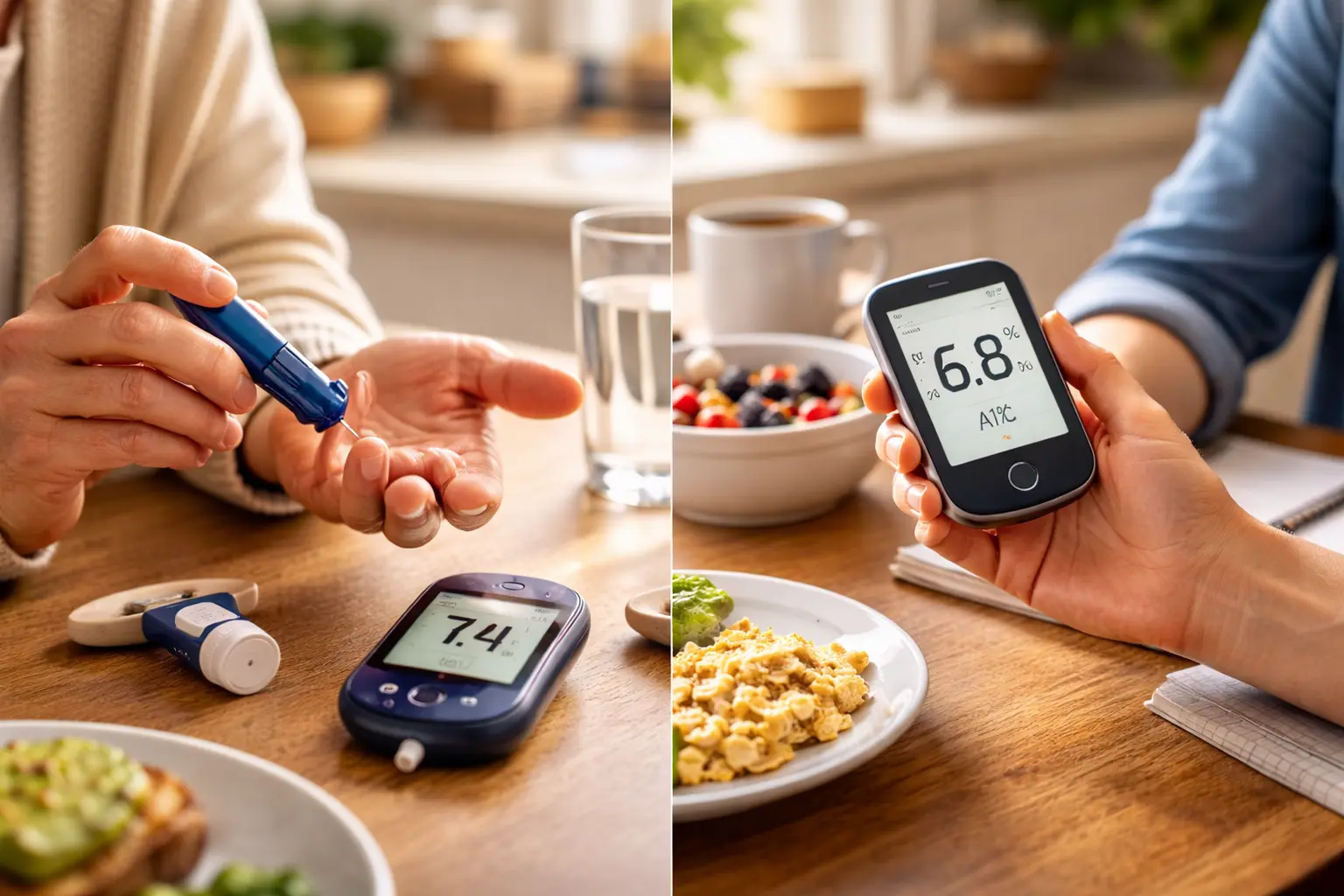
You’re tired of getting conflicting numbers from your doctor, confused about what A1C versus fasting glucose actually means, and worried that you’re missing something crucial about your health that could change everything.
Deciphering A1C and fasting glucose tests
A1C, also known as the hemoglobin A1C test, provides a snapshot of your average blood sugar levels over the past two to three months. Think of it as your blood sugar report card for the entire season. On the other hand, fasting glucose measures your blood sugar after an overnight fast, offering insights into your current sugar level at that exact moment. Imagine A1C as a weather forecast showing your overall climate patterns, while fasting glucose is like checking the temperature right now on your porch. For women managing their health, understanding this distinction matters because your body responds differently at different times of day. Your morning fasting glucose might look perfect while your A1C reveals that afternoon snacks or stress-induced blood sugar spikes have been creeping up over weeks. Both tests serve different purposes in your health toolkit, and knowing when each one tells you something important is the first step toward taking real control.
- A1C is ideal for monitoring long-term blood sugar control and catching patterns over months.
- Fasting glucose is useful for evaluating immediate blood sugar levels and morning baselines.
- Both tests play crucial roles in diagnosing and managing diabetes effectively.
Understanding A1C levels
A1C levels below 5.7% are generally considered normal, meaning your average blood sugar has been stable and healthy. Levels between 5.7% and 6.4% indicate prediabetes, which is your body’s warning signal that changes need to happen now, not later. An A1C of 6.5% or higher typically confirms diabetes. Here’s what this looks like in real life: a woman in her 40s with an A1C of 6.2% might feel completely fine, have no symptoms, and think nothing is wrong. But that number tells a different story. It means her blood sugar has been running higher than ideal for months, and her pancreas is working overtime. Regular monitoring can help you track changes and take proactive steps to improve your levels. Many women find that small adjustments like adding a 15-minute walk after meals or swapping refined carbs for whole grains can shift their A1C down by 0.5% to 1% within three months. The key is consistency and knowing your baseline so you can celebrate real progress.
📘 Fix your day in under 2 minuteschoose where to begin:
Interpreting fasting glucose results
Fasting glucose levels below 100 mg/dL are normal, meaning your body handled the overnight fast well and your liver is managing glucose production appropriately. Levels between 100 and 125 mg/dL signal prediabetes and suggest your fasting metabolism needs attention. A reading of 126 mg/dL or above is indicative of diabetes. Picture this scenario: you skip breakfast to save calories, go to your doctor’s appointment fasting, and get a fasting glucose reading of 118 mg/dL. You might feel shocked because you felt fine. That number doesn’t reflect how you feel; it reflects what’s happening inside your cells. It’s essential to follow up with your healthcare provider to discuss your results and understand what they mean for your specific situation. Some women naturally have slightly higher fasting glucose due to genetics, while others see it spike from stress or poor sleep the night before testing. Your doctor can help you distinguish between a one-time blip and a genuine pattern that needs intervention.
Key differences and considerations
While A1C reflects your average blood sugar over time, fasting glucose offers a snapshot of your immediate sugar levels, and together they tell a complete story. Imagine you have an A1C of 6.1% (prediabetic range) but your fasting glucose is consistently 95 mg/dL (normal). This tells your doctor that your blood sugar spikes are happening after meals or during the day, not in the morning. That insight changes your treatment strategy entirely. You might focus on meal timing, portion control, or adding protein and fiber rather than medication. Conversely, if your fasting glucose is 115 mg/dL but your A1C is 6.0%, something unusual is happening, and your doctor might want to investigate further. Monitoring both tests provides a comprehensive view of your blood sugar control and helps tailor your treatment plan accordingly. Women often find that tracking both numbers gives them the motivation to make changes because they can see exactly which habits affect which number.
Taking control of your health
Regular monitoring, a healthy diet, exercise, and medication adherence can help you manage your blood sugar levels effectively. Start with a realistic plan: maybe that means a 20-minute walk three times a week, swapping one sugary drink for water daily, or checking your blood sugar at consistent times. Small wins compound. One woman reduced her A1C from 7.2% to 6.1% in six months simply by eating protein at breakfast, taking the stairs at work, and cutting back on evening snacks. She didn’t overhaul her entire life; she made targeted changes based on her test results. Don’t hesitate to discuss your test results with your healthcare provider to ensure you’re on the right path to optimal health. Ask them which number matters most for you right now, what your personal targets should be, and what specific changes would have the biggest impact. Your doctor is your partner in this, not your judge.
A1C and fasting glucose tests are vital tools in managing diabetes and protecting your long-term health. Understanding the differences between these tests, interpreting the results accurately, and adopting healthy lifestyle habits tailored to your specific numbers are key steps for women to take control of their health and prevent complications.
Is one test more important than the other?
Both A1C and fasting glucose tests offer unique insights into blood sugar control and are equally important for managing diabetes. It’s essential to monitor both regularly. Your A1C shows your overall trend while fasting glucose reveals your baseline metabolism, and together they guide your treatment decisions.
Can lifestyle changes impact test results?
Yes, adopting a healthy lifestyle that includes a balanced diet, regular exercise, and medication adherence can positively influence A1C and fasting glucose levels. Consult with your healthcare provider for personalized recommendations. Many women see measurable improvements within 8 to 12 weeks of consistent lifestyle changes.
Others also read:
Disclaimer: This article is for informational purposes only and is not a substitute for professional medical advice. Always consult a healthcare professional for personal guidance.
This guide has been prepared and reviewed by the GlobalHealthBeacon editorial team and reflects current medical research as of 2026. It provides structured, evidence-based information to support informed health decisions.
