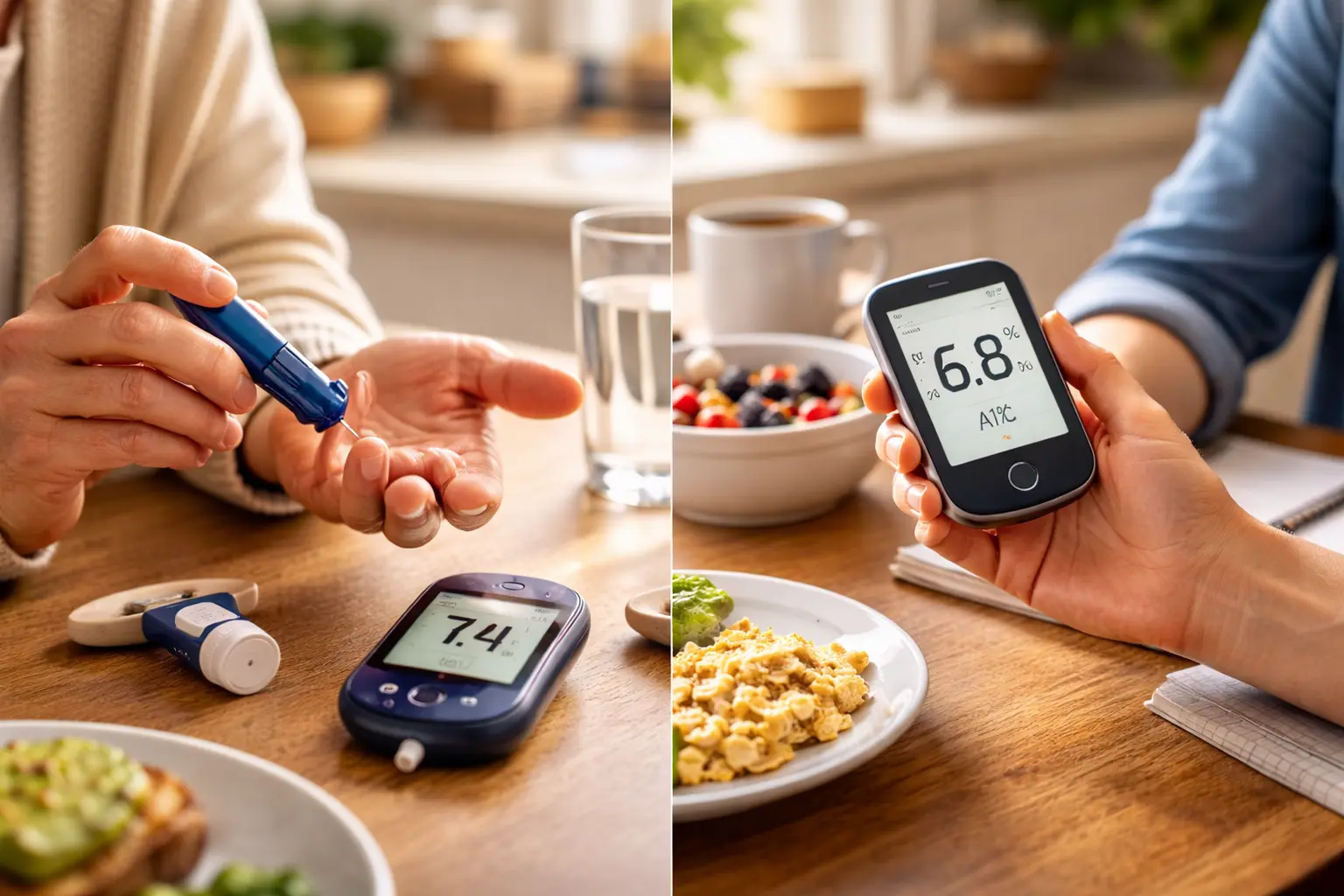
Your doctor throws around A1C versus fasting glucose like you should already know the difference, and suddenly you’re sitting in the waiting room feeling lost and frustrated because nobody explained what these numbers actually mean for your health.
Understanding A1C levels
A1C levels are like your blood sugar report card for the past three months. Instead of checking in once and calling it a day, A1C captures the bigger story of how your body has been managing glucose day in and day out. Think of it this way: if fasting glucose is a single snapshot, A1C is the whole photo album. When your doctor mentions your A1C, they’re looking at the average amount of glucose stuck to your red blood cells over that entire period. This matters because it shows patterns and trends rather than just one moment in time. For seniors especially, understanding this long-term perspective helps you see whether your daily habits, medications, and lifestyle choices are actually working. It’s the metric that really tells you if you’re on track or if adjustments need to happen.
- A1C of 5.7% or less is considered normal.
- Values between 5.7 to 6.4% indicate prediabetes.
- An A1C of 6.5% or higher suggests diabetes.
Decoding fasting glucose tests
Fasting glucose is different. You skip breakfast, head to the lab in the morning, and they measure your blood sugar right then and there after an overnight fast. It’s immediate, it’s current, and it tells you exactly what your body is doing at that specific moment. Some mornings you might wake up and feel a bit shaky or foggy, and that fasting glucose test can explain why. It catches those quick spikes or dips that happen overnight. The challenge is that one number doesn’t tell you much about the bigger picture. You could have a normal fasting glucose reading but still be struggling with blood sugar control throughout the day. That’s why your doctor doesn’t rely on it alone. Fasting glucose is like checking the weather right now versus understanding the climate. It’s useful, but it’s just one piece of the puzzle.
💬 Ready to feel better in 2 minutes?choose where to begin:
Why both matter for your health
Here’s where it gets interesting: A1C and fasting glucose are like two different lenses on the same situation. Imagine you’re trying to understand your overall fitness. One doctor checks your resting heart rate (that’s like fasting glucose), and another looks at your activity level over months (that’s A1C). Both give you valuable information. Your fasting glucose might be perfect, but if your A1C is creeping up, it means you’re having trouble managing blood sugar at other times during the day. Maybe it’s after meals, or during stressful afternoons. Conversely, a great A1C with a slightly elevated fasting glucose tells a different story. Together, these two numbers help your healthcare team see where the real problems are and where you’re doing well. For seniors managing multiple health conditions, this comprehensive view is crucial for catching issues early and adjusting your plan before bigger problems develop.
Balancing act: what to do next
So what do you actually do with this information? Start by tracking both numbers regularly and keeping a simple log. Write down your A1C results when you get them, and if you’re monitoring fasting glucose at home, jot those down too. Notice patterns. Are your fasting numbers higher on mornings after you’ve had dessert the night before? Does your A1C improve when you’ve been more active? These observations become gold when you talk to your doctor. Don’t wait for annual appointments to discuss your numbers. If something seems off or you’re confused about what the results mean, call and ask. Your healthcare provider can help you set realistic targets based on your age, overall health, and other medications you’re taking. Many seniors find that small changes like adding a 15-minute walk after dinner or adjusting meal timing make a real difference in both metrics.
Understanding the difference between A1C and fasting glucose levels is crucial for managing diabetes risk. A1C provides a long-term perspective, while fasting glucose offers immediate insights. Monitoring both metrics helps you stay proactive in maintaining optimal blood sugar control.
Can A1C levels be lowered?
Yes, A1C levels can be improved through lifestyle changes like diet, exercise, and medication as recommended by your healthcare provider.
How often should I check my A1C and fasting glucose levels?
It’s recommended to check your A1C at least twice a year and fasting glucose levels as advised by your healthcare provider based on your individual health needs.
Others also read:
Disclaimer: This article is for informational purposes only and is not a substitute for professional medical advice. Always consult a healthcare professional for personal guidance.
This article presents an experience-based perspective and has been reviewed by the GlobalHealthBeacon editorial team in 2026. It provides structured, evidence-based information to support informed health decisions.
