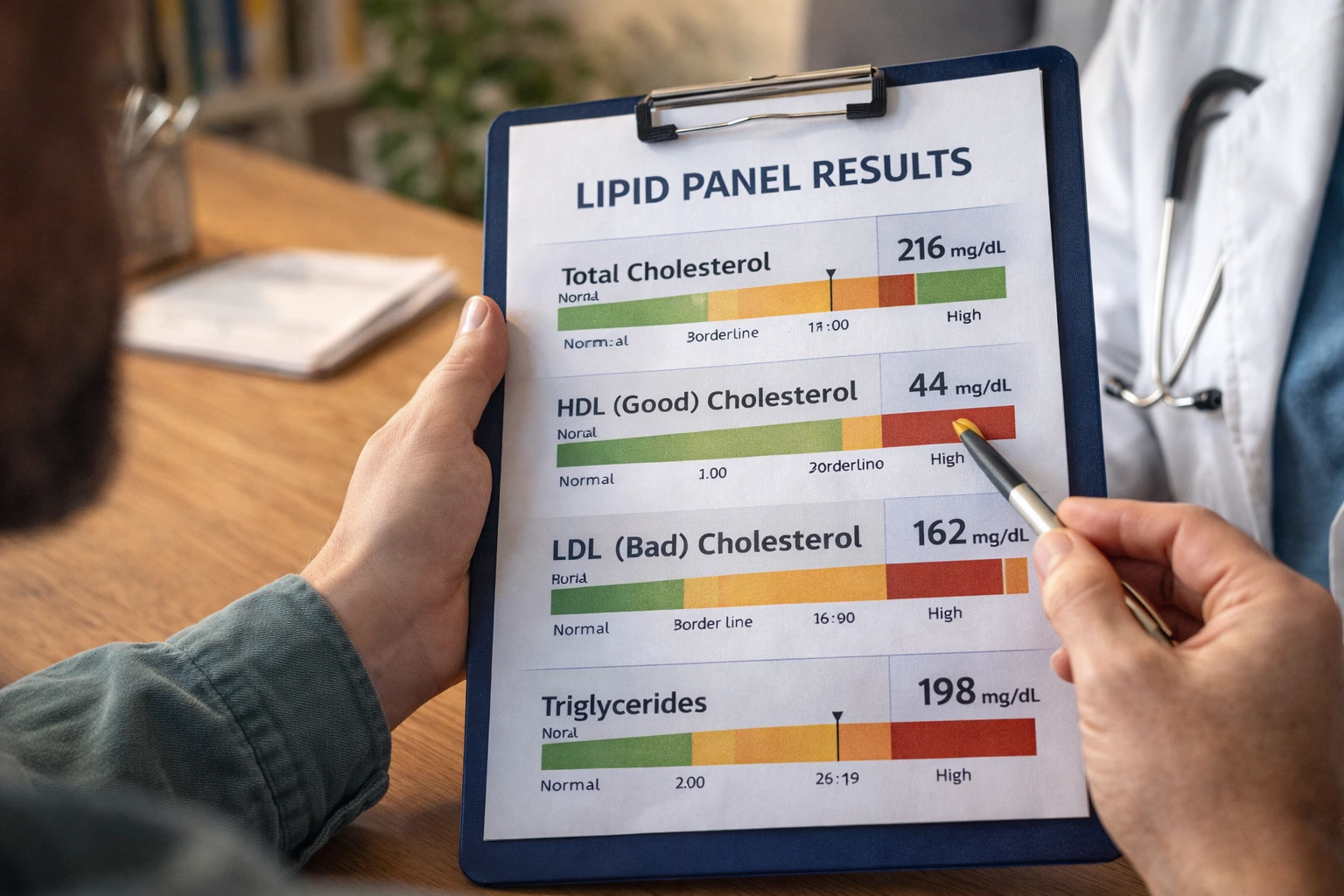
Your doctor hands you a lab report with numbers that might as well be in another language, and suddenly you’re wondering if those cholesterol figures mean you’re heading toward a heart attack or if you’re actually fine, so let’s cut through the confusion and get your lipid panel results explained in a way that actually makes sense.
Understanding lipid panel results
A lipid panel is essentially a snapshot of your cardiovascular health captured in four key measurements. Your total cholesterol adds up all types of cholesterol in your blood, while LDL cholesterol is the type that builds up in artery walls and increases disease risk. HDL cholesterol works like a cleanup crew, removing harmful cholesterol from your bloodstream. Triglycerides are a different fat that can also contribute to heart disease when elevated. For women specifically, these numbers matter differently than they do for men because hormonal changes throughout your life, especially after menopause, shift how your body processes and stores cholesterol. Understanding what each number represents helps you recognize whether your results signal a need for lifestyle changes or medical intervention. Think of it like reading a health report card where each grade tells you something specific about one aspect of your cardiovascular system.
- Total cholesterol should ideally be below 200 mg/dL.
- LDL cholesterol levels below 100 mg/dL are considered optimal for most individuals.
- HDL cholesterol levels above 60 mg/dL are protective against heart disease.
Interpreting your results
Once you have your numbers, interpretation requires looking at them as a complete picture rather than isolated figures. Imagine a 52-year-old woman named Sarah who gets her lipid panel back with total cholesterol of 220, LDL of 145, HDL of 38, and triglycerides of 180. On the surface, these numbers suggest elevated risk, but Sarah’s story matters too. She recently started exercising regularly after years of sedentary work, and her doctor explains that her HDL is still climbing as her fitness improves. This context changes the conversation from alarm to encouragement. When LDL is elevated, it typically means cholesterol is accumulating in your arteries, which is the primary concern for heart disease risk. However, HDL above 60 acts as a protective factor that can offset some LDL concerns. Triglycerides below 150 are normal, but many women find their triglycerides rise with refined carbohydrates and alcohol consumption. Your healthcare provider will consider your complete profile, family history, age, and existing conditions before recommending action.
📘 Fix your day in under 2 minuteschoose where to begin:
Factors affecting lipid levels
Your lipid numbers aren’t fixed in stone, which is actually good news because it means you have genuine control over them. Diet plays a massive role, and this is where many women get confused by conflicting advice. Saturated fats from red meat and full-fat dairy do raise LDL, but completely eliminating fat isn’t the answer either because your body needs healthy fats for hormone production and brain function. Exercise directly raises HDL cholesterol while often lowering triglycerides and LDL, which is why even 30 minutes of moderate activity most days creates measurable improvements within weeks. Genetics load the gun, but lifestyle pulls the trigger, meaning if your mother had high cholesterol, you’re predisposed, but that doesn’t make it inevitable. Hormonal shifts during perimenopause and menopause can worsen lipid profiles as estrogen levels drop, which is why many women see their numbers change in their 40s and 50s. Smoking damages artery walls and worsens cholesterol effects, while stress and poor sleep can elevate triglycerides. Certain medications like some birth control pills or hormone replacement therapy can also influence your lipid panel results.
Risk assessment and prevention
Your lipid panel is one tool among many that doctors use to calculate your actual cardiovascular risk, not a crystal ball predicting your future. A woman with LDL of 130 but excellent blood pressure, no smoking history, and regular exercise has very different risk than someone with LDL of 110 who smokes and is sedentary. This is why your doctor looks at your 10-year cardiovascular risk score, which combines cholesterol levels with age, blood pressure, smoking status, and diabetes history. Prevention strategies start with the lifestyle foundation: adopting a Mediterranean-style diet rich in olive oil, fish, nuts, and vegetables consistently lowers cholesterol better than any single food restriction. Regular physical activity, stress management through yoga or meditation, adequate sleep, and maintaining a healthy weight create a synergistic effect where each factor amplifies the others. Some women need medication like statins to reach target numbers, especially if they have existing heart disease or very high genetic predisposition. The key is viewing prevention as a long-term partnership with your healthcare provider where you’re actively participating in decisions about your health rather than passively accepting numbers.
Follow-up and monitoring
Getting one lipid panel is like taking a single photograph, but understanding your health trend requires a series of images over time. Most women should recheck lipid levels every five years if results are normal, but if you’ve made lifestyle changes or started medication, your doctor might want to see results after 6 to 12 weeks to assess whether interventions are working. This follow-up period is crucial because it shows you whether your efforts are actually moving the needle, which provides motivation to continue or adjust your approach. Keep a simple log of your results with dates so you can see your own trajectory rather than just focusing on individual numbers. If you’ve started a new exercise program or changed your diet, note that on your results so you can connect cause and effect. Some women find that tracking their lipid improvements alongside other health markers like blood pressure or weight loss creates a motivating picture of overall health improvement. Regular monitoring also catches any concerning trends early, allowing your doctor to intervene before problems develop. Think of follow-up appointments as check-ins with your health coach, opportunities to celebrate progress and adjust strategy as needed.
Your lipid panel results are a starting point for understanding your heart health, not a final verdict on your future. By learning what the numbers mean, recognizing the factors you can control, and committing to regular monitoring with your healthcare provider, you transform abstract lab values into actionable information. Women’s cardiovascular health has unique considerations around hormonal changes and risk factors, making personalized attention to your lipid profile especially important. Take these results as motivation to invest in yourself through diet, movement, stress management, and sleep, knowing that even modest improvements create measurable changes in your numbers and genuine protection for your heart.
What should I do if my lipid panel results are abnormal?
If your lipid panel results are abnormal, consult your healthcare provider for further evaluation and personalized recommendations. They may suggest lifestyle modifications, medications, or further testing to assess your heart disease risk.
How often should I have a lipid panel test?
The frequency of lipid panel tests may vary based on your age, risk factors, and medical history. In general, it is recommended to have your cholesterol levels checked at least every five years. However, individuals with existing heart disease or risk factors may require more frequent monitoring.
Others also read:
Disclaimer: This article is for informational purposes only and is not a substitute for professional medical advice. Always consult a healthcare professional for personal guidance.
This guide has been prepared and reviewed by the GlobalHealthBeacon editorial team and reflects current medical research as of 2026. It provides structured, evidence-based information to support informed health decisions.
