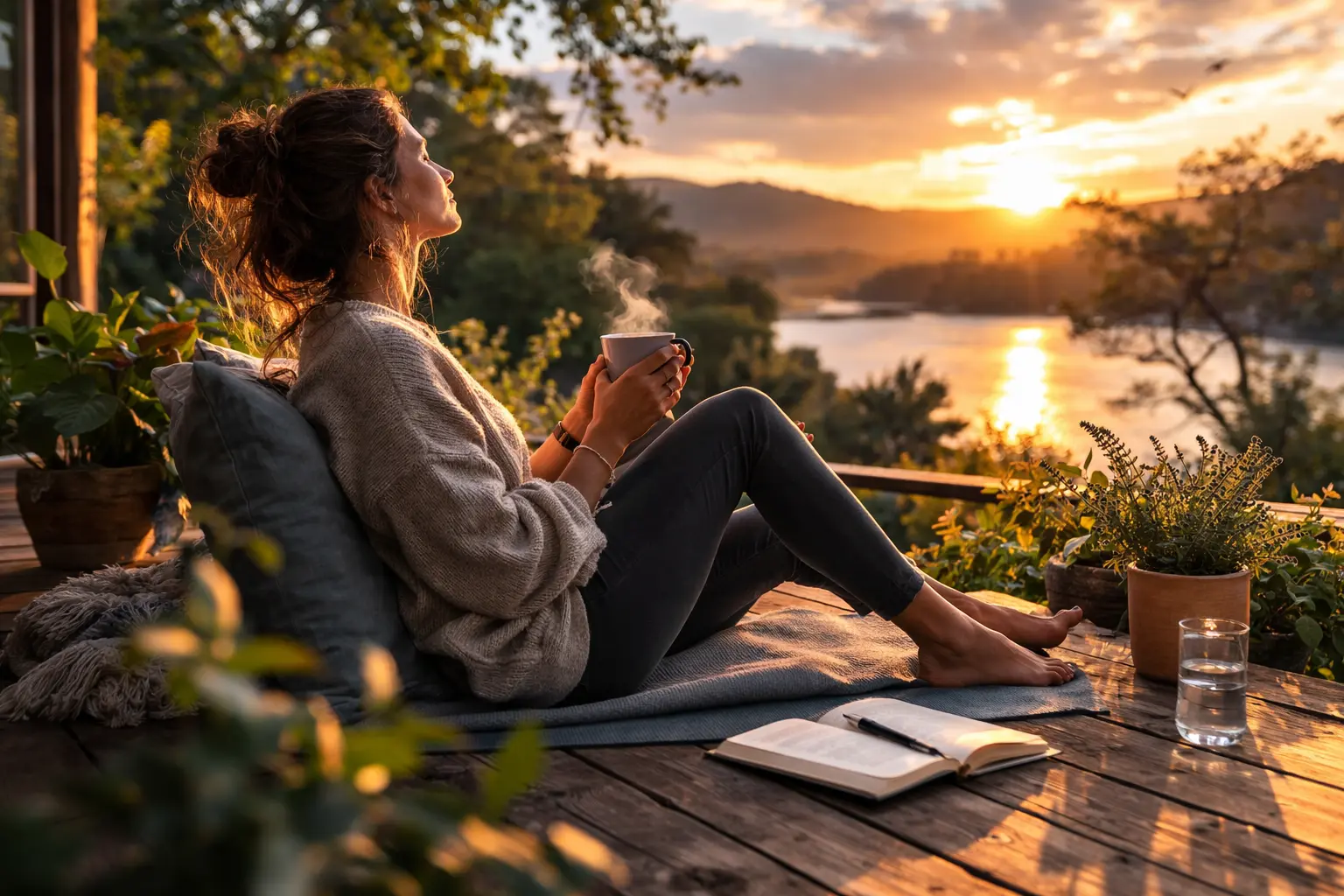
Your chest tightens, your mind races, and nothing seems to slow down, so you need relaxation techniques for stress that actually work and work fast.
Deep breathing exercises
Deep breathing is your fastest access point to calm. When stress hits, your nervous system shifts into overdrive, but controlled breathing flips that switch back. Find a quiet corner, sit comfortably, and place one hand on your chest and one on your belly. Breathe in slowly through your nose for a count of four, feeling your belly expand like you’re filling it with air. Hold that breath for four counts, then exhale through your mouth for six counts, making the exhale longer than the inhale. This extended exhale signals safety to your body. Repeat for 5 to 10 minutes. Many young adults find this works best when they do it right after waking or before bed, but it’s equally effective during a stressful work meeting or before an exam. The key is consistency and not forcing it. Your body will respond naturally.
- Inhale deeply through your nose, expanding your diaphragm.
- Exhale slowly through your mouth, releasing tension with each breath.
- Focus on the rhythm of your breathing to calm your mind and body.
Progressive muscle relaxation
Progressive muscle relaxation works by creating a contrast between tension and relaxation so your body learns the difference. Start by lying down or sitting in a comfortable position. Begin with your toes. Tense every muscle in your feet for five to ten seconds, squeezing as hard as feels right, then suddenly release and notice the warmth and heaviness flooding in. Move upward through your calves, thighs, glutes, abdomen, chest, shoulders, arms, hands, neck, jaw, and face. Spend about one minute per muscle group. This technique is particularly useful for young adults who carry stress in their shoulders and neck without realizing it. Many people report that after one session, they become aware of tension they didn’t know they were holding. Practice this before bed for better sleep or during a lunch break to reset your nervous system.
📘 Fix your day in under 2 minuteschoose where to begin:
Mindfulness meditation
Mindfulness meditation teaches your mind to observe thoughts without getting tangled in them. Find a comfortable seated position, close your eyes, and focus on your natural breath without trying to change it. As thoughts arise, acknowledge them like clouds passing through the sky and gently return your attention to your breath. If your mind wanders to your to-do list, a conversation, or worry about the future, that’s normal and not failure. Simply notice it happened and redirect. Start with just five minutes daily. Young adults often struggle with the misconception that meditation means having a blank mind, but it’s actually the opposite. It’s about noticing your mind’s activity and choosing not to engage with it. Many find that morning meditation sets a calmer tone for the entire day, while evening practice helps process stress from the day and improves sleep quality.
Visual imagery
Your brain responds powerfully to imagined sensory experiences. Close your eyes and mentally transport yourself to a place where you feel completely safe and at ease. This might be a beach, forest, mountain cabin, or even a childhood memory of a comfortable space. Engage all your senses. See the colors and light, hear the sounds around you, feel the temperature and textures, smell the air. If you’re imagining a beach, feel the sand beneath you, hear the waves, smell the salt air, and notice the warmth of the sun. Spend three to five minutes fully immersed in this mental refuge. Young adults often use this technique before presentations or difficult conversations to anchor themselves in calm. The beauty of visual imagery is that it requires no equipment and works anywhere, whether you’re in a bathroom stall at work or on a crowded bus. Regular practice makes it easier to access this mental space quickly when stress strikes.
Exercise and physical activity
Movement is one of the most underrated relaxation tools available. When you exercise, your body releases endorphins, which naturally elevate mood and reduce stress hormones like cortisol. You don’t need intense workouts. A 20-minute walk, a yoga session, dancing to your favorite songs, or even stretching counts. Young adults often find that exercise serves double duty: it processes stress stored in the body while also giving your mind a break from rumination. Many report that their best ideas come during or after movement. The key is choosing an activity you actually enjoy, not something you force yourself to do. If running feels like punishment, try dancing. If yoga feels boring, try rock climbing. Consistency matters more than intensity. Even three 15-minute sessions weekly significantly improves stress resilience and overall well-being.
Stress relief doesn’t require expensive therapy or hours of your time. Deep breathing, progressive muscle relaxation, mindfulness meditation, visual imagery, and regular exercise are all accessible tools you can use right now. Pick one technique that resonates with you, practice it consistently for a week, then add another. Your nervous system will gradually recalibrate, and you’ll notice stress affecting you less intensely.
Can relaxation techniques help with anxiety?
Yes, relaxation techniques like deep breathing and mindfulness meditation can help reduce anxiety symptoms by promoting relaxation and stress relief.
How often should I practice these relaxation techniques?
It’s beneficial to practice relaxation techniques daily, even if it’s just for a few minutes. Consistent practice can help build resilience to stress and improve overall well-being.
Others also read:
Disclaimer: This article is for informational purposes only and is not a substitute for professional medical advice. Always consult a healthcare professional for personal guidance.
This guide has been prepared and reviewed by the GlobalHealthBeacon editorial team and reflects current medical research as of 2026. It provides structured, evidence-based information to support informed health decisions.
