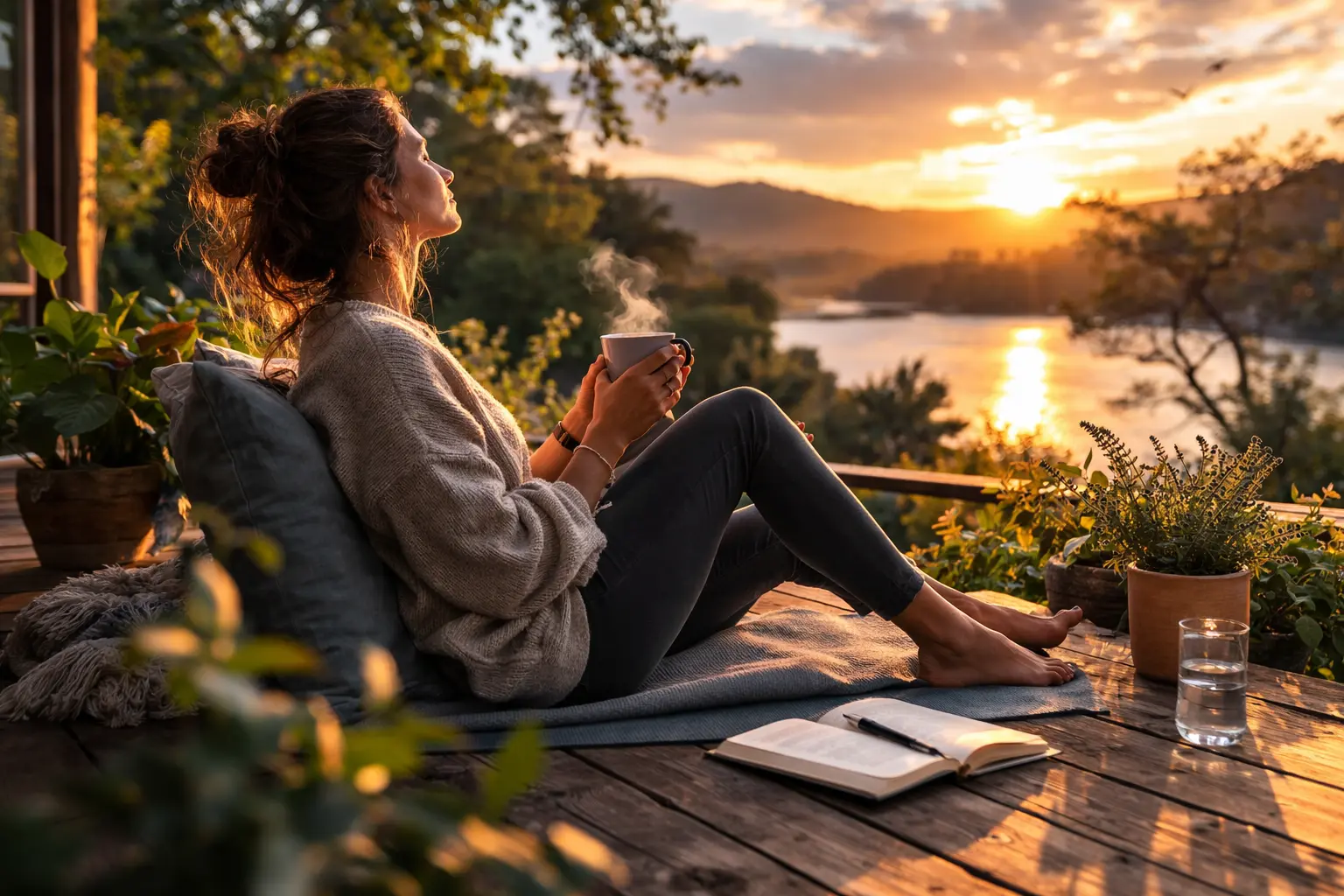
Your shoulders are permanently tensed, your mind won’t stop spinning at 11 PM, and you can’t remember the last time you felt actually calm, so here are relaxation techniques for stress that actually fit into a real life.
Mindful meditation: finding inner peace
Mindfulness meditation doesn’t require sitting in silence for an hour. Start with five minutes in your car before work, during lunch at your desk, or even in the bathroom as a mini escape. The practice works by anchoring your attention to your breath, which interrupts the stress cycle your body gets stuck in. When your mind wanders (and it will), gently bring it back without judgment. Many women find that this simple act of noticing their thoughts without reacting to them creates distance from the anxiety. You might notice your jaw unclenches or your breathing deepens after just a few sessions. Apps like Insight Timer or Calm offer guided sessions specifically timed for busy schedules. The key is consistency over duration. Five minutes daily compounds into real calm over weeks.
- Practice deep breathing exercises to calm the mind and body.
- Use guided meditation apps for support and structure.
- Allocate at least 5-10 minutes daily for meditation to reap the benefits.
Progressive muscle relaxation: unwinding tension
Progressive muscle relaxation works because it teaches your body the difference between tension and relaxation. Start by tensing your toes for five seconds, then release and notice the sensation. Move systematically upward through your calves, thighs, glutes, abdomen, chest, hands, arms, shoulders, neck, and face. Each muscle group gets five seconds of tension followed by release. This technique is particularly effective for women who carry stress in their shoulders and neck. You can do this lying in bed before sleep or sitting in a chair during a work break. A common mistake is tensing too hard, which defeats the purpose. The goal is moderate tension that you can clearly feel releasing. Many women report falling asleep faster or waking with less morning stiffness after practicing this regularly. It takes about 15 minutes total and requires no equipment.
📘 Fix your day in under 2 minuteschoose where to begin:
Yoga therapy: stretching for serenity
Gentle yoga poses release both physical and emotional tension stored in your body. Child’s pose, cat-cow stretches, and forward folds are accessible starting points that don’t require flexibility or experience. The combination of movement, breathing, and body awareness activates your parasympathetic nervous system, which is your body’s natural brake pedal. You don’t need a studio membership or special clothing. A 10-minute routine at home using YouTube videos works just as well. Many women find that yoga helps them reconnect with their body after spending hours hunched over screens. The slow, deliberate movements also quiet racing thoughts in a way that sitting still cannot. A common mistake is pushing too hard into stretches. Yoga is not about touching your toes; it’s about what you learn on the way down. Even three poses held for one minute each can shift your nervous system state.
Breathwork for balance: harmonizing body and mind
Your breath is the only nervous system function you can consciously control, making it a powerful stress tool. Diaphragmatic breathing means breathing into your belly rather than your chest. Place one hand on your chest and one on your belly. Inhale through your nose for a count of four, letting your belly expand while your chest stays relatively still. Hold for four counts, then exhale through your mouth for six counts. The longer exhale signals safety to your nervous system. Practice this for just two minutes when you feel stress rising. Many women use this technique during difficult conversations, before presentations, or when anxiety hits at night. A common mistake is forcing the breath or trying to breathe perfectly. Your body knows how to breathe; you’re just slowing it down intentionally. Even one conscious breathing cycle can lower your heart rate and blood pressure measurably.
Art therapy: creativity as a stress reliever
Art therapy doesn’t require talent or artistic skill. The act of creating something with your hands shifts your brain from the anxious, planning part to the present, creative part. Adult coloring books, sketching, painting, or working with clay all count. You’re not making gallery-worthy art; you’re processing emotions and giving your mind something concrete to focus on besides worry. Many women find that 20 minutes of coloring or doodling reduces stress as effectively as meditation. The repetitive motion is soothing, and the visual progress is satisfying. You can do this while listening to a podcast or music. A common mistake is judging your work or trying to make it perfect. The therapeutic benefit comes from the process, not the product. Keep supplies accessible so you can grab them during high-stress moments. Some women keep a sketchbook in their bag for waiting rooms or breaks.
Relaxation techniques for stress don’t have to be complicated or time-consuming. Mindful meditation, progressive muscle relaxation, gentle yoga, breathwork, and art therapy are all practical tools you can integrate into your existing routine. Start with one technique that resonates with you, practice it consistently for two weeks, then add another. Your nervous system will respond, and you’ll notice calmer mornings, better sleep, and less reactive responses to daily frustrations.
How often should I practice these relaxation techniques?
Daily practice yields the best results, even if it’s just five to ten minutes. Your nervous system responds to consistency more than duration. Think of it like brushing your teeth for mental calm. If daily feels impossible, aim for at least four days per week. Many women find that morning or evening routines work best because they’re already habit slots.
Which relaxation technique is best for beginners?
Mindful meditation or breathwork are ideal starting points because they require no equipment and can be done anywhere. Start with just three to five minutes and use a guided app if sitting in silence feels uncomfortable. Breathwork is especially good if you want immediate results since even one conscious breathing cycle produces measurable calm.
Others also read:
Disclaimer: This article is for informational purposes only and is not a substitute for professional medical advice. Always consult a healthcare professional for personal guidance.
This guide has been prepared and reviewed by the GlobalHealthBeacon editorial team and reflects current medical research as of 2026. It provides structured, evidence-based information to support informed health decisions.
