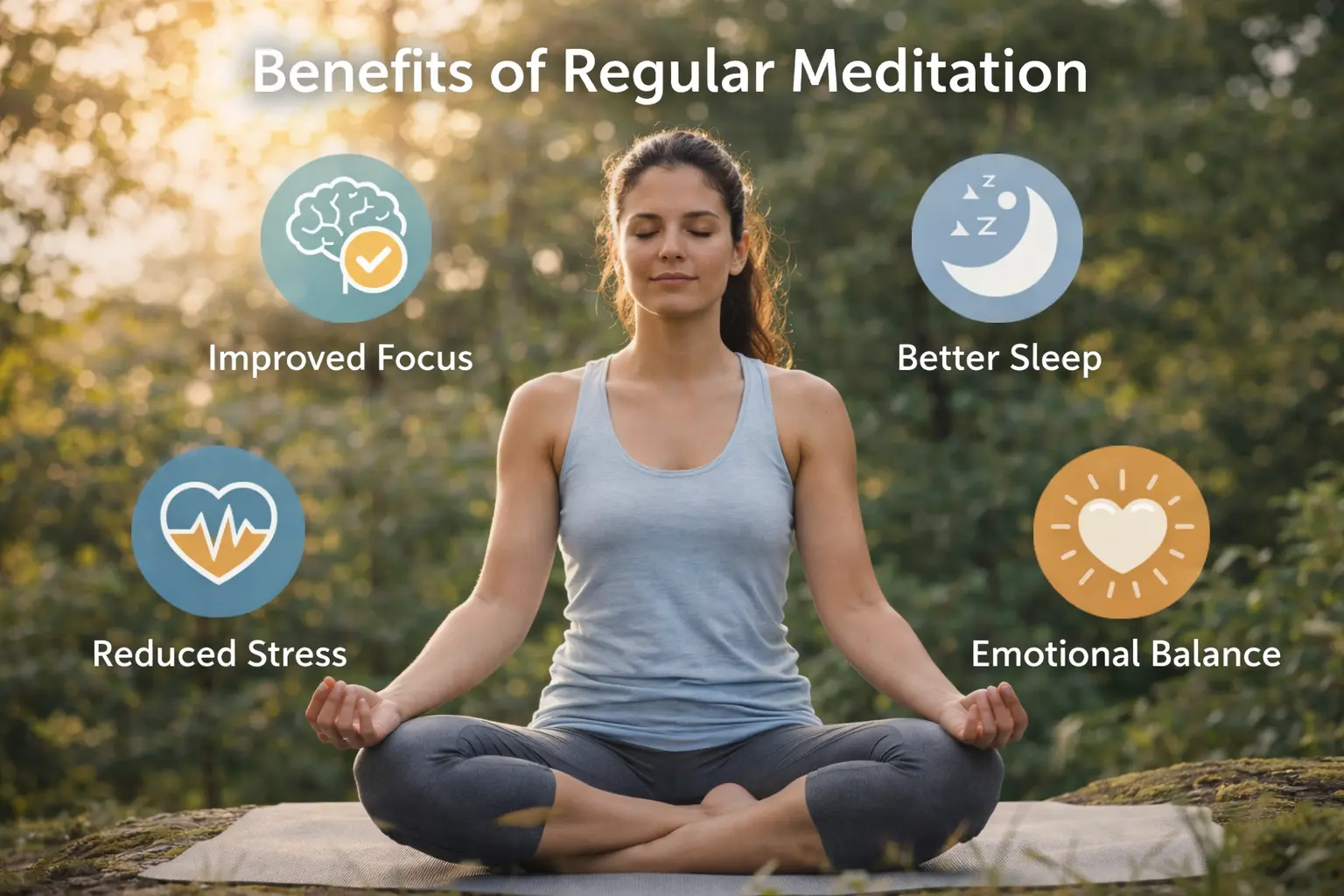
Your mind won’t shut up, your chest feels tight, and you’re exhausted by 2pm even though you just woke up—but the benefits of regular meditation might be the reset button you didn’t know you needed.
Clarity and calmness
Picture this: you’re sitting in your dorm room or apartment, notifications pinging constantly, your to-do list spiraling in your head. Then you close your eyes and commit to just five minutes of meditation. At first, your mind feels like a browser with 47 tabs open. But something shifts. As you practice regularly, that mental noise starts to settle. You begin noticing thoughts without getting tangled in them. One young adult described it as watching clouds pass instead of being trapped inside the storm. Within weeks, you’ll catch yourself naturally pausing before reacting, choosing your words more carefully, and feeling genuinely present in conversations. The clarity isn’t magical, it’s gradual and real. Your ability to focus on a single task improves. Anxiety about the future loosens its grip. You start making decisions from a calmer place instead of pure panic.
- Enhanced focus and concentration
- Reduced stress and anxiety levels
- Improved emotional regulation
Stress reduction and well-being
Stress doesn’t disappear when you meditate, but your relationship with it transforms completely. Imagine carrying a heavy backpack all day. Meditation doesn’t remove the backpack, but it teaches you to set it down periodically. Young adults who meditate regularly report that work deadlines, relationship drama, and financial worries still exist, but they stop feeling suffocating. Your nervous system actually learns to downshift. When you practice meditation consistently, you’re training your body to recognize that not every moment is a threat. A 25-year-old marketing professional shared that after three months of daily 10-minute sessions, she noticed her shoulders weren’t perpetually tensed up anymore. Her sleep improved. Her irritability faded. She had more patience with her roommates and herself. This isn’t about becoming emotionally numb or pretending problems don’t matter. It’s about building resilience and perspective so life’s inevitable challenges don’t knock you completely off balance.
💬 Ready to feel better in 2 minutes?choose where to begin:
Mindfulness and present moment awareness
Think about the last meal you actually tasted. Or the last walk where you noticed the sky instead of scrolling through your phone. Most young adults are living on autopilot, mentally somewhere else while their body goes through the motions. Mindfulness meditation changes that. You start noticing small things: the texture of your coffee cup, the way sunlight hits your desk, the genuine smile from a friend. These moments aren’t trivial. They’re where life actually happens. A college student who started meditating described finally being able to sit with a friend without mentally planning what to say next. She was actually listening. Another found that eating became enjoyable again instead of something rushed between tasks. Mindfulness doesn’t require you to sit cross-legged for hours. It’s about bringing that quality of attention into your everyday life. You eat slower. You listen deeper. You experience more satisfaction from simple things because you’re actually present for them.
Self-discovery and inner growth
Meditation is like finally turning on the lights in a room you’ve been fumbling around in the dark. When you sit quietly with yourself regularly, you start noticing patterns. Why do you always seek validation from others? What triggers your anxiety? What actually matters to you versus what you think should matter? A 28-year-old shared that meditation helped her realize she was pursuing a career path her parents wanted, not what genuinely excited her. Another discovered he had deep perfectionist tendencies that were exhausting him unnecessarily. These insights don’t come from forcing yourself to think harder. They emerge naturally when your mind settles enough to listen to itself. You begin understanding your values, your fears, your strengths. You recognize old patterns and have space to choose differently. This self-awareness ripples outward. You make better choices about relationships, career moves, and how you spend your time. You become more comfortable with who you actually are instead of constantly trying to be someone else.
Exploring regular meditation unveils a path to clarity, calmness, stress reduction, mindfulness, and self-discovery. As young adults embrace this transformative practice, they discover a profound shift in their emotional well-being and the way they engage with life.
How long should I meditate to experience benefits?
Start with just a few minutes a day and gradually increase as you feel comfortable. Consistency is key, so aim for a daily practice that suits your schedule and lifestyle.
Can meditation help with sleep issues?
Yes, meditation can improve sleep quality by calming the mind and body before bedtime. Establishing a bedtime meditation routine can promote relaxation and aid in falling asleep more easily.
Others also read:
Disclaimer: This article is for informational purposes only and is not a substitute for professional medical advice. Always consult a healthcare professional for personal guidance.
This article presents an experience-based perspective and has been reviewed by the GlobalHealthBeacon editorial team in 2026. It provides structured, evidence-based information to support informed health decisions.
