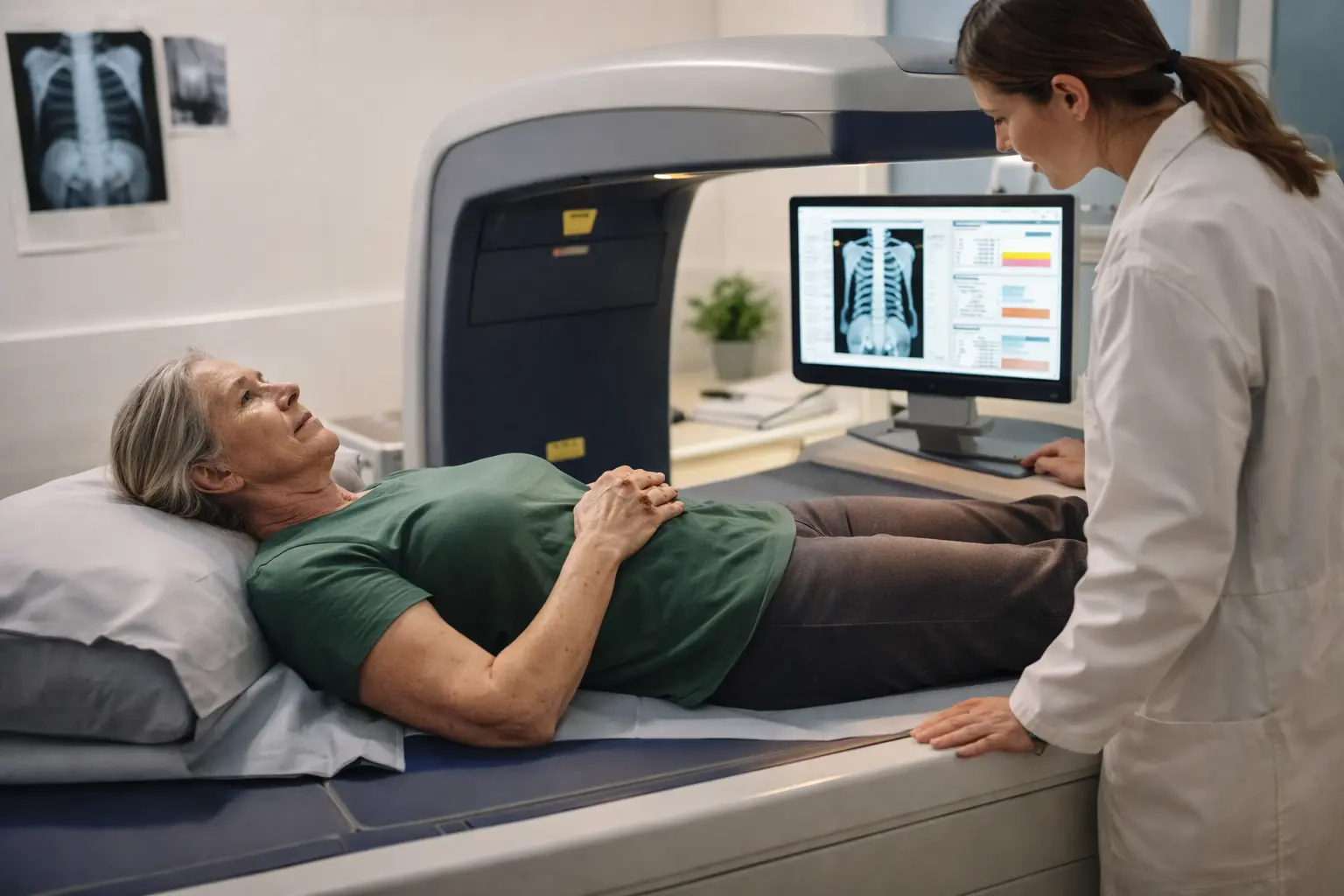
You feel a dull ache in your lower back after climbing stairs, your mom mentions osteoporosis running in the family, and suddenly you’re wondering if your bones are quietly becoming fragile without you even knowing it, which is exactly why understanding what a bone density scan dxa explained can do for you might be the wake-up call you need.
Understanding bone density scans: the basics
Bone density scans, also known as DXA scans, measure how solid and strong your bones really are using low-dose X-rays. Think of it like a health report card for your skeleton. The scan captures images of your bones, typically your hip, spine, and forearm, and compares them to healthy young adult bones to calculate your bone mineral density. What makes this so valuable is that osteoporosis often develops silently without any symptoms until you experience a fracture. Many women don’t realize their bones are weakening until they break a wrist from a simple fall or notice they’re getting shorter. A DXA scan catches these changes early, before serious damage occurs, giving you the chance to take preventive action when it matters most.
- Quick and painless procedure lasting 10-30 minutes with zero discomfort
- Highly accurate in detecting bone health issues years before fractures happen
- Provides essential information for preventive care and personalized treatment planning
Preparing for your DXA scan: what to expect
Getting ready for a bone density scan is refreshingly simple, which is one reason so many women find it less intimidating than expected. Wear comfortable, loose-fitting clothing without metal buttons, zippers, or jewelry since these can interfere with the imaging. Avoid taking calcium supplements for at least 24 hours before your appointment, as they can create shadows on the scan that affect accuracy. On the day of your scan, you’ll arrive at the imaging center, check in, and then be guided to a quiet room where the actual scan happens. You lie flat on a padded table, fully clothed, while a mechanical arm moves slowly over your body capturing images. The technician steps behind a protective barrier and takes multiple shots from different angles. Many women describe feeling a mix of nervousness and relief during this moment, realizing they’re finally getting answers about something that’s been worrying them.
💬 Ready to feel better in 2 minutes?choose where to begin:
Deciphering your DXA results: interpreting the numbers
Your DXA results arrive as T-scores, which might sound confusing at first but become clear once explained. A T-score above negative one means your bones are normal and strong. A score between negative one and negative two-point-five indicates osteopenia, which means your bones are weaker than ideal but not yet at the fracture threshold. Below negative two-point-five signals osteoporosis, where fracture risk becomes significantly higher. Your doctor will also provide a 10-year fracture probability percentage, showing your actual risk of breaking a hip, spine, or wrist in the next decade. Some women feel alarmed seeing these numbers, while others feel relieved to finally have concrete information instead of vague worries. The key is understanding that these results aren’t a life sentence but rather a roadmap showing exactly where you stand and what interventions might help.
Taking action post-DXA: empowering your bone health
Once you have your results, your healthcare provider becomes your partner in strengthening your bones. If your scan shows normal density, the focus shifts to maintenance through regular exercise, adequate calcium and vitamin D intake, and avoiding smoking and excessive alcohol. For osteopenia, your doctor might recommend weight-bearing exercises like walking or dancing, dietary changes, and possibly medication depending on your age and fracture risk. With osteoporosis, a more structured approach typically includes prescription medications that slow bone loss or build new bone, combined with fall-prevention strategies and home modifications to reduce injury risk. Many women find this action phase empowering because they’re no longer guessing or worrying in the dark. You have a specific plan, clear targets, and the ability to influence your outcome through informed choices about exercise, nutrition, and medical treatment.
Delve into the realm of DXA bone density scans, uncovering their significance in preserving your bone health. From preparation to interpretation and action steps, this experience-based guide equips you with the knowledge to safeguard your bones effectively.
Is a DXA scan painful?
No, DXA scans are painless and typically take around 10-30 minutes to complete. You won’t experience any discomfort during the procedure.
How often should I have a bone density scan?
The frequency of DXA scans varies based on your risk factors. Generally, women over 65 or those with significant bone health issues may undergo scans every 1-2 years.
Others also read:
Disclaimer: This article is for informational purposes only and is not a substitute for professional medical advice. Always consult a healthcare professional for personal guidance.
This article presents an experience-based perspective and has been reviewed by the GlobalHealthBeacon editorial team in 2026. It provides structured, evidence-based information to support informed health decisions.
