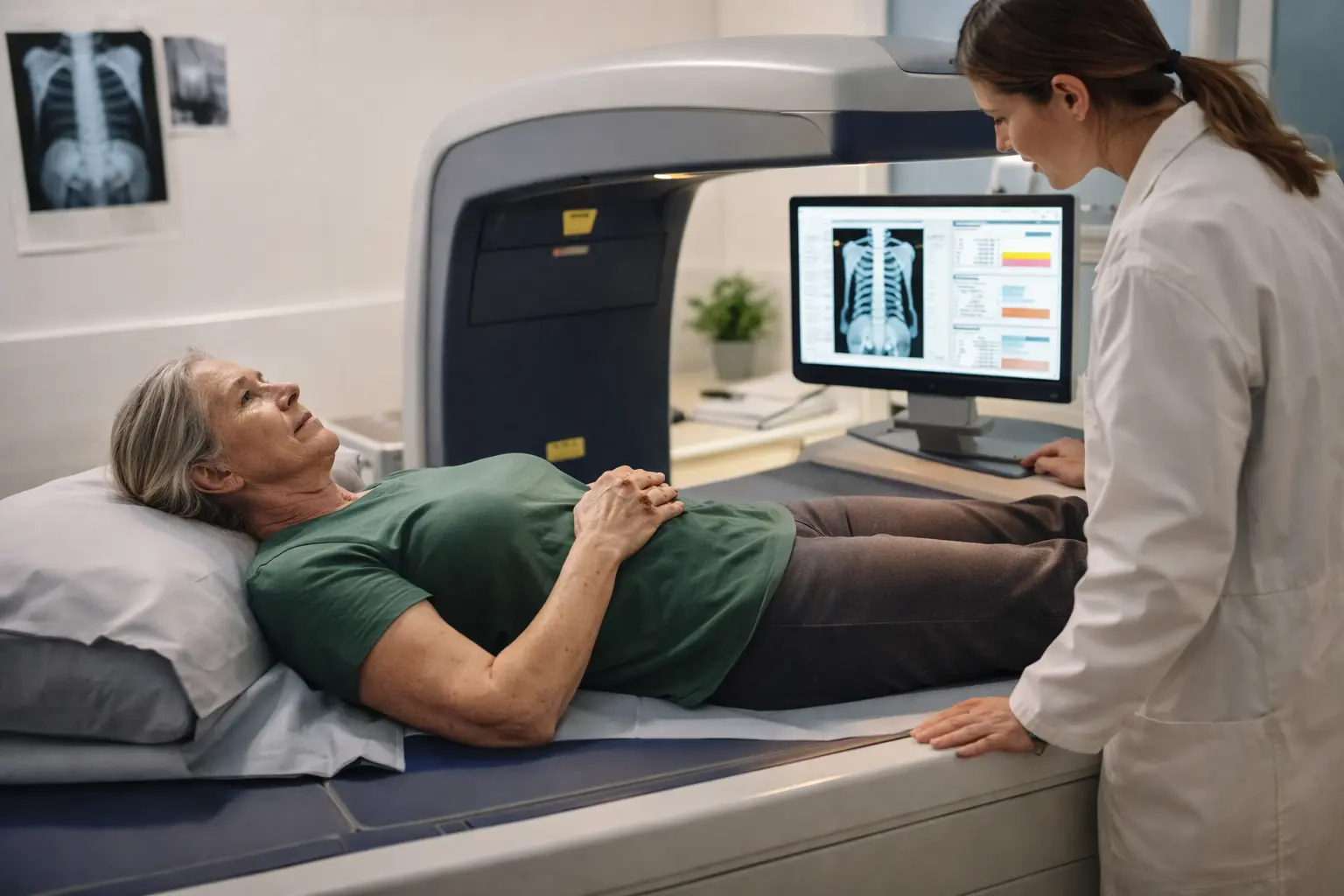
You’re worried your bones might not be as strong as they should be, and nobody’s really explaining what a bone density scan dxa explained actually does or why you might need one, so let’s cut through the confusion and get you ready.
Understanding bone density scan dxa
A bone density scan DXA, formally known as dual-energy X-ray absorptiometry, is a straightforward medical test that measures how dense and strong your bones are. Think of it like a health report card for your skeleton. The machine uses two different energy levels of X-rays to distinguish between bone and soft tissue, giving your doctor precise measurements of bone mineral density. The radiation exposure is minimal, roughly equivalent to what you’d receive during a routine dental X-ray or about one-tenth of a standard chest X-ray. For young adults, understanding this test early matters because bone density peaks in your late twenties and early thirties. After that, bone loss gradually accelerates, especially for women after menopause. Getting a baseline measurement now helps you and your doctor track changes over time and catch potential issues before they become serious fractures.
- The scan targets common fracture sites like the hip, spine, and forearm.
- It’s crucial for young adults to assess bone health early to prevent future complications.
- A DXA scan is recommended for those at risk like women over 65 and men over 70.
Preparing for your dxa appointment
Getting ready for a DXA scan is refreshingly simple, but a few details matter. Start by telling your doctor if you’re pregnant, as the test isn’t recommended during pregnancy. If you’ve had a contrast X-ray or nuclear medicine test recently, mention that too, since contrast agents can linger in your body and potentially interfere with results. Wear loose, comfortable clothing without metal components like zippers, underwire bras, or jewelry, since metal creates artifacts on the scan. Remove all metal items before the test begins. Avoid taking calcium supplements for at least 24 hours before your appointment, as excess calcium in your digestive system can create false readings. You can eat normally and drink water. If you’re on other medications, continue taking them unless your doctor says otherwise. Arrive a few minutes early to complete any paperwork, and bring your insurance card and photo ID.
📘 Fix your day in under 2 minuteschoose where to begin:
During the dxa scan
When you arrive for your scan, a technologist will guide you to the X-ray room and explain exactly what to expect. You’ll lie flat on a padded table, fully clothed, while a scanning arm passes slowly over your body, typically starting at your feet and moving toward your head. The process feels completely painless and takes about 10 to 30 minutes depending on which bones are being scanned. You’ll need to remain still and breathe normally throughout. The technologist may ask you to adjust your position slightly to ensure optimal image quality. Some facilities scan your whole body, while others focus on specific areas like your hip and spine, which are the most common fracture sites. The technologist might step out of the room during the actual scanning, but they can see and hear you the entire time. If you feel uncomfortable or need a break, just let them know. Once the scan is complete, you’re done. There’s no recovery time, no side effects, and you can return to your normal activities immediately.
Interpreting your dxa results
Your DXA results come back as a T-score, which compares your bone density to that of a healthy young adult of the same gender. Understanding this number is key to knowing where you stand. A T-score above -1.0 is considered normal bone density. A T-score between -1.0 and -2.5 indicates osteopenia, which means your bones are weaker than normal but not yet at the fracture threshold. A T-score below -2.5 indicates osteoporosis, meaning your bones are significantly weakened and fracture risk is elevated. Your doctor will also calculate a 10-year fracture risk based on your T-score and other factors like age, sex, and medical history. This helps determine whether treatment is necessary or if lifestyle changes alone are sufficient. Don’t panic if your results aren’t perfect. Many young adults with lower bone density can improve their scores through diet, exercise, and lifestyle modifications. Your doctor will discuss what these numbers mean specifically for you and create a personalized action plan.
Taking action post-dxa
Once you have your results, the real work begins, but it’s manageable and often involves changes you can make immediately. Schedule a follow-up appointment with your doctor to discuss your bone health status and what it means for your future. If your results show low bone density, your doctor might recommend calcium and vitamin D supplementation, prescription medications, or both. Beyond medication, focus on weight-bearing exercises like walking, jogging, strength training, or dancing at least three to four times per week. These activities stress your bones in a healthy way, signaling them to maintain or build density. Ensure your diet includes adequate calcium from dairy, leafy greens, fortified plant-based milk, or supplements, aiming for 1,000 to 1,200 mg daily depending on your age. Vitamin D is equally important for calcium absorption, so get 15 to 30 minutes of sunlight exposure daily or consider supplementation. Quit smoking if you do, as it accelerates bone loss. Limit alcohol to moderate amounts, since excessive drinking interferes with bone formation. Follow up with repeat DXA scans as your doctor recommends, typically every one to two years if you have low bone density.
Bone density scan DXA explained: understand the basics of how the test works, prepare yourself for a smooth appointment, learn how to read your results, and take concrete steps to build or maintain strong bones for life.
Is a DXA scan necessary for all young adults?
A DXA scan is typically recommended for individuals with risk factors like a family history of osteoporosis, smoking, low body weight, or certain medications that can affect bone health.
How often should young adults undergo a DXA scan?
The frequency of DXA scans depends on your individual risk factors and bone health status. Your healthcare provider will advise you on the appropriate interval for follow-up scans.
Others also read:
Disclaimer: This article is for informational purposes only and is not a substitute for professional medical advice. Always consult a healthcare professional for personal guidance.
This guide has been prepared and reviewed by the GlobalHealthBeacon editorial team and reflects current medical research as of 2026. It provides structured, evidence-based information to support informed health decisions.
