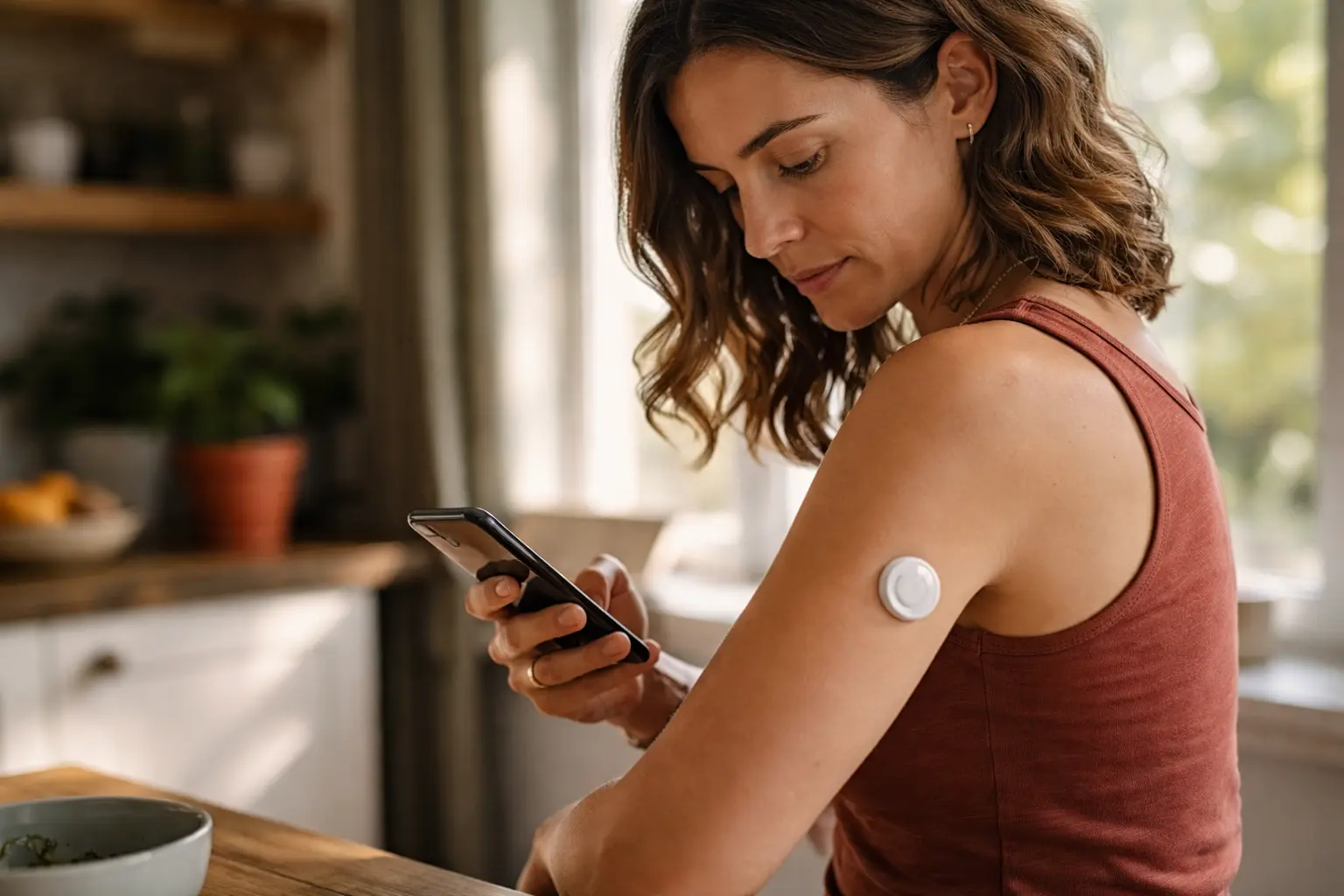
You’re tired of feeling shaky one moment and sluggish the next, never quite knowing what your blood sugar is doing behind the scenes, and a continuous glucose monitor explained might just be the clarity you’ve been missing.
Understanding continuous glucose monitoring
Continuous Glucose Monitoring, or CGM, represents a fundamental shift in how people track their blood sugar throughout the day. Instead of relying on fingerstick tests that capture only a single moment in time, a CGM sensor sits just beneath your skin and measures glucose levels in the fluid surrounding your cells roughly every five minutes. Picture this: you wake up, eat breakfast, take a walk, feel stressed during a phone call, and then have an afternoon snack. Each of these moments affects your glucose in different ways. A traditional blood test might miss all of this. With CGM, you see the complete story. The sensor transmits this data wirelessly to a receiver or your smartphone, creating a continuous graph that shows not just your current glucose level, but the direction it’s heading. Are you climbing rapidly? Dropping slowly? Staying stable? This real-time window into your glucose patterns helps you understand how food, physical activity, stress, sleep, and even weather influence your body’s response.
The science behind CGM technology
The technology powering CGM sensors relies on a chemical process called electrochemical detection. The sensor contains an enzyme that reacts with glucose in the interstitial fluid, the liquid that bathes the cells just below your skin’s surface. This reaction generates a small electrical signal proportional to your glucose concentration. The sensor measures this signal repeatedly throughout the day and converts it into a glucose reading. Interstitial fluid glucose lags slightly behind blood glucose, typically by about five to fifteen minutes, which is why CGM readings may differ slightly from a fingerstick blood test taken at the same moment. Modern CGM systems use sophisticated algorithms to account for this lag and provide accurate estimates. The data travels wirelessly to your device using Bluetooth or similar technology, encrypted for privacy. What makes this particularly valuable for seniors is that the system can alert you when glucose trends suggest you might experience low or high blood sugar soon, giving you time to take action before symptoms develop. Some newer systems even integrate with insulin pumps, automatically adjusting insulin delivery based on glucose readings.
Benefits of continuous glucose monitoring for seniors
For older adults, CGM offers several distinct advantages that extend beyond simple number tracking. First, real-time insights reveal glucose fluctuations you might never have noticed otherwise. You might discover that your mid-afternoon energy dip correlates with a glucose drop, or that a particular food causes a larger spike than you expected. Second, early detection of dangerous patterns becomes possible. Hypoglycemia, or low blood sugar, can develop quickly and cause confusion, dizziness, or falls, which are especially risky for seniors. A CGM alert gives you precious minutes to eat something and prevent a serious episode. Hyperglycemia, or high blood sugar, develops more slowly but can worsen over time if undetected. Third, CGM data enables personalized guidance. Rather than following generic advice, you and your healthcare team can review your specific patterns and adjust your diet, exercise timing, or medications based on what your data actually shows. One senior might find that a morning walk dramatically improves their glucose control, while another might need to adjust their medication timing. CGM makes these individual differences visible and actionable.
- Wear the CGM sensor as directed by your healthcare provider, typically on the back of your arm or abdomen, and allow the initial warm-up period before relying on readings.
- Regularly check glucose trends throughout the day, paying attention to patterns rather than isolated numbers, and respond promptly to high or low alerts.
- Collaborate with your healthcare team to review your CGM data during appointments, discussing patterns and making informed adjustments to diet, activity, or medications based on evidence from your own readings.
🔬 Science-backed benefits in 2 minuteschoose where to begin:
Improving diabetes management with CGM
For seniors living with diabetes, whether type 1 or type 2, CGM transforms the management landscape from reactive to proactive. Imagine managing diabetes the old way: you test your blood sugar a few times daily, get individual numbers, and try to piece together what those numbers mean. You might miss the pattern where your glucose climbs every evening, or you might not realize that skipping breakfast causes problems six hours later. With CGM, these patterns become obvious. You see the full arc of your glucose response to meals, activity, stress, and sleep. This visibility allows you to make informed decisions about your daily routines. A senior might notice that a thirty-minute walk after dinner keeps their evening glucose stable, or that eating protein with carbohydrates prevents sharp spikes. Over time, these small adjustments compound into significantly better glucose control. Research shows that people using CGM often achieve better A1C levels, the three-month average of blood sugar, which reduces the risk of long-term complications like nerve damage, vision problems, and kidney disease. Beyond the numbers, many seniors report feeling more confident and less anxious about their diabetes because they understand what’s happening in their body.
Challenges and considerations of CGM technology
While CGM offers substantial benefits, seniors should understand the real-world challenges that sometimes arise. Sensor accuracy can vary, especially in the first day or two after insertion, and certain factors like dehydration or recent exercise can affect readings. Some people experience skin irritation or allergic reactions to the adhesive patch holding the sensor in place, though this is relatively uncommon. The sensor requires regular replacement, typically every seven to fourteen days depending on the brand, which involves both cost and the minor discomfort of insertion. Some systems require fingerstick calibration, meaning you still need to prick your finger periodically to keep the sensor accurate. For seniors with arthritis or vision problems, this calibration step can be frustrating. There’s also a learning curve. Understanding how to interpret trends, respond to alerts, and adjust your behavior takes time and education. Many seniors benefit from working with a diabetes educator or their healthcare provider to maximize the value of their CGM. Additionally, not all insurance plans cover CGM, and out-of-pocket costs can be significant. Despite these challenges, most people who persist through the adjustment period find that CGM becomes an invaluable tool.
Future developments in CGM technology
Continuous glucose monitoring technology continues to advance rapidly, with innovations aimed at making glucose tracking more seamless and effective. Sensor accuracy is improving, with newer generations showing better agreement with blood glucose measurements. Data interpretation algorithms are becoming smarter, using machine learning to identify patterns and predict glucose trends more accurately. Integration with other health monitoring devices is expanding, allowing CGM data to connect with fitness trackers, smartwatches, and comprehensive health apps that give you a fuller picture of how your overall lifestyle affects your glucose. Some research explores non-invasive glucose monitoring using light or electromagnetic waves, which could eventually eliminate the need for a skin sensor altogether. Artificial intelligence is being applied to help users understand their data and receive personalized recommendations without requiring constant communication with healthcare providers. For seniors, these advances promise easier use, better accuracy, lower costs, and more meaningful insights. The trajectory suggests that in the coming years, glucose monitoring will become even more integrated into daily life, requiring less active management while providing more actionable information.
Others also read:
Disclaimer: This article is for informational purposes only and is not a substitute for professional medical advice. Always consult a healthcare professional for personal guidance.
This article has been prepared and reviewed by the GlobalHealthBeacon editorial team and is based on current medical research and published scientific literature available in 2026. It provides structured, evidence-based information to support informed health decisions.
← Back to the Main page on: continuous glucose monitor explained
