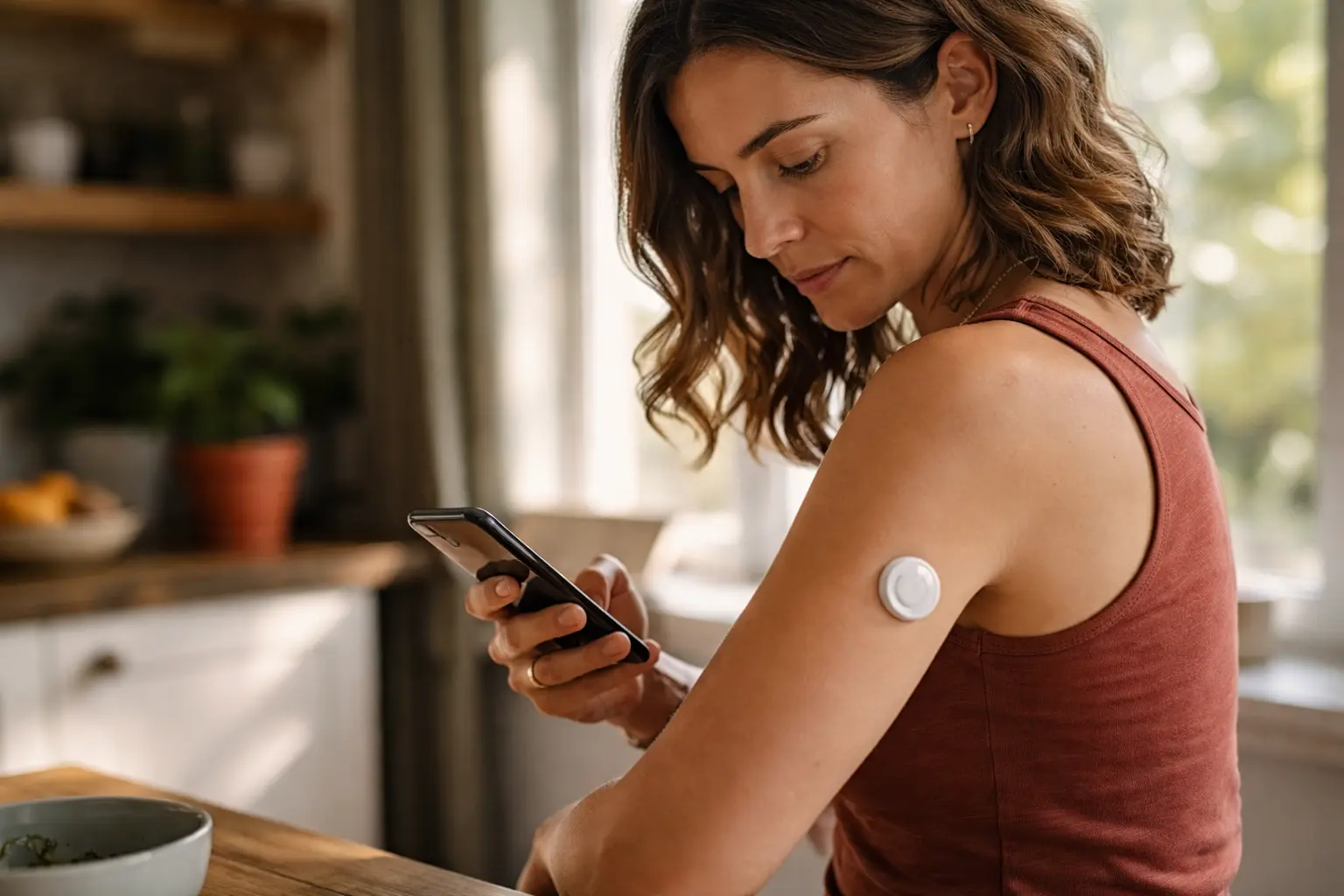
You’re exhausted for no reason, your mood swings are unpredictable, and you can’t figure out why your body feels like it’s working against you until a continuous glucose monitor explained everything you were missing about what’s actually happening inside.
Understanding continuous glucose monitoring
Imagine spending years wondering why certain meals leave you foggy or why afternoon energy crashes hit without warning. A continuous glucose monitor explained in simple terms is basically a tiny sensor that sits under your skin and watches your blood sugar patterns 24/7, catching the ups and downs you never knew were happening. Instead of pricking your finger multiple times a day, you get real-time data flowing to your phone or a small receiver. For seniors, this changes everything because you finally see the actual story your body has been trying to tell you. That post-lunch energy dip? You can now trace it directly to what you ate. The restless nights? Often connected to glucose fluctuations. It’s like suddenly turning on the lights in a dark room and finally seeing what’s been there all along.
- Effortlessly monitor glucose levels throughout the day without finger pricks.
- Receive immediate alerts for highs and lows so you can act before problems develop.
- Understand patterns and trends to make informed decisions about your diet and lifestyle with confidence.
How CGM technology works
The mechanics are surprisingly elegant. A tiny sensor, about the size of a postage stamp, sits just under your skin in your arm or abdomen and measures glucose in the fluid surrounding your cells. Every few minutes, it reads your glucose level and sends that data wirelessly to your phone or receiver. Think of it like having a personal health assistant checking in on you constantly. The device doesn’t hurt during insertion, though you might feel a quick pinch. Once it’s in, you barely notice it’s there. Within minutes, you’re seeing real numbers and trends. Most CGM systems show you not just your current glucose level, but arrows indicating whether you’re trending up or down. For seniors managing multiple health concerns, this continuous feedback loop becomes invaluable. You’re not guessing anymore. You’re making decisions based on actual data about how your body responds to exercise, meals, stress, and sleep.
💬 Ready to feel better in 2 minutes?choose where to begin:
Adapting to CGM in daily life
The first week wearing a CGM can feel strange, almost like having someone watching over your shoulder constantly. Some seniors describe initial anxiety about the constant monitoring, worried they might see numbers they don’t like. That’s completely normal. But here’s what happens next: most users report that within two to three weeks, the device becomes invisible to them physically and mentally. You shower with it, exercise with it, sleep with it. The real shift comes when you stop seeing it as surveillance and start seeing it as support. You notice patterns emerge. Maybe you realize that your 3 PM energy crash happens specifically on days you skip breakfast. Or that a 20-minute walk after dinner smooths out your glucose curve. These discoveries feel empowering, not restrictive. You’re not being limited by the data. You’re being liberated by understanding. Seniors often tell us that this adjustment period, while slightly uncomfortable, leads to a profound sense of control they haven’t felt in years.
The emotional impact of CGM use
Using a continuous glucose monitor explained to many seniors why they’ve felt the way they have for years. The emotional journey is real and worth acknowledging. Initially, some feel anxious seeing their glucose patterns displayed so transparently. But that anxiety usually transforms into something powerful: relief and empowerment. You’re no longer in the dark. You understand your body better than you ever have. Seniors report feeling more connected to their health, more proactive, and genuinely hopeful about managing their wellbeing. There’s also a psychological shift from feeling passive about aging to feeling like an active participant in your own health story. You’re not just accepting what happens to your body. You’re learning, adjusting, and making informed choices. Many describe this as a turning point where they stopped feeling like their health was happening to them and started feeling like they were steering the ship. That emotional transformation, from confusion to clarity, from anxiety to confidence, is often as valuable as the physical health benefits.
Continuous Glucose Monitoring systems revolutionize the way seniors understand and manage their blood sugar levels. By providing real-time data and clear patterns, CGM devices empower you to make informed decisions about your diet and lifestyle, leading to better health outcomes and a deeper connection to your own body.
Can CGM sensors be uncomfortable to wear?
While some users may experience mild discomfort during sensor insertion, the majority find wearing a CGM sensor to be painless and convenient. Most people forget it’s there within days.
Are CGM devices covered by insurance for seniors?
Many insurance plans cover CGM devices for seniors with a diabetes diagnosis. Check with your provider to see if you are eligible for reimbursement or coverage.
Others also read:
Disclaimer: This article is for informational purposes only and is not a substitute for professional medical advice. Always consult a healthcare professional for personal guidance.
This article presents an experience-based perspective and has been reviewed by the GlobalHealthBeacon editorial team in 2026. It provides structured, evidence-based information to support informed health decisions.
← Back to the main continuous glucose monitor explained page
