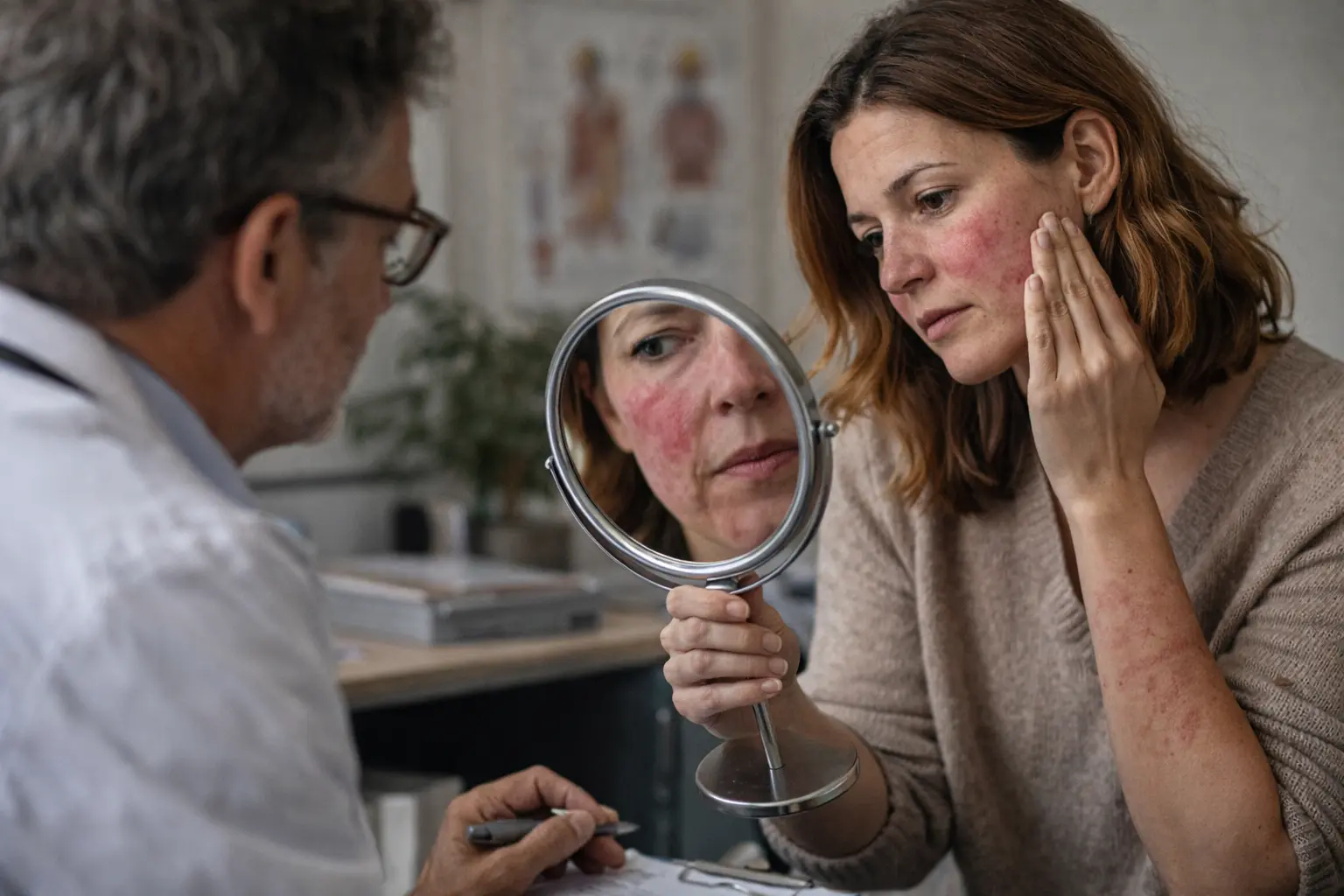
Your face flushes at the slightest provocation, those stubborn red patches won’t fade, and you’re tired of wondering if it’s just aging or something more serious – rosacea symptoms explained means finally understanding what’s actually happening to your skin and why.
Understanding rosacea symptoms
Rosacea is a chronic inflammatory skin condition that primarily affects the face, though it can extend to the neck, chest, ears, and scalp in some cases. The condition manifests through persistent facial redness, visible blood vessels that appear as fine lines across the cheeks and nose, and acne-like bumps that can be mistaken for regular acne. What makes rosacea particularly challenging for seniors is that it tends to worsen with age and can significantly impact quality of life. Flare-ups occur when blood vessels in the face dilate excessively in response to various triggers. Common culprits include spicy foods, alcohol consumption, extreme temperatures, emotional stress, and even certain skincare products. Understanding these patterns helps seniors recognize when their skin is about to react, allowing them to take preventive measures before symptoms escalate.
Identifying common symptoms
The symptoms of rosacea present differently from person to person, which is why proper identification matters. Persistent facial redness typically appears on the cheeks, nose, forehead, and chin, often resembling a permanent blush or sunburn that doesn’t fade with rest. Visible blood vessels, called telangiectasia, become prominent as tiny red or purple lines across affected areas. Many seniors notice pimples or bumps that resemble acne but don’t respond to standard acne treatments. Some experience thickened skin, particularly on the nose, a condition called rhinophyma that develops over time. Eye involvement is also common, with symptoms including watery or irritated eyes, a gritty sensation, and increased sensitivity to light. One senior might primarily experience flushing episodes, while another deals mainly with persistent redness and visible vessels. Recognizing which symptoms dominate your particular presentation helps guide conversations with healthcare providers about the most appropriate treatment approach.
Factors contributing to rosacea
Rosacea develops through a complex interplay of biological and environmental factors rather than a single cause. Genetic predisposition plays a significant role, with studies showing that individuals with fair skin and Northern European ancestry experience higher prevalence rates. Abnormalities in blood vessel function cause them to dilate more readily and remain dilated longer than normal, creating the characteristic flushing and persistent redness. The Demodex mite, a microscopic organism naturally present on all skin, appears in higher concentrations on rosacea-affected skin and may trigger immune responses. An overreactive immune system compounds the problem, responding aggressively to various triggers and environmental factors. For seniors, decades of sun exposure can damage skin barrier function and blood vessel integrity, making rosacea more likely to develop or worsen. Chronic inflammation from other conditions, certain medications, and lifestyle factors all contribute to the overall picture. Understanding these contributing factors helps seniors recognize that rosacea isn’t caused by poor hygiene or personal failings, but rather by underlying biological processes.
- Maintain a consistent skincare routine using gentle, fragrance-free products specifically formulated for sensitive or rosacea-prone skin, avoiding harsh scrubs and astringent ingredients.
- Identify and document your personal triggers by keeping a symptom diary, then systematically avoid known culprits such as spicy foods, alcohol, extreme temperatures, and stressful situations.
- Schedule a consultation with a dermatologist for proper diagnosis, skin assessment, and a personalized treatment plan tailored to your specific rosacea subtype and symptom severity.
🔬 Science-backed benefits in 2 minuteschoose where to begin:
Treatment options for rosacea
Treatment for rosacea focuses on controlling symptoms and preventing flare-ups rather than curing the condition entirely. Topical medications, including metronidazole and azelaic acid, reduce inflammation and redness when applied directly to affected areas. Oral antibiotics, particularly low-dose doxycycline, work through both antimicrobial and anti-inflammatory mechanisms to calm the skin from within. Laser and light-based therapies target visible blood vessels and persistent redness, with many seniors seeing significant improvement after a series of treatments. Newer options include oral medications that specifically address the inflammatory pathways involved in rosacea. The most effective approach typically combines multiple strategies: a gentle skincare routine, trigger avoidance, sun protection, and professional treatments. Seniors benefit from working closely with dermatologists who understand age-related skin changes and can adjust treatments as needed. What works brilliantly for one person may require modification for another, so patience and open communication with healthcare providers remain essential throughout the treatment journey.
Managing rosacea flare-ups
Managing flare-ups requires a multi-faceted approach that combines daily preventive habits with responsive strategies during active episodes. A gentle skincare routine using lukewarm water, mild cleansers, and fragrance-free moisturizers protects the skin barrier and reduces irritation. Daily sunscreen application with at least SPF 30 is non-negotiable, as UV exposure consistently triggers or worsens rosacea in most seniors. Identifying personal triggers through careful observation allows you to avoid situations that predictably cause flare-ups. Stress management techniques such as deep breathing, meditation, or gentle exercise help control the vascular responses triggered by emotional tension. Staying adequately hydrated supports skin health and may reduce inflammation. When a flare-up occurs, applying cool compresses, using prescribed topical medications, and temporarily simplifying your skincare routine can help calm the skin. Many seniors find that consistency matters more than perfection, and small daily efforts compound into meaningful symptom reduction over weeks and months. Keeping realistic expectations helps maintain motivation, as managing rosacea is a long-term commitment rather than a quick fix.
Seeking support and guidance
Living with a visible chronic skin condition can feel isolating, particularly for seniors who may already experience age-related concerns about appearance and social confidence. The good news is that rosacea affects millions of people worldwide, and substantial support networks exist. Online communities and forums connect seniors with others managing similar challenges, providing practical tips, emotional validation, and reassurance that they’re not alone in their experience. Support groups, whether in-person or virtual, offer spaces to discuss frustrations and celebrate victories with people who genuinely understand. Counseling services can help address any emotional impact from living with a visible condition. Healthcare professionals including dermatologists, primary care physicians, and sometimes rheumatologists work together to optimize treatment plans. Building a trusted relationship with your dermatologist means having someone who understands your specific situation, monitors your progress, and adjusts treatments as your skin changes. This collaborative approach, combining professional medical guidance with peer support and personal advocacy, creates the strongest foundation for successfully navigating rosacea throughout your senior years.
Rosacea represents a complex chronic skin condition requiring both scientific understanding and practical management strategies. By learning how rosacea develops, recognizing your personal symptoms and triggers, adopting a gentle skincare routine, protecting your skin from sun exposure, and seeking appropriate medical care, seniors can effectively manage this condition and maintain quality of life. Support from healthcare professionals and peer communities strengthens your ability to navigate the challenges with confidence and realistic expectations.
Are there specific foods that can trigger rosacea flare-ups?
Yes, certain foods commonly trigger rosacea flare-ups in susceptible individuals, though triggers vary significantly from person to person. Spicy dishes, hot beverages, alcohol (particularly red wine and beer), citrus fruits, tomato-based foods, and chocolate appear frequently in trigger lists. However, what triggers one senior’s rosacea may not affect another. Keeping a detailed food and symptom diary helps identify your personal triggers, allowing you to make informed dietary choices that minimize flare-ups while maintaining nutritional balance and enjoyment of meals.
Can rosacea be completely cured?
Unfortunately, there is currently no cure for rosacea, as it’s a chronic condition with underlying vascular and immune components that persist long-term. However, this doesn’t mean you’re stuck suffering with symptoms. With the right combination of treatments, trigger avoidance, skincare practices, and lifestyle modifications, seniors can effectively manage their rosacea and achieve significant symptom reduction. Many people experience periods of minimal symptoms or even remission with consistent management, allowing them to live comfortably despite the condition’s chronic nature.
Others also read:
Disclaimer: This article is for informational purposes only and is not a substitute for professional medical advice. Always consult a healthcare professional for personal guidance.
This article has been prepared and reviewed by the GlobalHealthBeacon editorial team and is based on current medical research and published scientific literature available in 2026. It provides structured, evidence-based information to support informed health decisions.
