You’re staring at a lab report with percentages that feel like a foreign language, wondering if those numbers mean you’re doing okay or if something’s slipping through the cracks – here’s what your A1C test explained actually means for your health.
What is A1C test?
The A1C test, also known as the hemoglobin A1C test, measures something happening inside your red blood cells right now. When glucose circulates through your bloodstream, it attaches itself to hemoglobin, a protein that carries oxygen in your blood. This process is called glycation, and it happens naturally. The A1C test captures a snapshot of how much sugar has bonded to your hemoglobin over the past two to three months. Think of it like a window into your average blood sugar behavior. If you’ve had consistently high blood sugar, more glucose molecules will have stuck to your hemoglobin. The test expresses this as a percentage. A person with excellent blood sugar control might see 5.2%, while someone whose levels have been running higher might see 8% or 9%. This percentage tells your doctor whether your blood sugar has been running in a healthy range or creeping upward over that three-month period.
Importance of A1C test
For seniors, the A1C test serves as a critical health checkpoint. Unlike a single blood sugar reading taken at your doctor’s office, which shows only that moment in time, the A1C reveals your overall glucose pattern. Imagine checking your car’s fuel gauge once versus looking at your fuel consumption over three months. The A1C is that three-month view. Healthcare providers use this information to evaluate whether your current diabetes management strategy is working. If your A1C has been stable or improving, your treatment plan is likely effective. If it’s rising, adjustments may be needed. These adjustments might include changes to medication, dietary modifications, or increased physical activity. For seniors specifically, maintaining steady A1C levels becomes increasingly important because the body’s ability to recover from high blood sugar episodes diminishes with age. Consistently elevated A1C levels accelerate damage to blood vessels and nerves, which is why regular monitoring becomes your best defense against complications like vision problems, kidney issues, and heart disease.
Interpreting A1C results
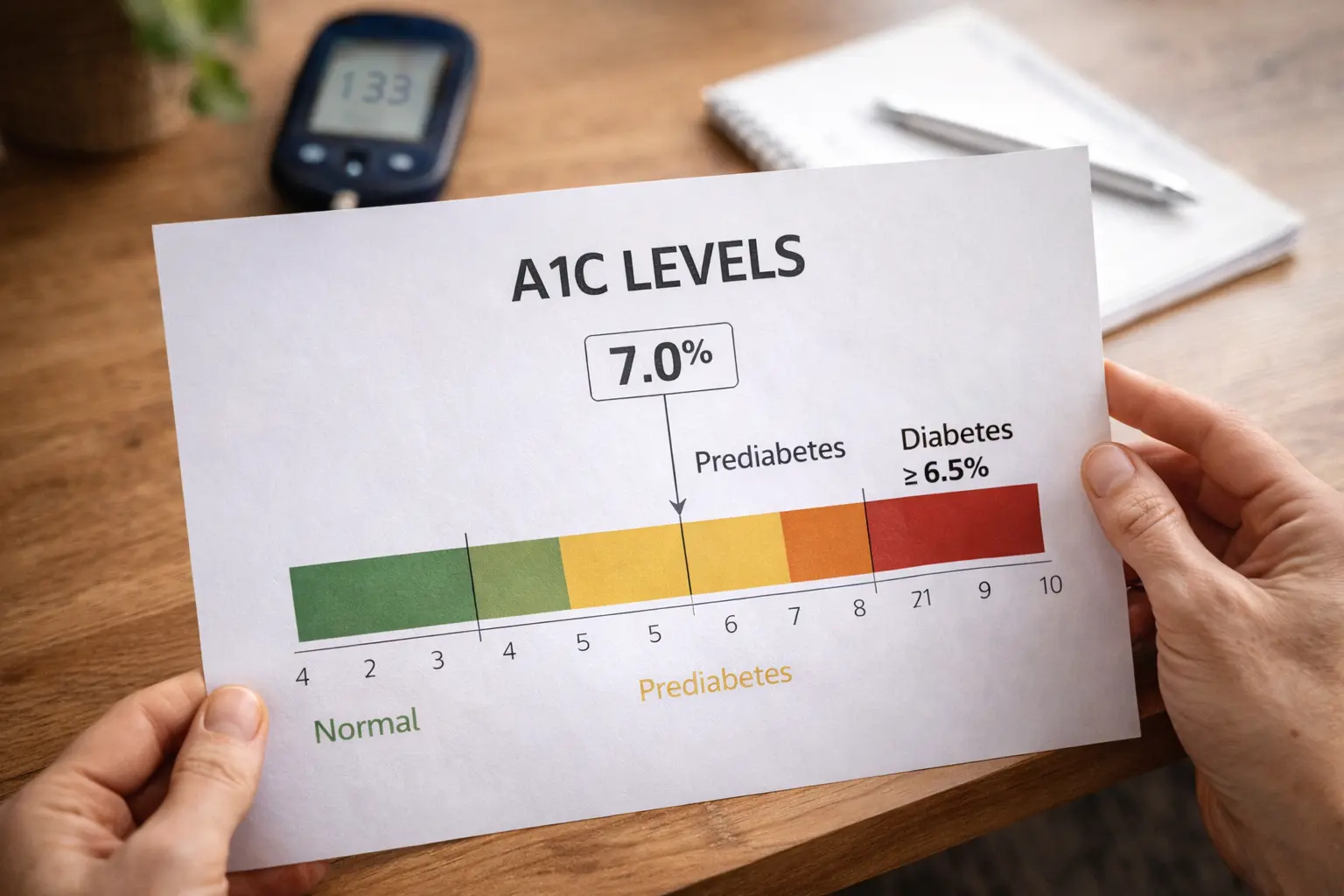
Understanding your A1C number requires knowing the established ranges that guide medical decision-making. A normal A1C level sits below 5.7%, indicating that your blood sugar has remained in a healthy range. Between 5.7% and 6.4%, you enter the prediabetes zone, which signals that your glucose levels are trending upward but haven’t crossed into a diabetes diagnosis yet. At 6.5% or higher, a diabetes diagnosis is typically confirmed. For seniors already managing diabetes, your healthcare provider will establish a personal target range, which might differ from these standard ranges depending on your overall health, other conditions, and life expectancy. Some seniors with multiple health concerns might aim for a slightly higher target like 7.5% to reduce the risk of low blood sugar episodes. Lowering your A1C through lifestyle changes and medication adjustments can meaningfully reduce your risk of complications. Even a 1% reduction in A1C can decrease your risk of heart disease and kidney problems. The key is understanding that this number represents your past three months, not your future, but it powerfully predicts what comes next if patterns continue unchanged.
- Understand the target A1C level recommended by your healthcare provider, as your personal goal may differ from standard ranges based on your age, health status, and other medical conditions.
- Follow a balanced diet rich in vegetables, lean proteins, and whole grains while limiting refined sugars and processed foods, and engage in regular physical activity such as walking, swimming, or gentle strength training at least 150 minutes per week.
- Monitor your blood sugar levels regularly using a glucose meter or continuous glucose monitor to track your progress, identify patterns, and share data with your healthcare team at appointments.
🔬 Science-backed benefits in 2 minuteschoose where to begin:
A1C test frequency
The timing of A1C testing follows a practical schedule designed to catch changes in your blood sugar patterns without overwhelming you with constant lab visits. Most seniors with diabetes have their A1C tested every three to six months, though your specific schedule depends on several factors. If you’ve recently started a new medication or made significant lifestyle changes, your doctor might recommend testing every three months to see how quickly your body responds. If your A1C has been stable for a year or more and your diabetes is well-controlled, you might stretch testing to every six months. Some seniors with very stable, well-managed diabetes might test annually, though this is less common. The reasoning behind regular monitoring is straightforward: your blood sugar patterns can shift due to seasonal changes, stress, illness, medication adjustments, or natural aging processes. By checking your A1C on schedule, your healthcare team can spot upward trends early and adjust your plan before complications develop. Think of it as preventive maintenance for your health, similar to getting your car serviced regularly rather than waiting for it to break down.
Factors influencing A1C levels
Your A1C number doesn’t exist in isolation. It reflects the cumulative effect of multiple factors working together over three months. Diet is foundational. Consistently eating foods that spike your blood sugar will push your A1C higher, while a diet emphasizing whole grains, vegetables, and lean proteins keeps it lower. Physical activity works directly against high blood sugar by helping your muscles use glucose more efficiently. Stress hormones like cortisol can raise blood sugar, which is why seniors managing chronic stress often see higher A1C levels. Illness, even something as simple as a cold or urinary tract infection, can temporarily elevate blood sugar. Sleep quality matters too. Poor sleep disrupts the hormones that regulate glucose, potentially raising your A1C over time. Medications, both diabetes medications and others you might take for blood pressure or other conditions, can influence your glucose levels. Some medications like corticosteroids can raise blood sugar significantly. Understanding these factors helps you recognize that your A1C reflects your entire lifestyle, not just one element. This is empowering because it means you have multiple levers to pull if you want to improve your number.
Future implications of A1C monitoring
The numbers on your A1C test today predict your health trajectory over the coming years. Research consistently shows that seniors who maintain A1C levels in their target range experience significantly fewer complications. High A1C levels accelerate damage to small blood vessels, which is why uncontrolled diabetes leads to vision loss, kidney disease, and nerve damage in the feet. Your heart and large blood vessels also suffer from sustained high blood sugar, increasing your risk of heart attack and stroke. By regularly monitoring your A1C and working proactively with your healthcare team, you’re essentially choosing your future health outcomes. A senior who maintains an A1C of 7% has a dramatically different ten-year health outlook than one whose A1C runs at 9%. The encouraging part is that improvements happen relatively quickly. If you make meaningful changes to your diet, activity level, or medication adherence, you can see A1C improvements within three months. This means you’re not locked into your current trajectory. Every three-month testing cycle offers a new opportunity to see whether your efforts are working and to adjust your approach if needed. This is why staying engaged with your healthcare provider and taking your A1C seriously matters so much for your long-term quality of life.
Understanding the science behind your A1C test results empowers you to take control of your diabetes management. Your A1C number represents your average blood sugar over three months and serves as a powerful predictor of your health future. By monitoring your A1C regularly according to your healthcare provider’s schedule, following evidence-based lifestyle recommendations, and working closely with your medical team to adjust your treatment plan when needed, you maintain the ability to prevent or delay serious complications. The factors influencing your A1C are largely within your influence, from the foods you eat to your activity level and stress management. Each three-month testing cycle offers a fresh opportunity to see whether your current approach is working and to make adjustments if needed. Your A1C is not a judgment; it’s a tool that helps you and your doctor make informed decisions about your health.
How often should seniors with diabetes have their A1C tested?
Seniors with diabetes are typically advised to have their A1C tested every three to six months to monitor their blood sugar control and adjust their treatment plan as needed. If your diabetes is newly diagnosed or recently adjusted, your doctor might recommend testing every three months. If your A1C has been stable for a year or more, testing every six months may be sufficient. Always follow your healthcare provider’s specific recommendations based on your individual situation.
What should seniors do if their A1C levels are above the target range?
Seniors should consult their healthcare provider promptly if their A1C levels are elevated above their target range. Working together, you can develop a personalized plan that might include dietary modifications, increased physical activity, stress management techniques, medication adjustments, or a combination of these approaches. Your doctor may also check for underlying factors like illness, medication side effects, or sleep problems that could be contributing to higher levels. Remember that improvement takes time, and even small reductions in A1C can meaningfully lower your risk of complications.
Others also read:
Disclaimer: This article is for informational purposes only and is not a substitute for professional medical advice. Always consult a healthcare professional for personal guidance.
This article has been prepared and reviewed by the GlobalHealthBeacon editorial team and is based on current medical research and published scientific literature available in 2026. It provides structured, evidence-based information to support informed health decisions.
