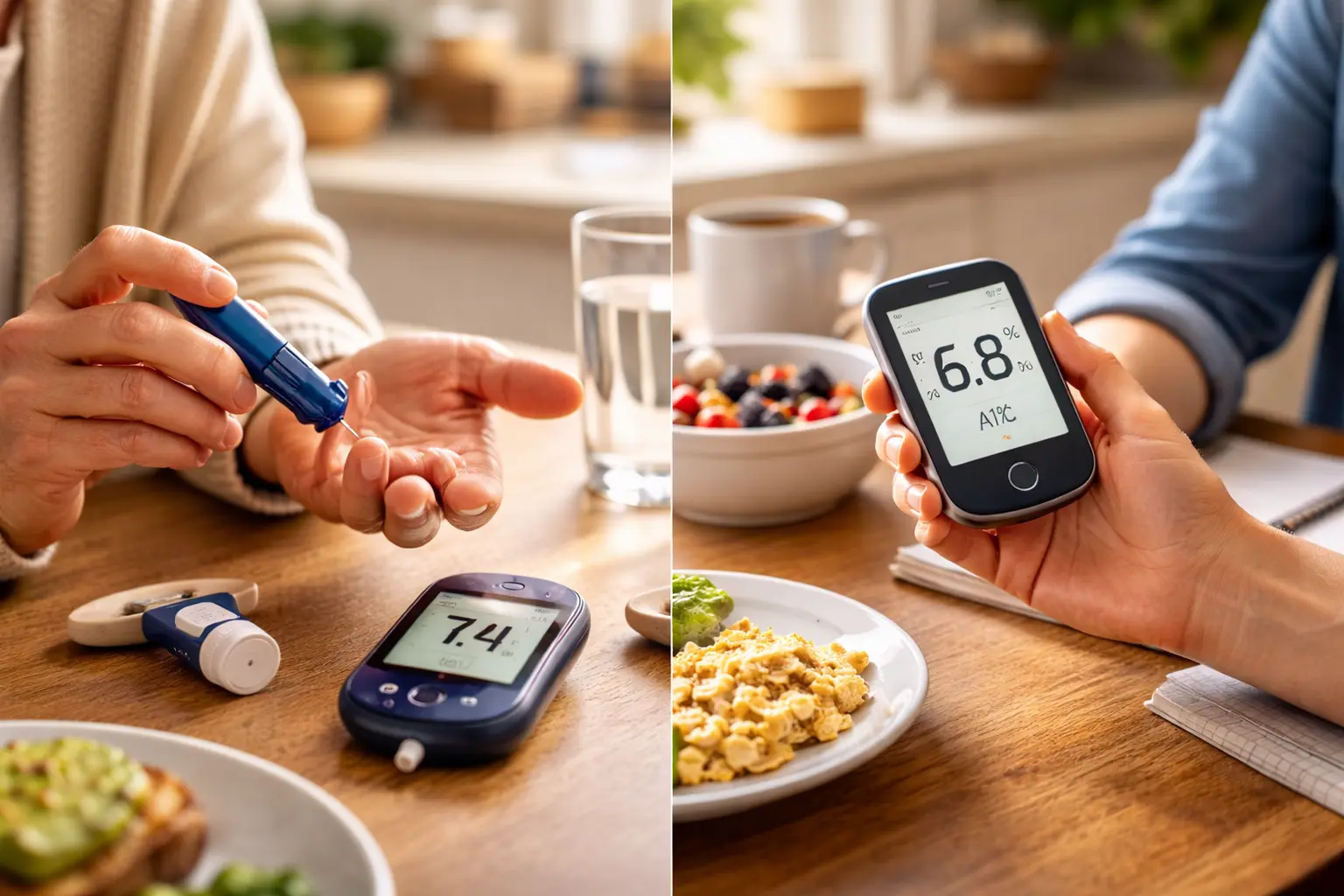
You’re staring at lab results with two numbers that supposedly tell you everything about your blood sugar, but nobody explained what the heck they actually mean or why your doctor ordered both when one seems like it should be enough, and that’s exactly why understanding a1c versus fasting glucose matters right now.
Understanding A1C levels
A1C, also known as glycated hemoglobin, functions like a three-month snapshot of your average blood sugar levels. Here’s how it works: glucose molecules attach to hemoglobin proteins in your red blood cells, and this attachment is permanent for the lifespan of that cell. Since red blood cells live roughly 120 days, A1C captures your glucose patterns over that entire window. Think of it like a time-lapse photograph showing your overall glucose behavior rather than a single moment. For young adults, this matters because early patterns of elevated A1C can signal metabolic changes before symptoms appear. An A1C of 5.7% or higher suggests your body is struggling to regulate glucose efficiently, even if you feel completely fine. This test is particularly valuable because it’s less affected by what you ate yesterday or stress from a single day.
Insight into fasting glucose
Fasting glucose measures your blood sugar after an overnight fast, typically eight to twelve hours without food. This test reveals how your body manages glucose when it’s in a resting state and has depleted its immediate energy stores. Imagine your body as a battery: fasting glucose shows what happens when that battery has been sitting idle all night. A normal fasting glucose falls below 100 mg/dL, while 100 to 125 mg/dL suggests prediabetes territory. For young adults, this test is particularly revealing because it shows your baseline metabolic function without the noise of recent meals or daily activity. Some people have perfectly normal A1C levels but elevated fasting glucose, which indicates their body struggles specifically with overnight glucose regulation. This distinction is crucial because it tells your doctor something different about your metabolic health and where intervention might help most.
Comparing A1C and fasting glucose
A1C and fasting glucose tell complementary stories about your glucose control, but they operate on completely different timescales. A1C is your long-term report card, showing patterns and trends over months, while fasting glucose is your morning quiz, revealing how your body handled the night. Imagine monitoring your fitness: A1C is like your average weekly workout performance, while fasting glucose is like checking your resting heart rate this morning. A young adult might have a normal A1C but elevated fasting glucose, suggesting their body struggles with overnight glucose production but generally manages daytime levels well. Conversely, someone might have slightly elevated A1C with normal fasting glucose, indicating their glucose spikes after meals but recovers well overnight. Both patterns require different management approaches. Regular monitoring of both tests provides a complete picture that neither test alone can deliver, which is why doctors typically order them together for comprehensive assessment.
- Discuss the importance of regular monitoring of both A1C and fasting glucose levels.
- Explain the implications of elevated A1C versus high fasting glucose in young adults.
- Highlight the significance of these measures in preventing long-term complications associated with diabetes.
🔬 Science-backed benefits in 2 minuteschoose where to begin:
Key differences in mechanisms
The biological mechanisms behind these tests reveal why they measure different aspects of glucose control. A1C reflects cumulative glucose exposure: every time glucose circulates in your blood, some molecules permanently bind to hemoglobin proteins, creating a chemical record. This process is irreversible and proportional to your average blood glucose concentration. Fasting glucose, by contrast, measures the glucose your liver produces overnight through a process called gluconeogenesis. Your liver acts like a glucose factory, and fasting glucose reveals how aggressively that factory operates when you’re not eating. Some young adults have overactive liver glucose production, leading to high fasting glucose despite good overall control. Others have insulin resistance that primarily affects meal-time glucose handling, showing up as elevated A1C but normal fasting levels. Understanding these mechanisms helps explain why two people with similar A1C values might need different treatment strategies based on their fasting glucose patterns.
Interpreting test results
Normal A1C ranges from 4% to 5.6%, with 5.7% to 6.4% indicating prediabetes and 6.5% or higher suggesting diabetes. Fasting glucose below 100 mg/dL is considered normal, 100 to 125 mg/dL indicates prediabetes, and 126 mg/dL or higher suggests diabetes. For young adults, these thresholds matter because early intervention during the prediabetes stage can prevent progression. A 28-year-old with A1C of 5.9% and fasting glucose of 105 mg/dL sits in prediabetes territory and might benefit from lifestyle modifications before medication becomes necessary. However, interpretation requires context: certain medications, hemoglobin variants, and conditions like anemia can affect A1C accuracy. Your ethnicity also influences baseline glucose metabolism, meaning reference ranges might need adjustment. This is why results should never be interpreted in isolation but always discussed with a healthcare provider who understands your complete medical picture.
Implications for young adults
Young adulthood represents a critical window for metabolic health because habits formed now establish patterns that persist for decades. Regular monitoring of A1C and fasting glucose allows early detection of glucose dysregulation before complications develop. A 25-year-old discovering elevated fasting glucose has years to implement dietary changes, increase physical activity, and potentially reverse prediabetes entirely. The stakes are high: unmanaged glucose dysregulation in young adults accelerates aging of blood vessels, increases cardiovascular disease risk, and can lead to diabetes complications by midlife. Yet this age group also has tremendous metabolic flexibility, meaning lifestyle interventions often work remarkably well. Young adults who catch abnormal glucose patterns early and make sustained changes can normalize their metabolism and avoid lifelong medication. This makes understanding these tests not just academically interesting but personally empowering, transforming abstract numbers into actionable information about your future health trajectory.
A1C and fasting glucose serve distinct roles in evaluating glucose control, with A1C reflecting long-term levels and fasting glucose providing immediate data. Understanding these measures is crucial for young adults to monitor their health proactively.
Can A1C levels be affected by factors other than blood sugar?
Yes, factors like anemia, certain medical conditions, and ethnic background can influence A1C levels, so it’s important to consider these when interpreting results.
How often should young adults have their A1C and fasting glucose levels checked?
Young adults with no known risk factors should have their A1C and fasting glucose levels checked every 3 years. However, those with risk factors for diabetes or abnormal results may need more frequent monitoring.
Others also read:
Disclaimer: This article is for informational purposes only and is not a substitute for professional medical advice. Always consult a healthcare professional for personal guidance.
This article has been prepared and reviewed by the GlobalHealthBeacon editorial team and is based on current medical research and published scientific literature available in 2026. It provides structured, evidence-based information to support informed health decisions.
