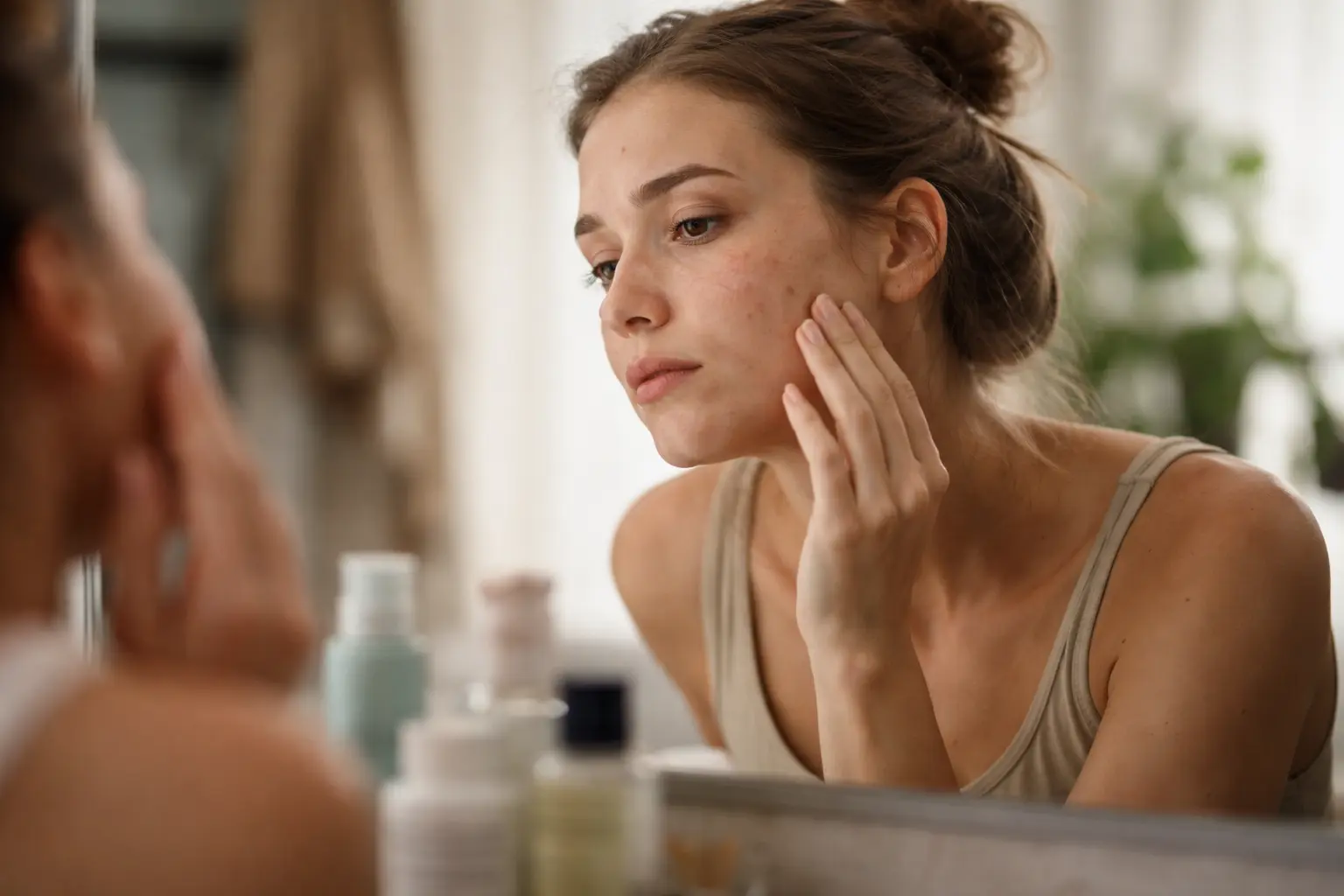
You wake up, splash water on your face, and there it is again—another angry red bump, maybe three or four more than yesterday—and you’re standing there wondering why your skin feels like it’s working against you, which is exactly why you need this acne treatment guide.
Understanding hormonal acne: the internal battle
Hormonal acne hits different because it’s not just surface-level frustration. It’s the kind of breakout that shows up right before your period, or during stressful weeks, or sometimes for no obvious reason at all. I remember Sarah, a woman in her twenties, describing how she’d notice her skin flaring up like clockwork two weeks before her cycle, as if her body was sending a signal she couldn’t ignore. The reality is that fluctuating hormone levels, especially estrogen and progesterone shifts, trigger oil production in your skin, clogging pores and creating the perfect environment for bacteria to thrive. Understanding this internal battle means recognizing that your acne isn’t a personal failure or a hygiene issue. It’s biology. Once you accept that hormonal acne is real and valid, you can stop blaming yourself and start exploring what actually works for your body.
- Track your breakouts alongside your menstrual cycle to spot patterns and identify your personal hormonal triggers.
- Talk to a dermatologist about prescription options like spironolactone, birth control pills, or topical retinoids designed for hormonal acne.
- Support your body through balanced nutrition with foods rich in omega-3s, antioxidants, and minerals that help regulate hormones naturally.
Skincare routine: nurturing your skin barrier
The biggest mistake most women make is going nuclear on their skin. They buy harsh acne products, strip away every bit of oil, and end up with irritated, angry skin that breaks out even more. I learned this the hard way after using a super strong benzoyl peroxide wash twice daily and watching my skin become red, flaky, and somehow worse. Your skin barrier is like a protective shield, and when you damage it with overly aggressive products, your acne actually gets worse. A real skincare routine for acne-prone skin means starting simple: a gentle cleanser that removes dirt without stripping, a lightweight moisturizer that won’t clog pores, and targeted treatments applied thoughtfully. If you’re using salicylic acid or benzoyl peroxide, start low and go slow. Use it two or three times a week at first, then gradually increase frequency as your skin adjusts. Non-comedogenic products are your friend because they’re specifically formulated to not block pores. The goal isn’t perfection overnight. It’s consistency and patience.
💬 Ready to feel better in 2 minutes?choose where to begin:
Lifestyle changes: empowering your healing journey
Clear skin doesn’t happen in a bottle alone. Think about the nights you stayed up scrolling, stressed about work, and woke up with a fresh cluster of breakouts. That’s not coincidence. Stress triggers cortisol release, which can amp up oil production and inflammation in your skin. Sleep deprivation does something similar, leaving your skin more vulnerable and less able to repair itself. Real change happens when you address the whole picture: drinking enough water so your skin stays hydrated from the inside out, moving your body regularly to reduce stress and improve circulation, and actually getting seven to eight hours of sleep instead of treating it as optional. One woman shared how adding a 20-minute walk three times a week and cutting back on late-night doom scrolling made a noticeable difference in her skin within six weeks. Self-care isn’t selfish or luxurious. It’s foundational to healing your skin and your mental health.
Professional insights: seeking dermatological guidance
Sometimes you need backup. A dermatologist isn’t just for severe acne. They’re for anyone frustrated with their skin and ready to move beyond trial and error. When you see a dermatologist, they assess your specific situation: your skin type, the severity and type of acne you’re dealing with, any sensitivities or allergies, and your lifestyle. They might recommend prescription retinoids like tretinoin, which are proven to work but require careful introduction. Or chemical peels that exfoliate at a deeper level than at-home products. Or oral medications if hormonal acne is the culprit. They can also rule out other conditions that mimic acne, like rosacea or folliculitis. The point is that professional guidance takes the guesswork out of your routine. You’re not spending months trying random products. You’re following a plan tailored to you.
Your acne journey is personal, and it deserves attention that goes beyond generic advice. Understanding your hormonal patterns, building a sustainable skincare routine, making lifestyle shifts that actually stick, and knowing when to call in a dermatologist are the real foundations of clearer skin. This isn’t about achieving perfection. It’s about taking back control and treating yourself with the care you deserve.
How long does it take to see results from acne treatment?
The timeline for acne treatment results varies depending on the individual, the severity of acne, and the chosen treatment methods. While some may experience improvement within weeks, others may require several months to notice significant changes.
Can diet affect acne breakouts?
Diet can influence acne breakouts to some extent. Avoiding foods high in refined sugars, dairy products, and processed foods may help reduce acne flare-ups for some individuals. However, the impact of diet on acne is highly individualized.
Others also read:
Disclaimer: This article is for informational purposes only and is not a substitute for professional medical advice. Always consult a healthcare professional for personal guidance.
This article presents an experience-based perspective and has been reviewed by the GlobalHealthBeacon editorial team in 2026. It provides structured, evidence-based information to support informed health decisions.
